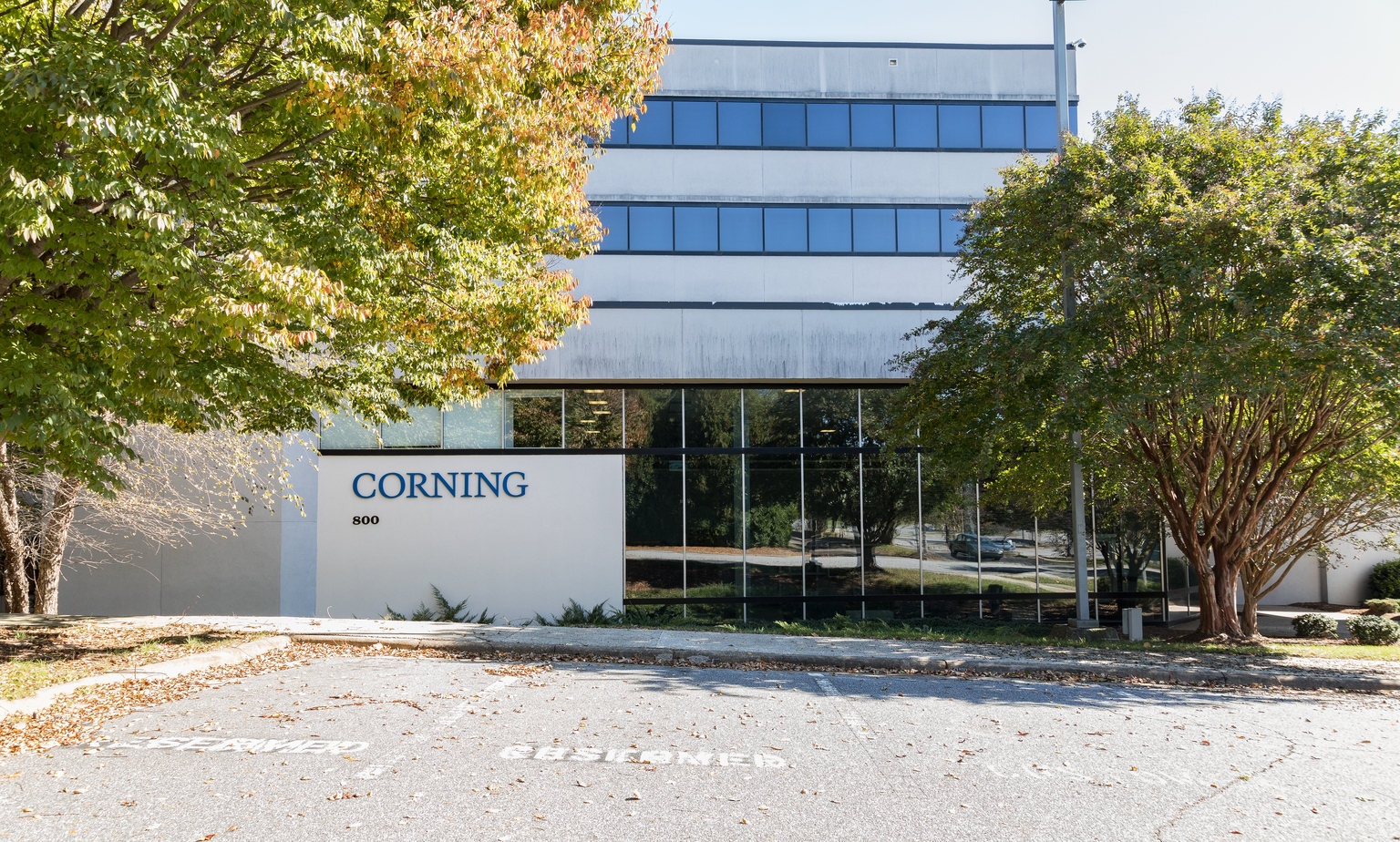
Corning's stock is riding the AI optical connectivity wave, with the Nvidia partnership driving most of the enthusiasm. That narrow catalyst creates a risk event: if hyperscaler capital spending slows or the AI trade rotates, GLW is exposed. The company operates three other large segments–display glass, environmental technologies, and life sciences–that are often overlooked. Each has its own risk profile, and together they will determine whether Corning's valuation holds or gaps down.
Concentration Risk in the AI Optical Loop
The Nvidia tie-up ties a growing share of Corning's optical communications revenue to a single customer end-market. Hyperscaler capex is the key variable. If Amazon, Microsoft, Google, or Meta pull back on data-center buildouts, the optical growth story loses its anchor. That risk is not hypothetical: hyperscaler spending is lumpy, and capacity digestion cycles have historically driven order volatility.
Corning's optical segment also depends on Nvidia maintaining its dominant data-center GPU market share. Any shift in AI chip architecture or interconnects could reduce the demand for Corning's specialty fiber. The stock's AI premium makes it vulnerable to a single earnings miss in that division.
The Three Forgotten Segments and Their Fault Lines
Corning's display glass business supplies liquid-crystal and organic light-emitting diode panels for televisions, monitors, and mobile devices. The risk here is cyclical: panel prices swing with consumer electronics demand. A global downturn or tariff escalation on Chinese-made displays would pressure this segment. The glass composition business is also exposed to tariff and supply-chain disruption given its Asian manufacturing base.
Environmental technologies–which make catalytic converters and diesel particulate filters–face a regulatory rotation. Slowing electric vehicle adoption could temporarily boost internal combustion engine parts demand, the long-term trend toward EVs reduces the addressable market. Tougher tailpipe rules in Europe and China could create short-term compliance demand, the structural decline remains.
Life sciences, including Corning's cell-culture vessels and labware, is the most defensive segment. Revenue there is less cyclical and more tied to bioprocessing investment. The risk is a biotech funding freeze or a shift to alternative materials.
What Confirms or Weakens the Setup
The bullish read is that the three forgotten segments provide a valuation floor while the AI optical story drives upside. The Alpha Score 72/100 for GLW reflects a moderate setup, not a clear buy or sell. The same is true for Nvidia at Alpha Score 71/100 and a current price of $214.86–down 0.22% on the session.
What would confirm the risk:
- A guidedown in Corning's optical communications segment or a large customer disclosure that capex is being trimmed.
- A tariff announcement that hits display glass costs and margins.
- A miss in Nvidia's data-center revenue that cascades into component orders.
What would reduce the risk:
- Strong earnings from the display or environmental divisions that prove diversification is working.
- A multiyear hyperscaler commitment that locks in optical demand.
- Regulatory clarity on life sciences spending that stabilizes that segment's growth.
Corning's next quarterly report will be the inflection test. If optical growth decelerates the three forgotten segments show stable or accelerating revenue, the stock can hold its valuation. If the AI trade alone carries the whole story, the risk of a reversion is high. Watch the segment breakdown, not just the headline revenue.
For a full view of the company's risk profile, see the GLW stock page. For the bellwether read, check the NVDA stock page and broader market analysis.