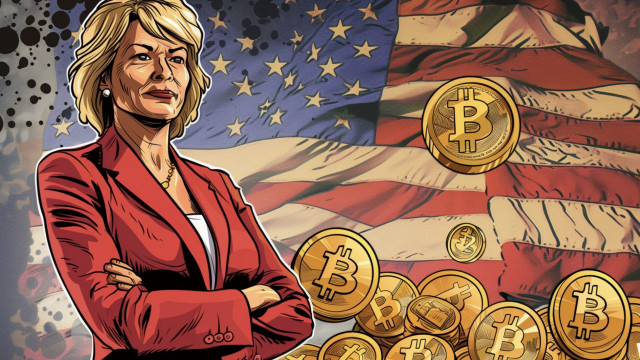
Coinbase shares surged 12% following the announcement of a finalized bipartisan agreement on the Clarity Act, a legislative framework that addresses the long-standing regulatory ambiguity surrounding stablecoin yield. Senator Cynthia Lummis confirmed the deal, which resolves the most contentious aspect of the Lummis-Gillibrand legislative effort: the conditions under which licensed entities can offer stablecoin yield to customers without triggering automatic securities classification. This development marks a significant shift for the industry, effectively providing a compliant pathway for federal or state-chartered institutions to pass yield to holders of fully reserved payment stablecoins, provided they adhere to rigorous transparency and reserve disclosure mandates.
Resolving the Regulatory Grey Area
The agreement serves as a direct response to the regulatory friction that historically hindered product innovation. Most notably, this framework resolves the legal uncertainty that forced the cancellation of Coinbase Lend in 2021, when the SEC threatened enforcement action prior to the product's launch. By establishing a clear, regulated pathway, the Clarity Act transforms what was previously a high-risk grey-area operation into a formal financial service. While algorithmic stablecoins remain subject to tighter restrictions, fully reserved payment stablecoins—most notably Circle’s USDC—are positioned as the primary beneficiaries of this legislative clarity.
This shift is not merely a regulatory milestone; it is a fundamental change to the revenue model for major exchanges. As Circle CEO Jeremy Allaire previously noted, the ability to provide compliant yield “unlocks trillions in on-chain capital efficiency.” For Coinbase, this represents the formalization of a revenue stream that is already a core component of its balance sheet through its partnership with Circle. Institutional investors are now tasked with re-modeling the company’s forward earnings, as the removal of SEC enforcement risk allows for the scaling of yield products that were previously untenable in the U.S. market.
Institutional Infrastructure and Competitive Moats
Coinbase’s institutional prime brokerage, which currently services hedge funds and family offices across more than 200 crypto assets, stands to gain the most from this regulatory pivot. Integrating a compliant yield product into this existing custody and lending infrastructure creates a significant competitive moat. By offering a product that is legally insulated from the enforcement risks that have plagued the sector for years, Coinbase is effectively upgrading its value proposition for institutional clients who require regulatory certainty to allocate capital at scale. This move aligns with broader trends in crypto market analysis, where the focus is shifting from speculative volatility to the integration of digital assets into traditional financial service architectures.
Legislative Friction and Near-Term Catalysts
Despite the market optimism, the legislative process remains the primary source of execution risk. The bipartisan agreement must still navigate committee markup, floor scheduling, and the eventual House-Senate reconciliation process. While President Trump has signaled his intent to sign the Clarity Act upon reaching his desk, the path to enactment is rarely linear. The most critical near-term variable for traders is the upcoming Senate Banking Committee markup, which is expected to occur this month.
A clean markup that preserves the yield-bearing pathway for fully reserved stablecoins will be the primary indicator of the bill's viability. Conversely, any amendments that seek to reopen the debate regarding algorithmic stablecoins or federal oversight thresholds will act as immediate headwinds for the sector. Investors should monitor the committee proceedings closely, as any deviation from the current language regarding reserve requirements could signal renewed legislative friction. For those tracking the evolution of Bitcoin (BTC) profile and broader market sentiment, the successful passage of this act would represent a foundational shift in the legitimacy of U.S.-based digital asset services.