Crypto▲ Bullish
CLARITY Act Stalls: 2030 Is Next Crypto Law Window
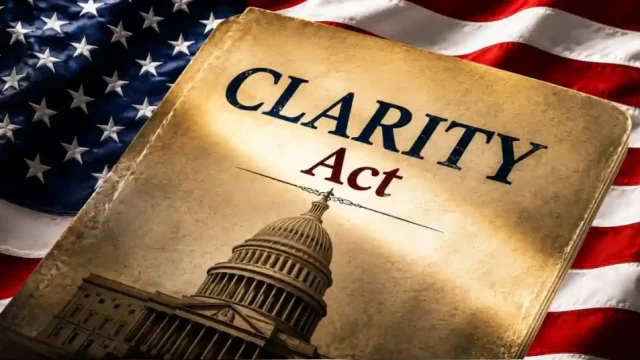
Senate inaction on the CLARITY Act could push US crypto regulation to 2030. The mechanism: capital and talent migrate to Singapore, UAE, China. Watch for floor votes and relocation announcements.
Continue with
Senator Cynthia Lummis is warning that the CLARITY Act may not get a Senate floor vote before the 2026 midterms. If the bill fails this session, she says the next realistic opportunity for comprehensive US crypto legislation could be 2030. The legislative clock is not an abstraction. It is a direct input into where blockchain capital, talent, and custody infrastructure locate for the next four years.
The Digital Asset Market Clarity (CLARITY) Act passed the House in 2025 with bipartisan support. The Senate Banking Committee advanced it in May 2026 by a 15-9 vote. Since then, the bill has seen no floor action. Lummis attributes the delay to a packed calendar and competing priorities. With the 2026 elections approaching, the political window for complex financial reform is closing.
The 2030 Risk Clock on US Crypto Law
Legislative Mechanics: What Happened and What's Next
The Senate Banking Committee vote in May 2026 demonstrated bipartisan committee support. The bill has not reached the floor. Lummis believes that if Congress does not pass the CLARITY Act during the current session, the next opening for comprehensive legislation may not arrive until 2030. A new Congress after the midterms would force sponsors to restart the process from scratch.
President Donald Trump has stated that his administration wants the United States to become the “crypto capital of the world” and promised a long-term regulatory framework. He criticized the prior SEC chair’s enforcement-heavy approach as pushing innovation overseas. Executive statements do not pass legislation. The CLARITY Act is the most advanced vehicle for codifying that promise. Its fate depends on Senate floor scheduling before the midterm break.
The Four-Year Gap Mechanism
The simple read is that a four-year regulatory vacuum leaves US-based crypto companies without federal clarity on token classification, exchange licensing, or custody standards. That vacuum directly benefits competitors who already have frameworks in place.
The better market read: The real mechanism is competition for capital and talent. Jurisdictions with clear regulatory regimes attract both. If the US remains in a legal gray zone until 2030, new protocols, venture funding, and developer talent will flow to Singapore, the UAE, and China at an accelerating pace. Network effects in blockchain are sticky: once a project establishes its legal and operational base in Singapore, relocating to the US later imposes friction costs that often prevent the move. The cost of lost first-mover advantage compounds.
What this means: The risk is not limited to any single token. A sustained US policy gap would:
- Depress valuations for US-domiciled crypto businesses and tokens that depend on domestic exchange liquidity.
- Delay institutional adoption by pension funds and asset managers that require regulatory clarity before allocating to digital assets.
- Slow development of US-based stablecoin infrastructure and dollar-pegged digital products, ceding that market to foreign issuers.