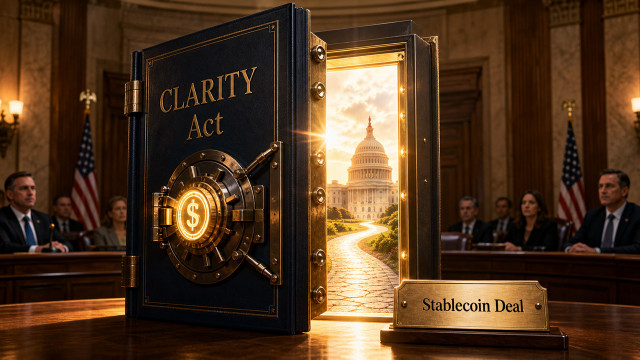
The legislative path for the CLARITY Act has shifted following a breakthrough in negotiations regarding stablecoin reward structures. Senate negotiators finalized compromise language last week, effectively clearing a primary hurdle that had stalled progress on the bill. With the framework now established, the Senate Banking Committee is positioned to initiate a formal markup as early as the week of May 11.
Resolving the Stablecoin Reward Deadlock
The core of the recent compromise addresses how stablecoin issuers and platforms handle yield-bearing mechanisms. Previous versions of the bill faced significant pushback over the classification of these rewards, which created uncertainty for both issuers and institutional liquidity providers. By narrowing the scope of what constitutes a regulated reward, the new language provides a clearer compliance roadmap for firms operating in the $321B stablecoin market. This adjustment is critical for Coinbase Backs CLARITY Act Compromise on Stablecoin Rewards, as it aligns the legislative text with existing operational models for digital asset custody and exchange services.
Legislative Momentum and Committee Timing
Moving the bill to the Senate Banking Committee is a necessary precursor to a full floor vote. The shift in timing to the week of May 11 suggests that leadership has secured enough bipartisan support to avoid a prolonged stalemate during the markup process. For market participants, the focus now shifts from the abstract possibility of regulation to the specific constraints that will be codified in the final text. The committee markup will serve as the definitive test of whether the compromise language can survive amendments from members who remain skeptical of stablecoin integration into the broader financial system.
Impact on Market Infrastructure
If the committee advances the bill, the focus will immediately pivot to the implementation timeline and the specific requirements for reserve transparency. The current draft aims to standardize reporting, which could reduce the fragmentation currently seen across different stablecoin protocols. Traders should monitor the specific language regarding reserve composition, as any shift toward stricter collateral requirements could force issuers to rebalance their holdings. This process would likely impact short-term liquidity in the underlying assets, particularly if issuers are required to move away from riskier commercial paper or lower-rated debt instruments.
As the May 11 window approaches, the primary risk is not the failure of the bill itself, but the potential for last-minute amendments that could reintroduce ambiguity regarding reward structures. The market will be looking for confirmation that the compromise language remains intact during the markup. Any deviation from the current agreement could trigger volatility in assets heavily reliant on stablecoin liquidity, as firms would be forced to reassess their compliance costs and operational viability under a more restrictive regulatory regime. The outcome of this committee session will dictate the regulatory environment for the remainder of the year.