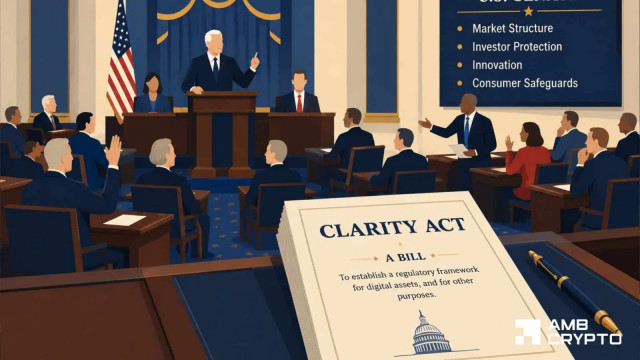
The CLARITY Act faces a tight Senate calendar as Thune prioritizes Russia sanctions and Clayton's confirmation, narrowing the window before August recess.
The Senate's packed legislative calendar is narrowing the window for the CLARITY Act, even as the bill moves closer to a decisive procedural stage.
On July 28, lawmakers will focus on Jay Clayton's confirmation and the cloture process for H.R. 5334, the legislative vehicle for the Lindsey O. Graham Sanctioning Russia Act of 2026. Senate Majority Leader John Thune is expected to prioritize those measures first, leaving the crypto market structure bill awaiting floor time.
Since the Senate generally advances one contested measure at a time, those priorities reduce the time available before the August recess for digital asset legislation. That does not weaken the bill's momentum. It has already cleared the House and Senate Banking Committee and remains on track for a possible floor vote during the week of August 3.
Any procedural delay would postpone the proposed 180-day implementation period, extending regulatory uncertainty for exchanges, issuers, and institutional investors awaiting a clearer U.S. digital asset framework, according to people familiar with the schedule.
The latest CLARITY Act draft expands the Senate's push for digital asset legislation by consolidating competing proposals into a single framework. By merging competing proposals into a single text, lawmakers have narrowed policy differences while introducing new ethics provisions to strengthen bipartisan backing.
The draft separates SEC and CFTC responsibilities, establishes disclosure and certification standards for token issuers, and creates a streamlined fundraising exemption for qualifying projects. The revised framework attempts to balance innovation with investor protection, giving exchanges, issuers, and institutional participants a clearer picture of how future digital asset markets may operate under federal law.
The debate has now shifted toward how that framework should be implemented without weakening existing safeguards. Senator Dave McCormick is urging Senate leadership to move forward with a floor vote on the bill. New York Attorney General Letitia James cautioned against it, warning that if states lose enforcement authority, consumers will suffer because of years of consumer protections built through enforcement.
The ultimate decision will define regulatory clarity and determine how responsibility for protecting digital asset investors is shared between federal and state authorities.
Drafted by a large language model from the source reporting linked above, then screened by automated publishing checks. It is not read by a journalist before publication. Some articles cite our Alpha Score. Verify prices and figures against the original source. Educational coverage, not personalized advice.