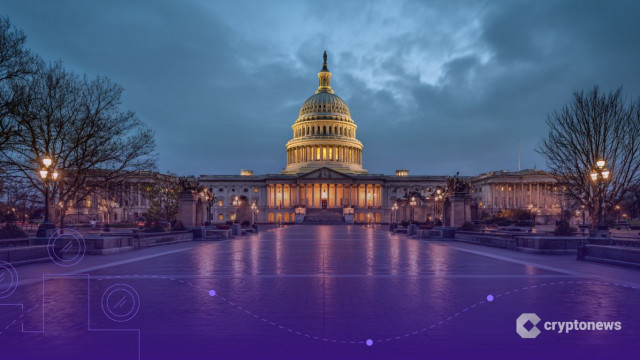
Senator Lummis warns that stalling the CLARITY Act pushes U.S. crypto regulation past 2030. Institutional capital, token classification, and exchange risk hang on a June committee vote.
Senator Cynthia Lummis warned that stalling the CLARITY Act now could push meaningful U.S. crypto regulation past 2030. The bill, which aims to clarify whether digital assets are securities or commodities, faces procedural gridlock in the Senate Banking Committee. Lummis argued that without passage this session, the next legislative window would not open until after the 2028 election cycle, effectively freezing the regulatory landscape for nearly a decade.
The naive read is that crypto regulation is always a few years away and markets can wait. The better market read is that institutional capital requires legal certainty to deploy at scale. Without the CLARITY Act, asset managers, banks, and pension funds cannot classify tokens with confidence. That uncertainty locks out the largest pools of liquidity. Every quarter of delay compounds the opportunity cost for U.S. exchanges and token issuers, who watch jurisdictions like the EU and Singapore finalize frameworks and capture listings.
Lummis specifically tied the timeline to the 2024 election cycle. If the bill does not clear committee before the summer recess, it dies with the current Congress. A new Congress would need to reintroduce and restart hearings, a process that historically takes 18 to 24 months. Add the 2026 midterms and the 2028 presidential race, and the next realistic passage window is 2030.
The CLARITY Act directly impacts every token traded on U.S. exchanges. If passed, tokens like ETH and SOL would likely receive commodity classification, shifting oversight from the SEC to the CFTC. That change would reduce litigation risk for exchanges and lower compliance costs for developers. Without it, the SEC's enforcement-first approach continues, and tokens face de facto delisting pressure from exchanges unwilling to fight classification battles.
Stablecoin issuers also have exposure. The bill includes provisions for payment stablecoins, defining them separately from investment contracts. A delay leaves USDC and USDT in regulatory limbo, especially as the EU's MiCA framework goes live in 2025 and demands full reserve transparency. U.S. issuers could lose European market access if domestic rules remain unclear.
The next concrete marker is the Senate Banking Committee markup scheduled for late June. If the CLARITY Act advances, expect a relief rally in BTC, ETH, and exchange tokens like BNB. If it stalls, the overhang on U.S.-listed crypto equities and tokens with SEC exposure will persist. Traders should watch committee votes and Lummis's public statements for signals on Republican whip count. A failure to advance would confirm that U.S. crypto policy is locked in a multi-year holding pattern, making offshore venues and non-U.S. tokens relatively more attractive.
For now, the bill's fate is the single most important legislative catalyst for U.S. crypto markets. A delay to 2030 is not hyperbole. It is the arithmetic of a broken congressional calendar.
Prepared with AlphaScala research tooling and grounded in primary market data: live prices, fundamentals, SEC filings, hedge-fund holdings, and insider activity. Each story is checked against AlphaScala publishing rules before release. Educational coverage, not personalized advice.