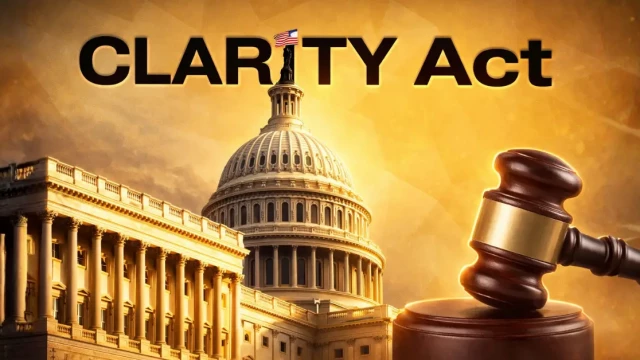
The legislative framework governing digital assets has reached a critical juncture as the final text of the Digital Asset Market Structure CLARITY Act enters the public record. This version includes a compromise between traditional banking institutions and the crypto industry regarding the treatment of stablecoin yield rewards. The agreement addresses long-standing concerns over how interest-bearing digital assets should be classified and regulated within the broader financial system.
Regulatory Framework for Yield Products
The compromise establishes specific parameters for issuers offering yield-bearing stablecoins. By creating a distinct regulatory path for these products, the legislation aims to reduce the ambiguity that has previously hindered institutional adoption. Banks and crypto firms have agreed on disclosure requirements that prioritize transparency for retail holders, ensuring that the underlying collateral backing these yield-generating assets remains liquid and verifiable.
This shift moves the industry away from a fragmented state-by-state approach toward a unified federal standard. The text clarifies that stablecoins providing yield must adhere to specific capital reserve ratios, effectively aligning them more closely with money market fund regulations. This alignment is intended to mitigate the systemic risks often associated with unbacked or opaque yield protocols.
Impact on Market Liquidity
The introduction of these rules serves as a catalyst for institutional capital allocation. With a clear legal definition for yield-bearing stablecoins, firms that were previously sidelined by regulatory uncertainty can now integrate these assets into their liquidity management strategies. This is a significant departure from the current landscape where DeFi leverage cycles threaten protocol stability due to a lack of standardized collateral rules.
For market participants, the next phase involves monitoring the implementation timeline set by federal regulators. The transition period will be the primary indicator of how quickly traditional finance can integrate these digital instruments. Firms are now evaluating their internal compliance structures to ensure they meet the new reserve requirements before the enforcement window opens.
AlphaScala Market Context
Market sentiment remains cautious as firms assess the operational costs of compliance under the new CLARITY Act provisions. While the technology sector continues to navigate shifting regulatory tides, companies like ON Semiconductor Corporation (Alpha Score 46/100) and ServiceNow Inc. (Alpha Score 51/100) are being monitored for their exposure to broader digital infrastructure trends. Investors should look for the upcoming federal guidance on the specific reporting frequency for stablecoin issuers, as this will dictate the immediate administrative burden on the industry.