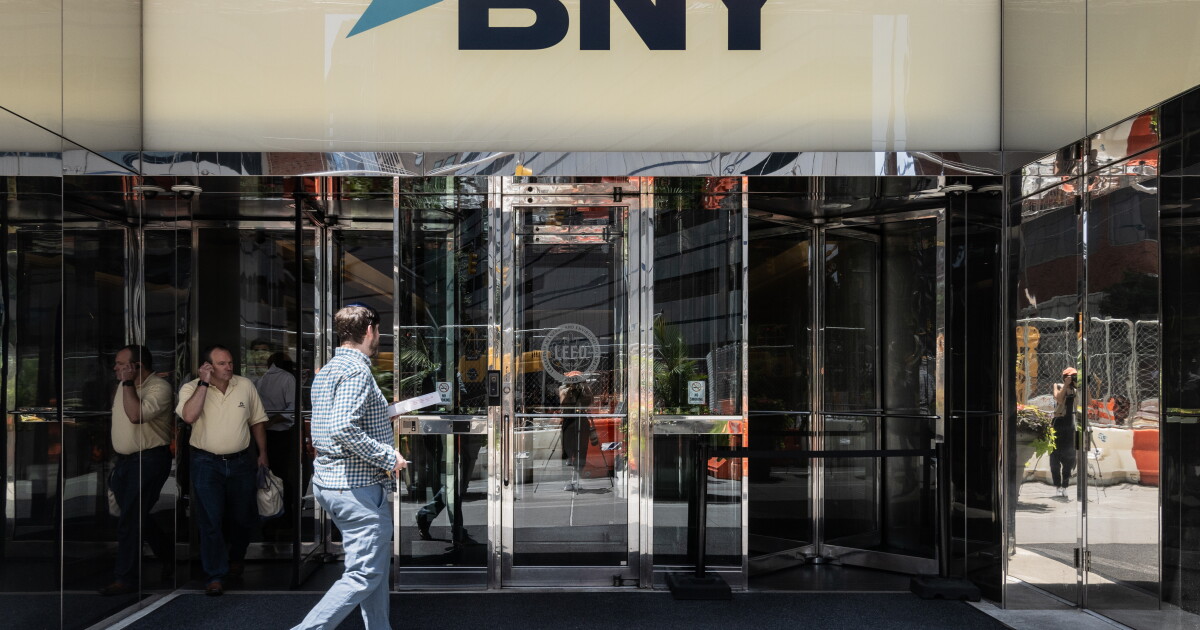
BNY Mellon said Monday it will let institutional clients store, transfer, mint and burn USDC through its Digital Asset Custody platform. The nation's oldest bank has safeguarded the majority of dollar reserves backing the second-largest stablecoin since 2022.
The announcement came a day after Circle's stock slid. Open USD, a new dollar-backed stablecoin from Open Standard, launched June 30 with support from more than 140 companies. BNY was among them.
KeyBanc analysts wrote that they "view the news as negative given potential USDC supply growth challenges and incremental competition from a group of partners with collective scale and powerful global distribution."
William Blair analysts Andrew Jeffrey and Adib Choudhury pushed back in a Tuesday note. "New entrants will struggle to replicate Circle's model, in our opinion, and the stated rationale such as reserve income sharing is duplicative." They called competitive fears "overblown."
The split captures a real tension. BNY's infrastructure supports USDC today but will expand to additional stablecoin issuers. The bank said the program aims to link fiat and digital asset custody within a single platform. BNY Chief Product and Innovation Officer Carolyn Weinberg said institutions need infrastructure that "seamlessly works across traditional and blockchain-based systems."
ACI Worldwide's Bridget Hall said BNY's move gives institutional customers more control over stablecoin use "within the controlled and regulated environment they're used to working in." ACI Chief Strategy and Growth Officer Phil Bruno called it a "smart move" that keeps client money inside BNY's walls.
The competition is not just about USDC. In July 2025, BNY became primary custodian for Ripple's stablecoin reserves. State Street launched a Stablecoin Reserves Money Market Fund earlier this month. Standard Chartered projects the stablecoin market could reach $2 trillion by 2028; Citigroup estimates $4 trillion by 2030.
Circle's Alpha Score sits at 28/100, labeled Weak. BNY Mellon scores 76/100, Strong. The divergence reflects the business model difference. BNY provides the rails; Circle issues the token. When the rails support multiple tokens, the pure issuer faces margin pressure.
The GENIUS Act, passed in July 2025, created a federal framework for payment stablecoins and accelerated Wall Street adoption. BNY's dual role as custodian and platform operator gives it leverage over the settlement layer. Whether USDC maintains its $74 billion market cap depends on how many of those 140-plus Open USD backers actually move volume.
"New entrants will struggle to replicate Circle's model, in our opinion," the William Blair analysts wrote. That view gets tested in the coming quarters.