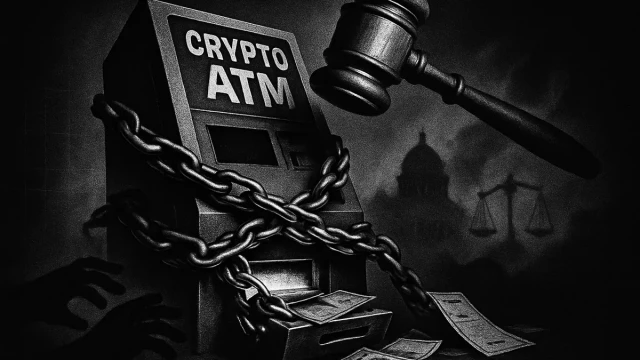
Canada is moving to ban crypto ATMs, citing high rates of fraud and money laundering. The proposal targets the kiosk model to protect retail consumers.
Alpha Score of 75 reflects strong overall profile with strong momentum, strong value, strong quality. Based on 3 of 4 signals — score is capped at 90 until remaining data ingests.
The Canadian federal government has initiated a proposal to ban crypto ATMs, marking a significant shift in how regulators approach the retail edge of digital asset access. Ottawa is not pursuing a broad prohibition on purchasing digital assets, but is instead targeting the specific cash-to-crypto kiosk channel that authorities have identified as structurally high-risk. This move signals a deliberate attempt to isolate and eliminate access points that regulators believe facilitate systemic abuse.
Fraud serves as the primary driver for this legislative push. Authorities report that crypto ATMs are frequently utilized in scams targeting ordinary Canadians, where victims are coerced by fraudsters into depositing physical cash into a machine to transmit assets to a wallet controlled by the perpetrator. By framing the policy through the lens of consumer protection, the government is positioning the ban as a necessary intervention to stop the exploitation of vulnerable populations. This framing is politically effective, as it distinguishes the kiosk model from broader, more regulated crypto market analysis activity.
Money laundering concerns represent the second pillar of the government’s case. Crypto ATMs provide a direct, high-friction cash entry point into the digital asset ecosystem, which has drawn consistent regulatory scrutiny. Officials appear to have concluded that the risk-reward equation for these machines has fundamentally broken down, citing a lack of public benefit relative to the volume of illicit activity. This assessment suggests that the government views the current infrastructure as inherently incompatible with existing anti-money laundering standards.
For ATM operators, the proposed ban represents an existential threat to their business model. Firms that have built their operations around convenience-store and mall placements face the most immediate risk, as a full prohibition would effectively eliminate their primary revenue stream. Unless these operators can successfully pivot to traditional money services or compliant over-the-counter setups, the viability of their current business model in Canada is in question. This transition would require significant capital and operational restructuring, which may prove insurmountable for smaller, kiosk-focused entities.
This development carries broader implications for global regulatory sentiment. Canada has historically been viewed as an early-friendly jurisdiction for digital assets, and the determination that the kiosk model has become more harmful than useful will likely influence policy discussions in other regions. Regulators in other jurisdictions will be watching the Canadian process closely to see if the removal of these machines correlates with a measurable decline in scam-related losses. If the data shows a reduction in fraud, it is highly probable that other nations will adopt similar restrictive measures. Conversely, if fraud simply migrates to alternative rails, the ban may be viewed as a symbolic gesture rather than a substantive solution to the underlying security issues.
Ultimately, the proposal reflects a growing trend of separating institutional or registered activity from consumer-facing channels that lack robust verification. The government is signaling that it does not view all crypto activity as illegitimate, but rather that specific access points create excessive downstream harm. Traders and operators should monitor whether the proposal moves toward formal legislation, as the timeline for implementation will dictate the urgency of the required pivot. The success of this policy will be judged by whether it effectively mitigates the targeted risks or merely displaces them into less visible parts of the financial system.
AI-drafted from named sources and checked against AlphaScala publishing rules before release. Direct quotes must match source text, low-information tables are removed, and thinner or higher-risk stories can be held for manual review.