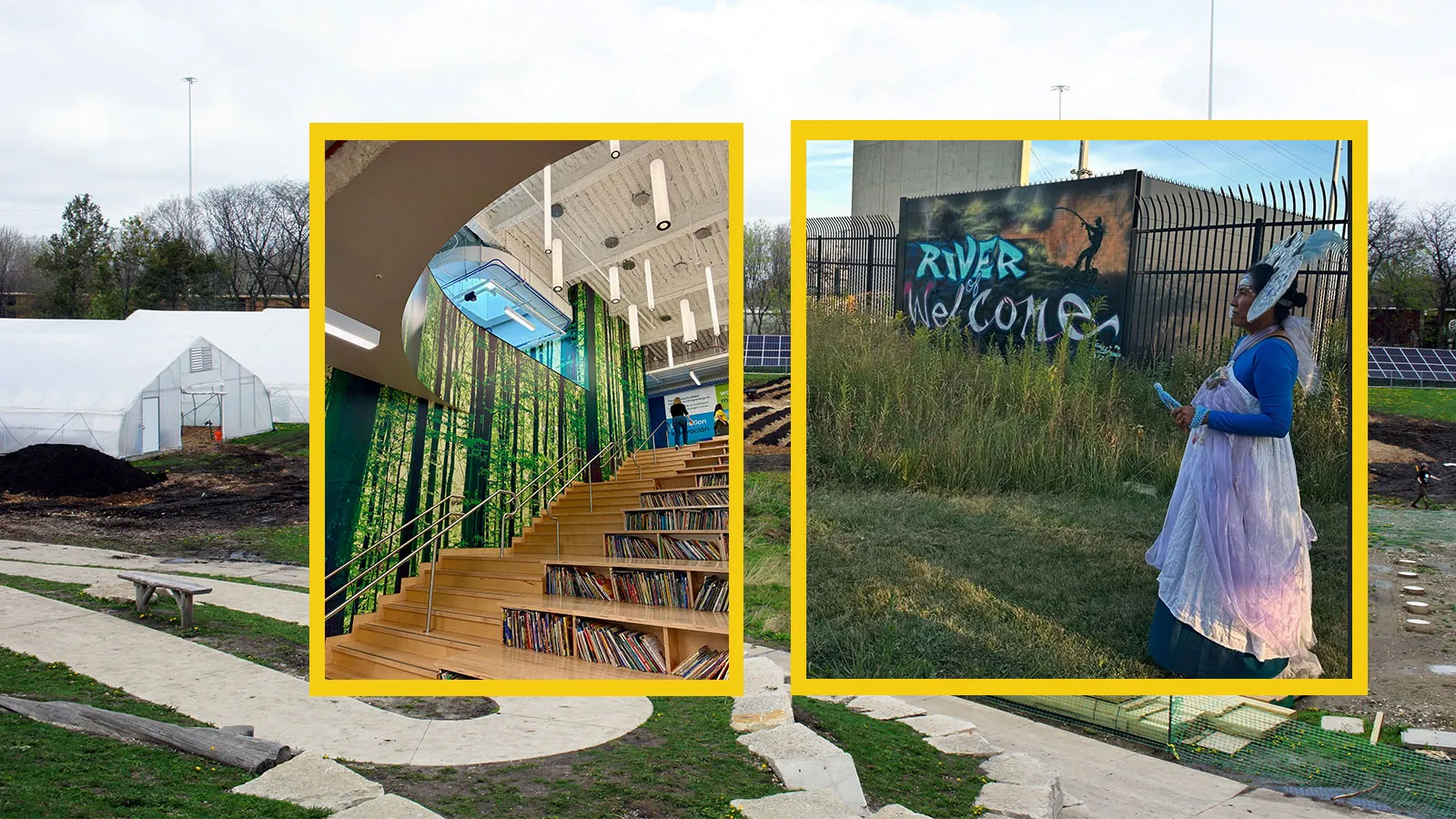
A K-8 charter school two miles from Chicago Midway Airport is turning six acres of neglected land into a working farm. The Academy for Global Citizenship expects to grow 10,000 pounds of produce in its first full year – strawberries, chilies, squash – and sell them at reduced prices to the surrounding neighborhood.
The setup is simple enough. The school sits in a block where the city tore down hundreds of public housing units 15 years ago, leaving weedy lots and a gap in community life. The new farm, built with $2.6 million from GreenLatinos and the Bezos Earth Fund, is part of a broader push across Chicago, Los Angeles, and Albuquerque to bring Latine neighborhoods closer to green space.
The “simple read” on this project is that it depends on philanthropy. The whole campus cost $53 million to build, and per-student spending runs $22,100 a year, roughly on par with other Chicago charters. The farm itself is a small piece of that budget. If the funding stream dries up or the school loses its philanthropic partners, the produce stops.
The better market read is about the health-cost offset. Latine neighborhoods in Chicago have 33% less park space than the city average. Nearly 70% of Latines nationally live in nature-deprived areas. A 2023 study linked less tree cover to lower life expectancies in Black and Latine communities in Los Angeles. On the South Side, where the school is hemmed in by a highway, railroad tracks, and the airport, asthma rates rank in the highest percentile.
Tree coverage can lower surface temperatures by up to 14 degrees Fahrenheit, according to a recent Nature Communications study. During the 1995 Chicago heat wave, more than 700 people died, many of them low-income and without access to cooling. Juan Declet-Barreto, a senior social scientist at the Union of Concerned Scientists, described how immigrant workers face vastly higher heat exposure than white-collar workers – construction sites, no air conditioning, no health insurance.
If the farm and surrounding rain gardens, native plants, and geothermal energy systems can reduce local heat exposure and improve air quality, the savings on emergency room visits, missed workdays, and asthma management could justify the upfront cost several times over. That calculation matters because heat waves are getting worse, and Chicago’s emergency systems still leave vulnerable people exposed.
The confirmation path for this thesis runs through measurable health outcomes. The school’s leaders plan to track attendance, student focus, and community use of the produce. Third grader Kara Solis-Cortes described the school’s Green Team’s seedling sale and honey harvest. Eighth grader Joaquin Cervantes now grows chilies at home after learning soils at school. Those are early signals, not proof.
Harder metrics will come from the Canal Origins Park project, six miles northeast, where GreenLatinos is building a $190,000 picnic pavilion with wheelchair-accessible tables, expected by this August. The Pilsen Environmental Rights and Reform Organization has engaged 190 locals over five events to shape the park’s design. Rowers already use the water. If the park draws consistent foot traffic and stays maintained, the model can export.
The invalidating factors are threefold. First, the city’s demolition of the public housing “courts” in the 2000s left empty lots that have not been redeveloped. No new housing has replaced them, which means the population base that would use the farm and park is thinner than it was 20 years ago. Second, the school’s $53 million build-out required a mix of state funding and federal tax credits. Replicating that cost structure is not straightforward for other schools without similar political access. Third, green infrastructure needs maintenance. Trees die, irrigation breaks, volunteer engagement fades. PERRO President Zitlalli Paez grew up in Pilsen, where gang violence kept her indoors. Breaking that cycle takes years of consistent programming, not just planting.
Co-principal Berenice Salas sees the farm as a way to reconnect families with skills they brought from Mexico. Her father was an organic bean farmer before migrating. She recalled a student’s mother picking a dried squash from the stem to turn it into a natural sponge. “That’s part of our roots,” Salas said. “A lot of these pueblitos and towns in Mexico are super resourceful because they have to be.”
If the farm can sustain itself past the grant cycle, the real return is in the next generation’s habits. The school’s design puts every classroom in sight of a window. Students ask for walks to calm down. Eighth grader Camila Ontiveros said she focuses better outside. That is the kind of compound effect that city budget offices cannot easily model but families feel.
Lucy Contreras, the Illinois state director of GreenLatinos, framed it as a public health issue, not a beautification project. The next concrete date is the August pavilion opening at Canal Origins Park. That will be the first test of whether organized community demand can turn a donated dollar into permanent amenity.