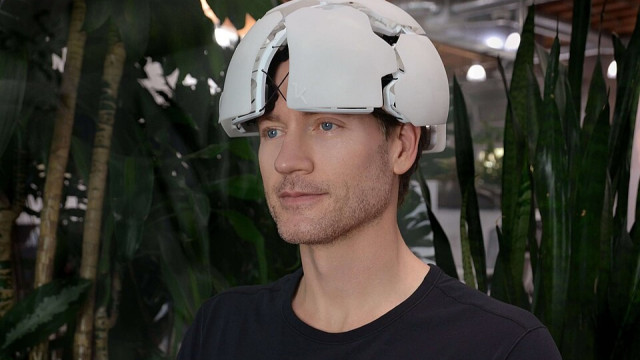
Tech entrepreneur and longevity advocate Bryan Johnson is floating a new research idea: measure the biological age of cryptocurrency workers against other professions. The question is whether exposure to the crypto industry accelerates the aging process. Johnson floated the idea in a social media post after Bitcoin fell below $67,000, though the market backdrop is incidental to the proposal.
Johnson is the founder of Project Blueprint, a data-driven health protocol that spends roughly $2 million a year on medical monitoring, strict diets, and self-experimentation. He sold his payments company Braintree (which owned Venmo) to PayPal in 2013 for $800 million. His extreme anti-aging regimen is the subject of the 2025 Netflix documentary “Don’t Die: The Man Who Wants to Live Forever.”
The Study Proposal: Biological Age by Profession
Johnson’s tweet said:
“it would be interesting to measure the biological age impact of crypto versus other professions to evaluate if it's an accelerate of aging processes”
The simple read is that Johnson, known for stunts like walking with an umbrella in sunlight, is generating publicity. The better market read is that Johnson is applying his systematic approach to a new variable: the occupational and lifestyle effects of the crypto industry. If he follows through, the study would compare biomarkers – such as DNA methylation clocks, telomere length, and inflammatory markers – across cohorts.
Why Crypto Work Could Matter
Crypto professionals face unique stressors: 24/7 market monitoring, volatility exposure, sleep disruption, and high cognitive load. Johnson’s hypothesis is that these factors could accelerate biological aging relative to less demanding professions. The study would attempt to isolate the occupational effect from lifestyle confounders.
How the Study Would Work
Johnson’s team at Project Blueprint already collects routine blood panels, MRI scans, and gut microbiome data on Johnson himself. Extending that protocol to a cohort of crypto workers would involve regular biomarker sampling, activity tracking, and psychological stress assessments. The output would be a “crypto age” metric that could be compared to a control group of non-crypto professionals.
Johnson’s Unified Theory of Decay
Johnson connects his longevity work to crypto through a shared philosophical framework. He has stated that “aging has the same philosophical underpinnings as inflation” and described both as “the slow death of an intelligent system.”
“Inflation erodes economic purchasing power over time in the exact same way that aging degrades the body's biological capital.”
This analogy is more than rhetorical. Johnson sees systems thinking, optimization, and exponential change as the common threads among crypto, artificial intelligence, and longevity. His argument is that any intelligent system – whether an economy, a body, or a blockchain – must fight entropy. If crypto work accelerates biological entropy, the finding would support his broader thesis.
Historical Crypto Interest
Johnson’s interest in cryptocurrency predates his longevity focus. At Braintree, he partnered with Coinbase to experiment with bitcoin payment infrastructure, aiming to create payment rails indifferent to fund origin. Today, he views his crypto and longevity work as a unified effort against systemic decay.
Potential Sector Ripple Effects
The read-through from Johnson’s proposal is speculative but worth tracking. If a credible study finds that crypto professionals show accelerated biological aging, it could open several commercial and insurance angles.
Health Monitoring Services
Startups offering continuous wellness tracking for traders could see demand. Project Blueprint itself could expand into a B2B service for crypto firms wanting to monitor employee health. Continuous glucose monitors, heart rate variability trackers, and sleep analytics are already common in high-performance workplaces; crypto firms might adopt them for risk management.
Insurance Product Adaptation
Life insurance and health insurance for crypto professionals are currently priced on standard actuarial tables. A finding linking crypto work to faster aging could lead to specialized underwriting or risk-adjusted premiums. Conversely, it could drive innovation in wellness-linked insurance that rewards healthy behaviors.
For context, WTW recently launched non-custodial crypto insurance after acquiring Redefind. If biometric risk becomes a factor, that market could expand beyond custody risk to personal health risk.
Hiring and Compensation
Firms competing for talent might need to offer health optimization programs as a benefit. Decred and other community-driven projects already emphasize decentralization and wellness; this could become a hiring differentiator.
Confirmation Signals to Watch
Johnson has not formally launched the study. The following markers would confirm he is serious:
- Cohort recruitment announcement with eligibility criteria
- Publication of a study protocol or partnership with an academic institution
- Baseline biomarker data release for the crypto group
- Control group selection – likely from a low-stress profession
If none of these materialize within six months, the proposal remains a thought experiment. If they do, the market for crypto-specific health analytics will have its first anchor study.
What Would Weaken the Setup
- A small sample size or self-selection bias (only stressed workers volunteer)
- Failure to control for income effects (wealthier crypto workers can afford better healthcare, skewing results)
- No adjustment for drug use or sleep disorders common in the demographic
Johnson’s track record suggests he is methodical. The $2 million annual budget for his own protocol implies he will fund the study properly. Traders should treat this as a watchlist item rather than a tradeable catalyst today.
For a broader view of crypto market conditions, see our crypto market analysis. To understand how institutional players are structuring risk, read about Galaxy Digital’s OTC prediction desk.