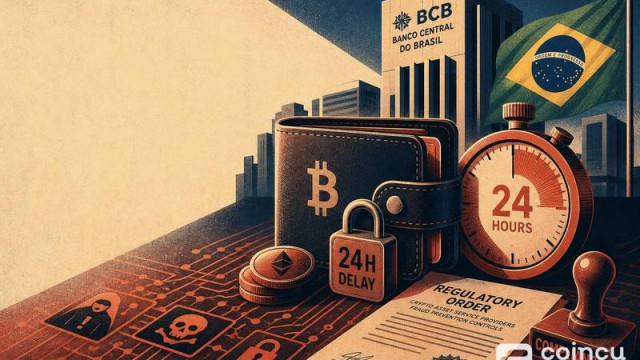
Brazil's central bank is imposing a 24-hour waiting period on transfers from exchanges to self-custody wallets. The measure, detailed in official documentation, is framed as an anti-fraud safeguard rather than a restriction on holding crypto directly.
A self-custody wallet is one where the user controls the private keys outside any exchange or intermediary. The hold applies only to outbound transfers to those wallets. Assets that stay on the exchange remain under the platform's oversight.
The central bank said the policy adds friction at the moment fraud losses are most likely to become permanent. Fraud schemes typically try to move stolen assets off the platform quickly. A 24-hour delay creates a window for reviews, alerts, or user intervention before funds leave the exchange.
That window matters because on-chain transfers to user-controlled wallets are effectively irreversible once broadcast. Recovery becomes far harder. A São Paulo court ordered Coinbase to return funds after a self-hosted wallet theft, illustrating the difficulty.
The move follows earlier reporting that the central bank ordered delays on large crypto transfers abroad. The new rule applies specifically to self-custody withdrawals from regulated exchanges operating in Brazil.
For exchanges, the rule implies new withdrawal workflows, disclosures, and monitoring around outbound self-custody transfers. Platforms serving Brazil would need to build the delay into their compliance stack.
For users, the practical effect is slower access when moving assets to a personal wallet. The measure adds friction to convenience, not a ban on self-custody. The transfer still completes after the hold.