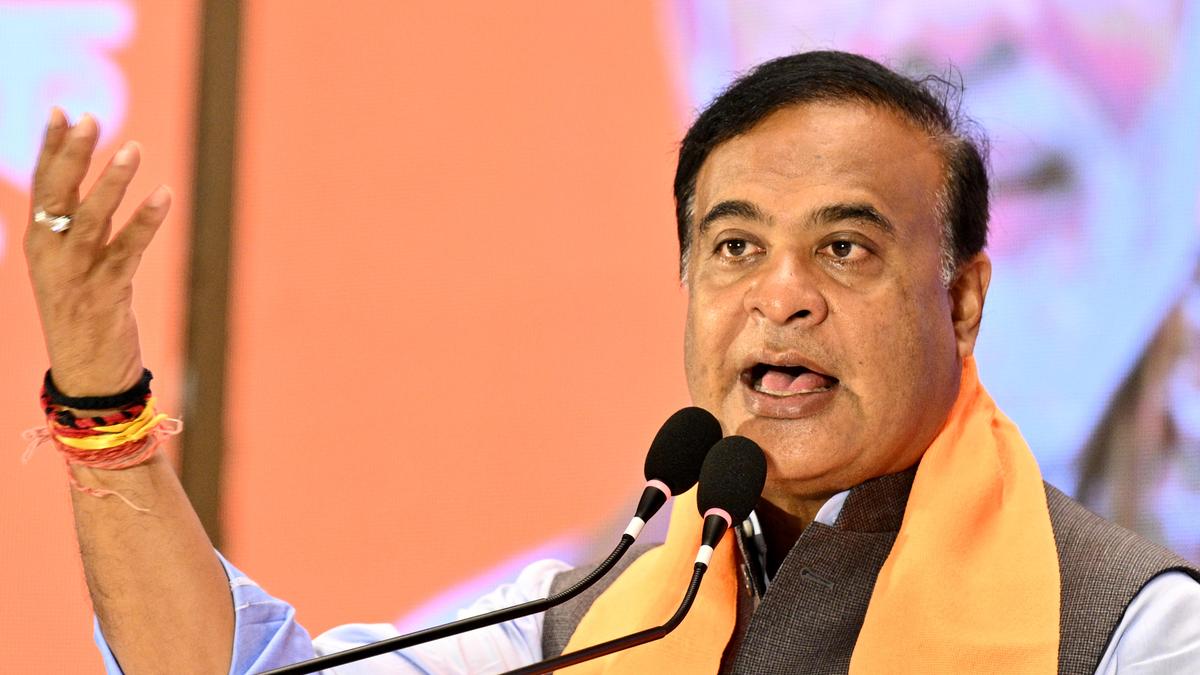
The BJP is leading in 80 seats in the 126-member Assam Assembly, signaling a landslide victory for CM Himanta Biswa Sarma. Stability remains the key takeaway.
The political landscape in Assam has shifted toward a decisive consolidation of power, with early counting trends from the 126-member Assembly indicating that the Bharatiya Janata Party is on track for a landslide victory. As of noon on Monday, the BJP was leading in approximately 80 constituencies, comfortably surpassing the 64-seat majority threshold required to form the government. This result signals a significant expansion of the party's influence compared to its 2021 performance, where it secured 60 seats independently. The current trajectory suggests that Chief Minister Himanta Biswa Sarma is not only retaining his position but is doing so with a mandate that strengthens his authority within the state.
The electoral outcome is defined by a sharp divergence in performance between the BJP and the Indian National Congress, which currently trails with 23 seats. The strength of the BJP’s position is most visible in urban centers and key strongholds. Chief Minister Sarma is leading his own constituency of Jalukbari by a margin exceeding 17,000 votes, a figure that underscores his personal political capital in the Guwahati region. Simultaneously, the BJP’s candidate in Dispur, Pradyot Bordoloi, has established a commanding lead of over 33,000 votes. These margins suggest that the party’s organizational machinery successfully translated campaign messaging into high-conviction voter turnout across diverse demographic belts.
Conversely, the opposition has faced a difficult cycle. The trailing performance of Congress state president Gaurav Gogoi, who is behind by approximately 13,900 votes in Jorhat, serves as a primary indicator of the party's inability to challenge the BJP’s momentum. While regional players like the Bodoland People’s Front and the Asom Gana Parishad are leading in 10 and 9 seats respectively, their influence remains secondary to the BJP’s dominant performance. For investors and analysts tracking regional political stability, this result minimizes the risk of a fractured mandate and suggests a continuation of current administrative policies.
A critical factor in this electoral result is the recent delimitation exercise conducted during Sarma’s tenure. By redrawing constituency boundaries, the state effectively rebalanced the electoral map, shifting influence toward upper Assam and tribal regions. This structural change is widely interpreted as a strategic move that diluted the electoral weight of Muslim-majority constituencies. The success of this strategy demonstrates how administrative policy can directly alter the political math of a state, creating a more favorable environment for the incumbent party.
Beyond structural changes, the campaign was characterized by a focus on identity politics and the rhetoric surrounding illegal immigration and land encroachment. By framing the election around these issues, the BJP successfully mobilized its core base. While opposition parties argued that this approach deepened social polarization, the electoral data suggests that the strategy was highly effective in securing a consolidated vote share. This outcome reinforces the importance of understanding how regional identity politics can act as a primary driver of legislative stability in India’s northeast.
For those monitoring the regional business environment, the BJP’s victory implies a period of policy continuity. The combination of welfare delivery and aggressive infrastructure development has been a hallmark of Sarma’s administration. With a stronger mandate, the government is likely to accelerate its existing economic agenda without the constraints of a narrow majority. This stability is often a prerequisite for long-term capital allocation in regional markets, as it reduces the likelihood of sudden shifts in land policy or state-level regulatory frameworks.
Investors should note that the current trends, while decisive, are based on mid-day counting patterns. A final confirmation of the results will provide clarity on the exact seat distribution among alliance partners, which could influence the internal power dynamics of the new cabinet. However, the core narrative remains unchanged: the BJP has successfully navigated a complex social landscape to secure a dominant position. This result mirrors broader trends in Indian state politics where strong regional leadership, combined with a clear ideological platform, continues to yield significant electoral dividends. For a broader view of how political shifts impact regional markets, readers can review our stock market analysis for context on how policy stability influences corporate growth trajectories. As the counting concludes, the focus will shift to the implementation of the next phase of the state’s development agenda under the renewed leadership of the BJP.
AI-drafted from named sources and checked against AlphaScala publishing rules before release. Direct quotes must match source text, low-information tables are removed, and thinner or higher-risk stories can be held for manual review.