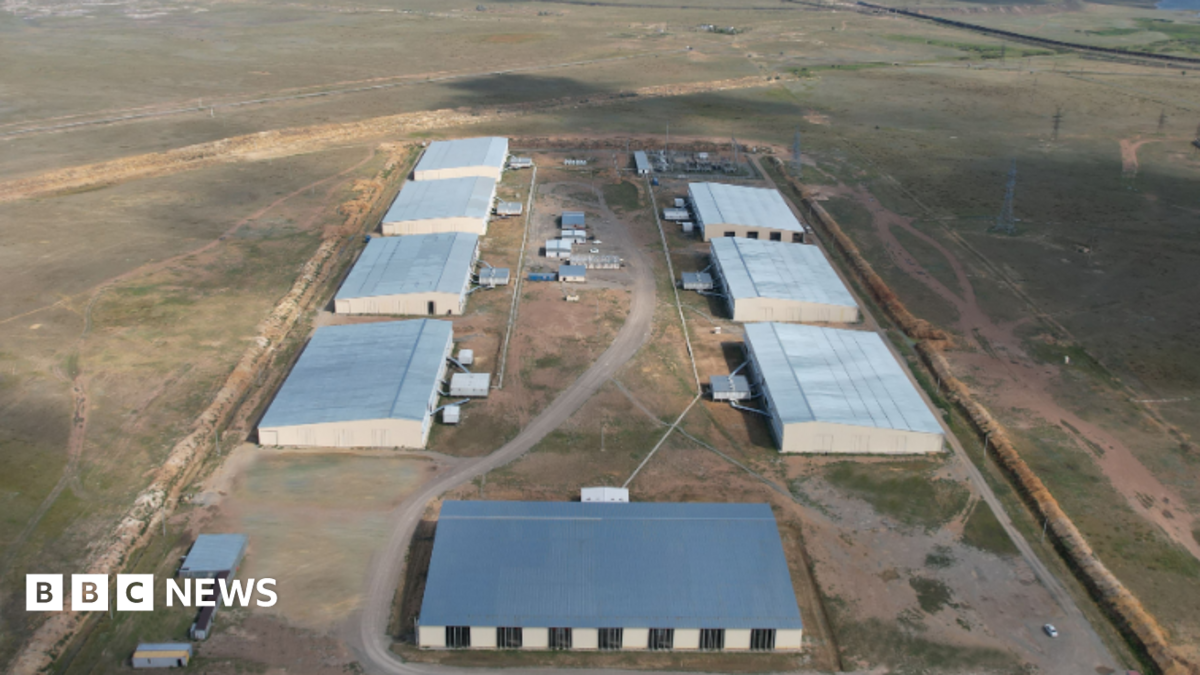
Bitcoin mining companies that once filled warehouses with computers to earn the cryptocurrency are now redirecting that computing power to artificial intelligence, signing large compute deals with AI firms.
Riot Platforms earlier this month signed a $9 billion, 20-year compute deal with Anthropic, one of several major agreements that illustrate the shift. Industry analysts say miners are pivoting because they have years of experience in finding cheap electricity and running large data centers efficiently.
"We expect to see many public miners continue winding down their Bitcoin mining hardware in the coming quarters," said Wolfie Zhao from The Energy Mag, a publication that rebranded from The Miner Mag to reflect the trend.
Bitcoin peaked at about $124,000 in October 2025 but has since fallen sharply. Recent price action brought it back to roughly $80,000, up almost 30% so far in August. But for companies that have already swapped hardware, even that rally may not be enough to reverse course, because the switch is expensive to undo.
TerraWulf, Ionic Digital, Core Scientific, Iris Energy, Bitdeer, Riot Platforms and Hut 8 are among the companies increasingly diverting investment and infrastructure from Bitcoin mining toward AI. Applied Blockchain renamed itself Applied Digital. TerraWulf's website once called itself an "infrastructure-focused bitcoin mining company"; it now focuses on "next-generation AI and high-performance computing."
Enegix, which opened a large Bitcoin mining site in Kazakhstan in 2020, is pivoting too. "Today, we are moving confidently towards artificial intelligence and planning the gradual alignment of our energy and infrastructure capabilities, both in Kazakhstan and elsewhere, towards the development of AI infrastructure," said chief executive Yerbolsyn Sarsenov.
Zhao said retrofitting crypto mines for AI is expensive, some companies have sold Bitcoin holdings to fund the switch, and the infrastructure commitment makes a return to crypto unlikely. "Once that multi-gigawatt power infrastructure has been retrofitted to AI or HPC colocation, there is no turning back," he said. "You can unplug from the Bitcoin network any time but signing a GPU colocation lease for 10 or 20 years means steady revenue and a commitment to keep the infrastructure up for the tenants."
Bitdeer, which claims to be the largest Bitcoin miner in the world, just announced a 16-year deal to provide compute for Anthropic. The company's chief strategy officer, Haris Basit, said Bitdeer will continue mining Bitcoin, expecting many operators to pursue a dual-purpose model. "Bitcoin mining is particularly well suited to that model because it is flexible and interruptible, while AI workloads can provide longer-duration contracted revenues," he said.
The broader crypto market analysis context shows the pivot is driven by economic realities: mining rewards have shrunk as Bitcoin's price dropped from its peak, and AI demand offers stable, long-term revenue. Zhao predicted the trend will persist even as Bitcoin has rallied in recent days, with many public miners continuing to phase out Bitcoin hardware.