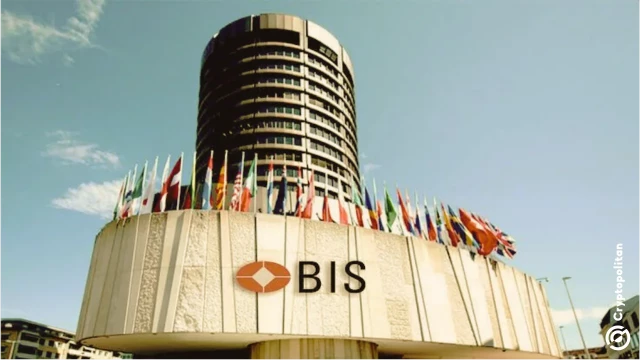
BIS report says $320B stablecoin market fails four money criteria, warns that dollar-pegged tokens drive 'stablecoin dollarization' in emerging economies.
The Bank for International Settlements released its 2026 Annual Economic Report with a clear verdict: dollar-backed stablecoins do not work as money.
The BIS evaluated stablecoins on four criteria it considers essential for anything that functions as money: singleness, elasticity, interoperability, and integrity. The report concluded that stablecoins fall short on all four.
Singleness means one unit always equals one unit of the underlying currency, regardless of the issuer. Stablecoins routinely drift from their $1 peg in secondary markets. Elasticity requires the supply to expand and contract with economic demand. Issuers mint tokens only after receiving cash deposits, which blocks flexible supply adjustment.
The BIS compared stablecoins to exchange-traded funds. “Stablecoins behave more like shares in an ETF instead of cash deposits,” the report said. That distinction matters for how they circulate and settle.
Over 99% of the roughly $320 billion stablecoin market is denominated in U.S. dollars, as of end of May 2026. Tether’s USDT and Circle’s USDC account for the bulk of that. A separate BIS research paper from May 5 put dollar dominance near 98%.
The concentration creates a structural problem for emerging economies. The BIS calls it “stablecoin dollarization” and warns it mirrors deposit dollarization from earlier crises, only faster, because crypto operates outside traditional banking infrastructure.
Turkey, Argentina, and Nigeria already see heavy stablecoin adoption, as citizens seek dollar exposure outside formal channels. Several emerging economies have imposed restrictions on cross-border stablecoin use. The BIS expressed skepticism about how well those controls can hold, since restrictions that work on bank deposits do not translate to self-custodial crypto tokens.
The BIS built a model that explored a scenario where the stablecoin market cap grows to between $1 trillion and $3 trillion. The net effect on economic output would still be “modestly negative,” the report said. As deposits leave banks for stablecoin issuers, who park reserves in U.S. Treasuries and money market funds, banks lose a cheap funding source. They would need to raise deposit rates, which increases lending costs and slows activity.
The BIS recommended building a “unified ledger” for central bank monies, combining tokenized central bank reserves with commercial bank money on a shared infrastructure. The report cited Project Agora, a cross-border payments prototype, as evidence that the unified approach is technically feasible.
The report also noted that stablecoins’ shortfall on the four criteria means they are unlikely to replace sovereign money in advanced economies. For now, the BIS sees them as a source of FX risk, not a monetary upgrade.
The report is the latest signal from the BIS that private crypto assets, even the pegged ones, do not meet the standards central banks expect from money. For traders, the key read-through is regulatory: if central bankers treat stablecoins as an FX stability threat rather than a payments innovation, the policy response will likely tighten around issuance and reserve backing, not around the blockchain itself.
Prepared with AlphaScala research tooling and grounded in primary market data: live prices, fundamentals, SEC filings, hedge-fund holdings, and insider activity. Each story is checked against AlphaScala publishing rules before release. Educational coverage, not personalized advice.