Binance launched U.S. stock trading on June 1, 2026, but its tokenized bStocks product remains pending FSRA approval. Kraken's xStocks is already live with 60 assets.
Binance started rolling out U.S. stock and ETF trading on June 1, 2026. The headline product, bStocks, is not yet live. That distinction matters for anyone tracking where the exchange is actually competing.
The June 1 launch gives Binance users brokerage-style access to over 7,000 U.S.-listed stocks and ETFs through a partnership with Alpaca, a regulated brokerage infrastructure provider. Fractional shares start at $5. The minimum platform fee is $0.35 per order. Users can buy with supported stablecoins or BNB.
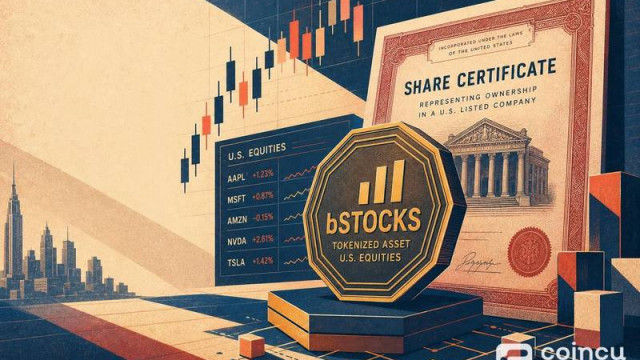
Phase two, the bStocks layer, is what Binance describes as tokenized certificates representing financial instruments. The announcement says bStocks will launch "in the coming weeks." They are classified under paragraph 92, Schedule 1 to FSMR, and issuance requires FSRA approval. Until that sign-off is confirmed, bStocks remains a planned product.
Shunyet Jan, a Binance executive, said "many users are looking for a more seamless way to access both digital assets and traditional financial products." Yoshi Yokokawa, CEO of Alpaca, said the launch "is an important example of how digital asset platforms are responding to user demand."
Binance is not first. Kraken already runs xStocks, a live tokenized-equities product with 24/5 trading, a $1 minimum, and 60 launch assets. Kraken also advertises self-custody options, a feature Binance has not detailed for bStocks.
The difference is scale. Kraken launched with 60 assets. Binance's underlying brokerage layer already supports over 7,000 instruments. If bStocks tokenizes a significant portion of that catalog, it would dwarf competing offerings in breadth.
Tokenized equities promise stock ownership on blockchain rails: fractional ownership, near-instant settlement, 24/7 trading. For crypto-native users, the appeal is consolidation – managing stocks and digital assets in a single interface. Traditional brokerage accounts require separate onboarding, bank connections, and often multi-day settlement.
Tokenized stocks are not the same as owning actual shares. The underlying structure typically involves a custodian or issuer holding the real shares while the token represents a claim on that position. That distinction carries implications for investor protections, dividend treatment, and what happens if the issuing platform faces insolvency.
Binance's bStocks have not been registered under the U.S. Securities Act of 1933 and are not offered to U.S. persons. Questions remain about the redemption mechanism – specifically whether bStocks holders can convert tokens back to underlying shares or only to cash equivalents. The custody structure, whether assets are held in segregated accounts, and the dispute resolution process have not been detailed.
The broader crypto market context adds another layer. The Fear and Greed Index sat at 9 (Extreme Fear) around the announcement period. Even significant product launches are landing in a cautious environment.
BNB, the native token of the Binance ecosystem, held a market capitalization of roughly $78.38 billion at the time of the announcement.
Prepared with AlphaScala research tooling and grounded in primary market data: live prices, fundamentals, SEC filings, hedge-fund holdings, and insider activity. Each story is checked against AlphaScala publishing rules before release. Educational coverage, not personalized advice.