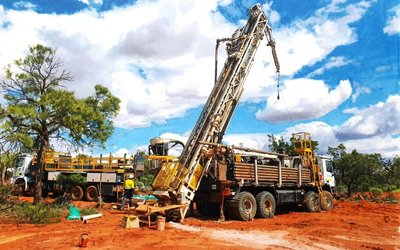
Barton Gold (ASX: BGD) reported high-grade assays from an expanded Phase 2 drilling campaign at its Tunkillia project in South Australia. The best intercepts came from the southern zone of the Area 223 open pit: 13 metres at 5.01 grams per tonne gold from 55 metres, including 3 metres at 15.8 g/t from 62 metres. Another hole returned 17 metres at 3.09 g/t, with a 1-metre interval at 36.9 g/t.
The results infill mineralisation in the S3 and South 1 pit stages, which are scheduled for mining in the middle and later years of the project. Managing director Alexander Scanlon said the assays are some of the highest grade received in that zone to date. The company has expanded its Phase 2 campaign to 40,000 metres, targeting further extensions and higher-grade upside.
For the resource model, these intercepts matter because they sit inside the optimised pit shell. Higher grades in the southern zone could lift the average grade of the later-stage feed and improve the project's overall economics. Barton's earlier Phase 1 results infilled the high-value S1 and S2 pits, which the company models to generate $1.3 billion in operating profit during the first 2.5 years of production, assuming $5,000 per ounce gold and a payback of less than 12 months.
The readthrough for other gold juniors is indirect but real. Tunkillia is one of the more advanced gold projects in South Australia, and successful infill drilling that confirms grade continuity reduces the risk profile for the whole region. If Barton can deliver a resource upgrade and a positive pre-feasibility study, it will strengthen the case for early-stage explorers in the Gawler Craton and the broader ASX gold space.
Barton is also advancing environmental surveys and technical studies for the tailings storage facility. It is evaluating renewable energy options to cut diesel costs. The next major milestones are the mineral resource upgrade and the pre-feasibility study, followed by the mining lease application. Scanlon said the company wants to complete the Phase 2 drilling quickly so it can move to those steps.
More assays from the southern zone are expected. The market will watch for the resource model update, which will determine whether Tunkillia can deliver the high-grade, early-production profile that the company's feasibility work assumes.