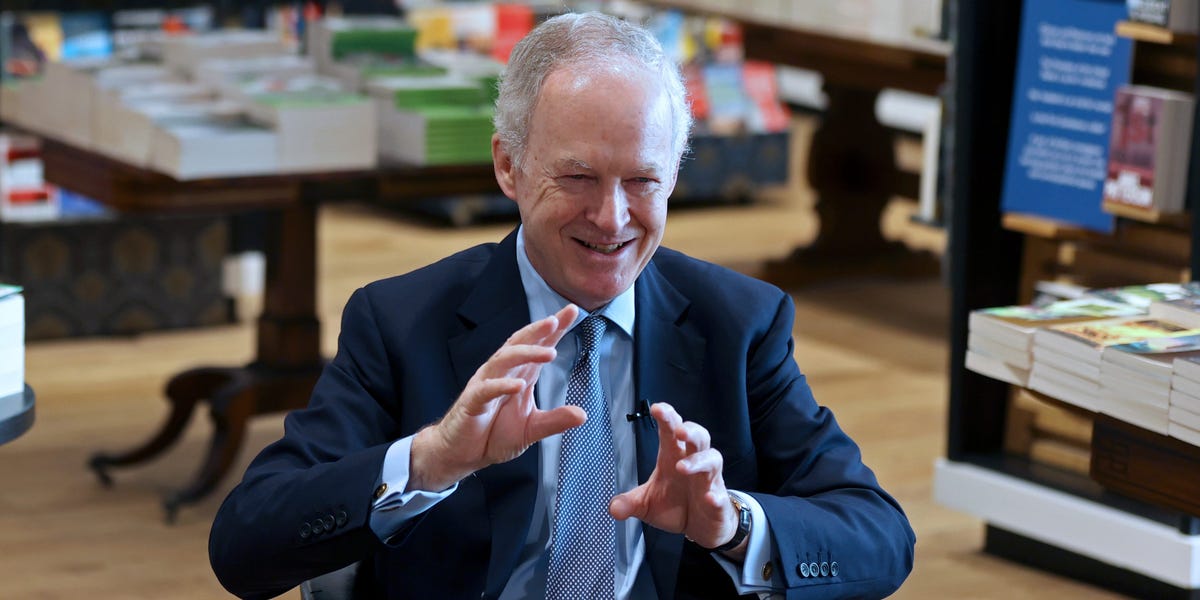
Barnes & Noble was down to under 600 locations in 2023. Last year it opened 57 stores. This year it plans another 60, the company said in a news release this week. The turnaround is the work of CEO James Daunt, who took over after Elliott Management acquired the chain for close to $700 million in 2019.
Daunt laid out his approach in a recent episode of the "Masters of Scale" podcast. He said the core problem was simple: "The bookstores weren't very good." The fix, he explained, has been a steady push to improve presentation, service, and assortment – year after year. But the bigger shift, he said, is about power.
"Almost everything I do is about flattening those hierarchies," Daunt said. He puts local booksellers in charge of what their stores carry and how they display it. That makes the work "much more engaging," he said, but also harder. "Often people resist it: 'We'd rather have the hierarchy, just tell me what to do, please.'"
Changing culture, he added, is like "stretching a rubber band. The minute you relax, it just pops back."
Daunt also pushed back on the idea that data should drive store decisions. "The data can occasionally be an interesting reference point," he said, "but it's the judgments you make almost in defiance of the data that will give you an inspiring store." Relying on centralized data, he argued, can "impose uniformity on the stores, and that really is the death knell for us." Instead, he wants local teams to trust their "gut instinct" when merchandising. He gave one example: a data-driven store allocated too many board books to parents who would rather read the same titles repeatedly, while shortchanging preteen readers who want variety.
Daunt noted that "booksellers and numbers tend to be sitting in opposite corners of the room." He said: "We are the nerds who read all our books, and when we got to the maths and science, just gave up."
Another element of his approach: don't dwell on mistakes. He prefers to "not look in the rear-view mirror," call something "idiotic," and move on. That, he said, encourages junior employees to challenge decisions and frees senior staff to change their minds.
Barnes & Noble has no marketing department and "zero marketing dollars to spend," Daunt said. Instead, it relies on young booksellers who use social media – especially TikTok's BookTok community – to spread word-of-mouth. "As long as we leave it to the kids with the blue hair, we'll be fine," he joked. Books that catch on in one store "just sort of spread like a rash through the business," he said, adding that the organic process has a valuable authenticity.
Daunt's decentralized model draws a clear parallel to Warren Buffett's approach at Berkshire Hathaway. The hedge fund that owns Barnes & Noble, Elliott Management, also holds a stake in Berkshire. The same principle – give local managers autonomy, don't punish errors – applies across both companies.
The results speak for themselves. Barnes & Noble opened more stores in 2024 than it did in the entire decade between 2009 and 2019. The chain is now on track for another 60 this year.