Banks push stablecoin plans as BIS questions their role
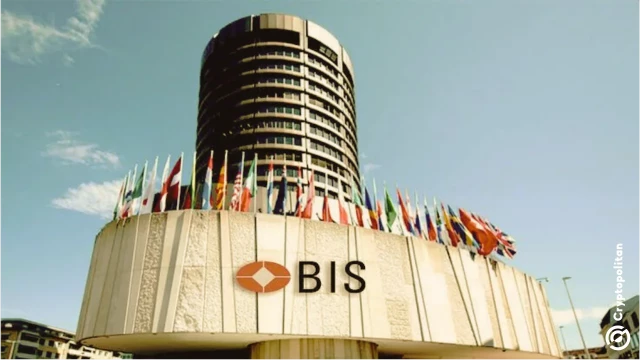
A dozen global banks including Bank of America and Wells Fargo are preparing a stablecoin on public blockchains, even as the BIS argues tokenized deposits offer a better foundation for digital payments.
Pablo Hernández de Cos, the BIS general manager, told the Jackson Hole Economic Symposium on August 28 that stablecoins fall short on two core properties of money: singleness and interoperability. A third issue is financial integrity, he said. A system built on tokenized deposits looks more promising. The same week, Forkast reported that a consortium of more than 12 banks, including Bank of America (BAC), Wells Fargo (WFC), Santander (SAN), Citi (C), Goldman Sachs (GS) and UBS (UBS), is preparing to issue its own stablecoin on public blockchains.
On singleness, de Cos gave a simple example. A person holding Tether's USDT who wants to send funds to a recipient who accepts Circle's USDC must first sell USDT and buy USDC. Because market prices fluctuate, the final value of the transfer may not equal one dollar. The system does not guarantee one-to-one exchangeability.
Interoperability presents a second problem. Most fiat-pegged stablecoins sit on fragmented public blockchains and scaling layers. Moving the same stablecoin from one chain to another requires complicated and sometimes costly procedures.
Tokenized deposits avoid that, de Cos argued. Settlement runs through central-bank accounts, preserving par redemption and finality.
Financial integrity is the third issue. De Cos said data shows most stablecoins now sit in self-custodied wallets, and a growing share of transfers move between wallets without any platform conducting know-your-customer checks. Traditional bank deposits, the least anonymous form of money, operate differently.
The BIS made a similar case in its Annual Economic Report on June 23, stating that existing stablecoin designs “fall short on foundational properties of money and threaten financial integrity.” The report also flagged “stablecoin dollarization” in emerging economies, where foreign stablecoins can affect capital flows and reduce monetary sovereignty.
A white paper published in January 2026 by Boston Consulting Group and blockchain data firm Allium found that public blockchains processed more than $62 trillion in stablecoin transfers over the previous year. Only about $4.2 trillion, roughly 7% of the total, reflected real economic activity. BCG estimated observable bilateral payments for goods and services in 2025 at $350 billion to $550 billion, which it called a minimum. Stablecoin market capitalization reached $307 billion in December 2025.
The BIS warnings have not stopped banks from moving on-chain. The GENIUS Act, signed into law July 18, 2025, allows banks to issue stablecoins through OCC-approved subsidiaries. It prohibits paying interest to holders. Bank of America CEO Brian Moynihan warned that as much as $6 trillion in deposits could leave banks if stablecoin issuers are allowed to offer yield. “If they make that legal, we'll go into that business,” he said.
Bank of America carries an Alpha Score of 65 (Moderate) on AlphaScala's BAC stock page. Wells Fargo scores 60 (Moderate) on its stock page. Both are among the largest participants in the consortium.
Smaller lenders are moving too. Cryptopolitan previously reported that 39 state bankers' associations formed the BankChain Alliance, targeting a 2027 launch. That initiative is designed to give community banks a shared route into tokenized deposits and stablecoins without depending on crypto-native platforms.
The BIS favors tokenized deposits for mainstream payments. A tokenized deposit is a claim on a commercial bank and stays inside the traditional deposit system. A stablecoin is a separate digital token designed to maintain a stable value, typically against the dollar. The BIS argues tokenized deposits preserve the existing monetary structure more effectively. JPMorgan has been active in the tokenized deposit space but has said it has no current plans to issue a stablecoin.
The Seoul Economic Daily reported the consortium is considering a dollar-pegged token initially, with expansion to G7 currencies. No launch date has been set. The BankChain Alliance targets 2027.
Drafted by a large language model from the source reporting linked above, then screened by automated publishing checks. It is not read by a journalist before publication. Some articles cite our Alpha Score. Verify prices and figures against the original source. Educational coverage, not personalized advice.