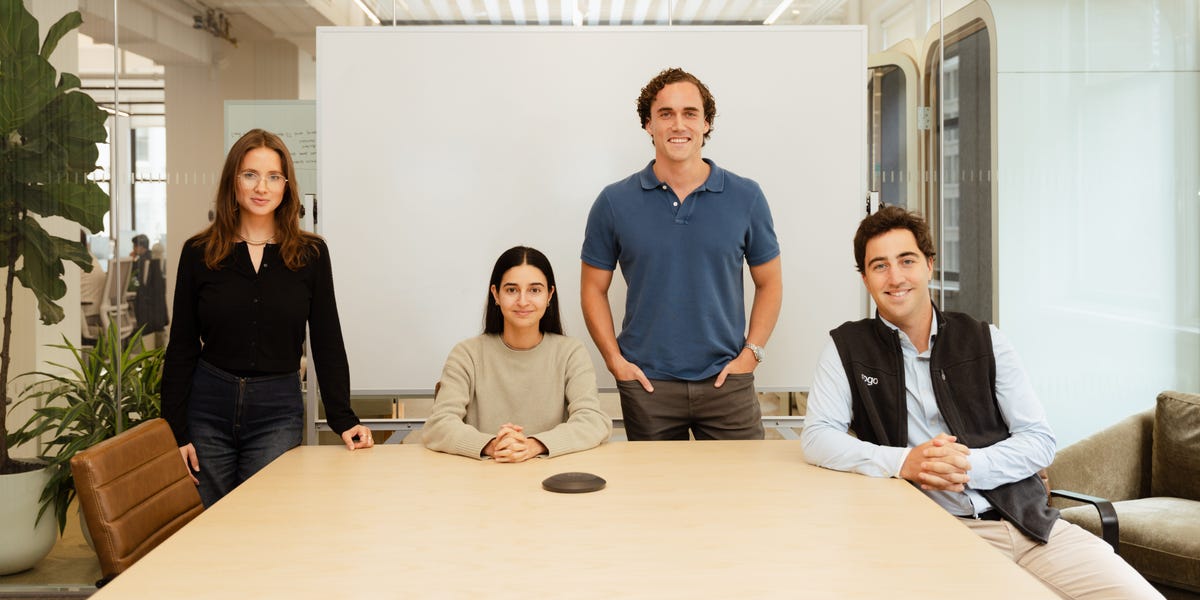
Wall Street's junior career path is sprouting a new fork. A small number of young bankers are leaving finance to join AI startups that sell automation tools back to the firms they left, and the flow has picked up sharply this year.
Jared Swansen, 27, made the leap in January. After three years at Bank of America and a stint at a small buy-side firm, he joined Rogo, a startup that builds AI for dealmaking. He has already forgotten the Excel shortcuts he used daily. Now his hours go to phone calls with former colleagues, showing them how to automate slide decks and research.
"The holy grail was to go to the buy side. That was everyone's dream," he said. "The AI wave was impossible to ignore."
Rogo was founded in 2021 by former Lazard and JPMorgan investment bankers in their twenties. It hit a $2 billion valuation after its Series D round in April. The workforce splits between engineers and former financiers. LinkedIn profiles show alumni of Evercore, Goldman Sachs, and Citi. The company counts Lazard, Moelis, and Tiger Global among more than 300 clients. Its AI agent, Felix, takes email instructions the way a colleague would, automating slide decks and model building.
Rogo's leadership said it does not expect or want all bankers to defect en masse; that would erode the client base. Recruiters in finance say they are not seeing a mass exodus, the AI option has become more attractive for the entrepreneurially minded. "It comes down to how common and how broad-based this is. It's hard to quantify," said Anthony Keizner, co-founder of recruiting firm Odyssey Search Partners.
Competitors are growing just as fast. Hebbia, founded in 2020, serves investing, banking, and law firms. It has around 200 employees, up from about 100 a year ago. Tom Navin, the head of people, said monthly inbound applications have nearly tripled this year to an average of 7,000. About 60% of employees come from finance. Large AI labs, including Anthropic and OpenAI, are also hiring bankers to build financial services.
Rogo is a tech-finance mashup. Former bankers wear jeans and eat free lunch. Engineers grind in conference rooms named "Dimon" and "Soros." Asked whether they work at a finance or tech company, four employees paused before Elsa McLean, head of talent, settled on "an AI company." McLean, 30, said she no longer has to explain what Rogo does to recruits. Inbound applications have surged since the first half of this year. Headcount has doubled to more than 150, with plans to double again within 12 months. Offices in New York and London are set to be joined by San Francisco and Singapore.
Rachel Friedman, 27, joined Rogo as one of eight employees and the first woman, after more than two years as an investment banker at Jefferies. She knew she did not want to stay in finance. For her, Rogo was about joining a fast-paced place where she could play any part, with the perk of swapping trousers for sweatpants. Starting at Rogo now, with big-name investors and global offices, is not the same gamble it was. "My impression is that the risk profile of candidates has pretty significantly changed over time," she said. "Now, everyone is comfortable with the idea that every financial institution will adopt AI. The risk is around betting on the right one."
Swansen said that by the time he joined, "it felt like probably the bigger risk was doing nothing when the whole world was changing."
Working at Rogo is not all that different from a top financial firm. Cumulative hours are similar, though employees generally control when they work. "I work a lot. I'm never scared at 6 p.m. on a Friday that something is going to blow up and destroy my weekend," Swansen said. Friedman, his boss, worries he works too much; he is usually up until 1 a.m.
Former financiers lean on old connections to win clients. Jack Maroni, 27, an MBA intern who spent four years at KKR before Harvard Business School, said he has introduced Rogo to friends still on the buy side. Swansen said his banking and private equity background is key to keeping clients happy. The work ethic carries over; many came from 80-hour weeks and, to quote Maroni, "built the muscle around grinding."
The paycheck is a different story. A "forward-deployed banker" in New York earns a base salary between $115,000 and $180,000 plus potential equity and bonus, according to a Rogo job posting. Candidates need at least three years of investment banking experience at a top firm. Rogo declined to provide details on pay packages. Second-year associates at top firms can make up to $400,000 all-in, said Meridith Dennes, managing partner at Prospect Rock Partners. This year is especially profitable, with banks reporting record profits. None of the recruiters said they have seen hordes of young people quit over AI anxiety. Banking is, Dennes said, "always going to be a stable choice."
"It is challenging to try and pull the top investment banker who's being paid an incredibly high bonus, being well taken care of. It's going to be really difficult to pull that person out unless they have a real passion for AI," said Brianne Sterling, who leads the investment banking practice at recruiting firm Selby Jennings.
Equity is the open question. Keizner said cash compensation alone probably will not lure people to startups like Rogo, an equity grant in a company that succeeds could be "as lucrative, if not more lucrative, than being on a traditional finance path." Navin at Hebbia said compensation packages require "a very different framing mentally" for former bankers used to cash. Hebbia offers bonuses for forward-deployed banking and investing roles, they are "a lot smaller" than in traditional finance, partly because of the equity component.
Friedman said people struggle most with giving up the structure of finance: knowing what it means to do well, what the promotion path looks like, exactly how pay will change over the years. "Convincing them that it'll be okay in a place where there's far less structure and your path might look different than your neighbor's, having that conversation with folks, some people definitely have to get over that mental barrier that unstructured things can be good," she said.