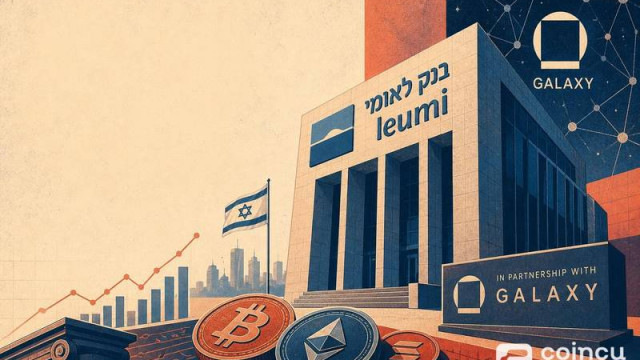
Bank Leumi, Israel’s largest bank, plans to let customers trade Bitcoin, Ether, and Solana through its own app, using Galaxy’s infrastructure. The partnership, announced Aug. 14, 2026, makes Leumi the first Israeli bank to offer direct digital-asset trading, the two companies said.
The service will live inside Leumi Trade, the bank’s capital markets application. Galaxy handles the backend – trading execution and custody through GalaxyOne Institutional and its GK8 custody platform. Customers never leave the banking interface, which is the selling point: a regulated path into crypto without opening an offshore exchange account, according to the companies.
Maya Ravia, a Leumi executive involved in the partnership, said the goal is to give customers simple and secure access, with regulatory oversight. The structure places compliance and asset safekeeping on institutional-grade rails while the bank controls identity and user experience.
Supported assets at launch are Bitcoin and Ether, plus Solana. The service targets early 2027. Leumi and its digital arm PEPPER customers will be eligible, though full onboarding criteria are not yet detailed.
Being first in Israel sets a competitive marker. If the rollout succeeds, other Israeli banks will face pressure to offer similar integration rather than cede the segment to standalone platforms. The move aligns with broader trends in institutional adoption where traditional finance and crypto infrastructure converge, as Scaramucci recently noted in discussing how crypto adoption becomes invisible.
The announcement landed during a cautious session. Bitcoin traded at $62,984, down slightly over 24 hours, with Ether at $1,875.71 and Solana at $75.10, according to CoinMarketCap data. The Fear and Greed Index sat at 29, in Fear territory, signaling a guarded market rather than a euphoric reaction.
Several open questions remain. The companies did not disclose customer fees, trading limits, or custody specifics. No separate Israeli regulatory approval document or fee schedule accompanied the announcement. The “regulated access” framing rests on the bank’s existing licensing and Galaxy’s infrastructure, not a newly published rulebook.
The clearest near-term marker is timing. The service is expected to go live in early 2027, leaving a multi-month window before customers can trade. That date, and the eventual fee structure, will determine whether Leumi becomes a template for bank-integrated crypto in Israel.