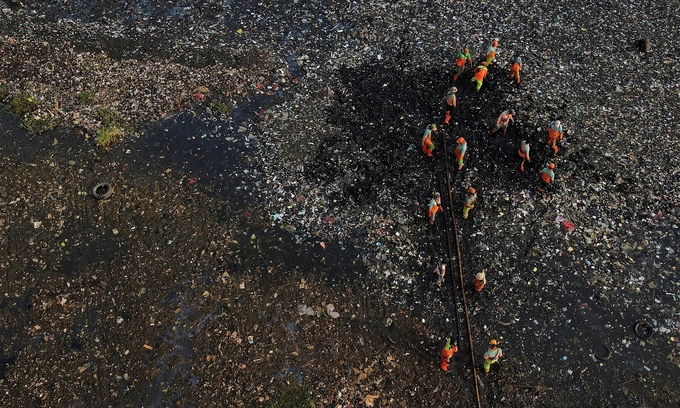
Indonesia has broken ground on a waste-to-energy plant on Bali, the island named the world's best destination by Tripadvisor for 2026. The facility, located in the Denpasar Raya area, is designed to process more than 500,000 tonnes of household waste annually. It will generate enough electricity to supply roughly 100,000 households across the island.
Pandu Sjahrir, Chief Investment Officer of Indonesia's sovereign wealth fund Danantara Indonesia, said at the groundbreaking ceremony that the plant is expected to reduce landfill waste by up to 80%. He added that it would cut carbon dioxide emissions by around 640,000 tonnes each year and create about 1,200 green jobs in construction, operations, and waste-management services.
Bali Governor Wayan Koster said construction is expected to finish within two years. He stressed that environmental protection is crucial to the island's economy, which relies heavily on tourism. The project, he argued, will help strengthen Bali's reputation as a cleaner and more sustainable destination for international visitors.
Indonesia's Minister of Environment Mohammad Jumhur Hidayat said the Bali project could serve as a model for other provinces. Some regions might generate electricity from waste, he noted, while others could produce refuse-derived fuel for industrial use, depending on local conditions.
The project comes as rapid tourism growth, urbanization, and a rising population have driven increasing volumes of municipal waste on the island. Bali was named the world's best destination this year as part of Tripadvisor's 2026 Travelers' Choice Awards: Best of the Best Destinations.
For investors tracking waste management and renewable energy, the plant's scale signals a potential shift in Indonesia's approach to municipal waste. At 500,000 tonnes per year, the facility is comparable to mid-sized European waste-to-energy plants. If the Bali model is replicated across other provinces, a pipeline of infrastructure contracts could open for engineering, procurement, and construction firms, as well as equipment suppliers specializing in waste processing and power generation.
The read-through for listed companies is indirect at this stage. No publicly traded Indonesian firm has been named as contractor or operator. Still, the project's size and the government's stated intent to use it as a template suggest that companies with proven waste-to-energy technology or operational experience in Southeast Asia could be positioned for future tenders.
Waste Management Inc. (WM), with an Alpha Score of 52 and a Mixed label, operates in the same broad sector but has no disclosed exposure to Indonesia. The stock page for WM is here. Broader stock market analysis on the industrials sector may help frame how infrastructure spending in emerging markets affects North American waste and energy firms.