Amazon (AMZN) stock surged 15.32% to $271.58 on July 31, a day after the company reported second-quarter earnings. The stock is up 17.66% year to date, roughly double the SPDR S&P 500 ETF's (SPY) 9.55% gain over the same stretch.
The headline numbers look strong. Revenue hit $200.6 billion, up 20% from a year earlier. Net income rose 244% to $62.6 billion. Morgan Stanley analyst Brian Nowak lifted his price target to $335 from $330 and reiterated an overweight rating, based on a 25x multiple.
But the net income figure comes with a caveat Amazon itself disclosed. Q2 net income includes $53.4 billion in non-operating pre-tax other income, primarily from the company's investments in Anthropic. That is a mark-to-model gain on a private company, not cash. The valuation may or may not be realizable, and the distinction matters for how investors should read the earnings.
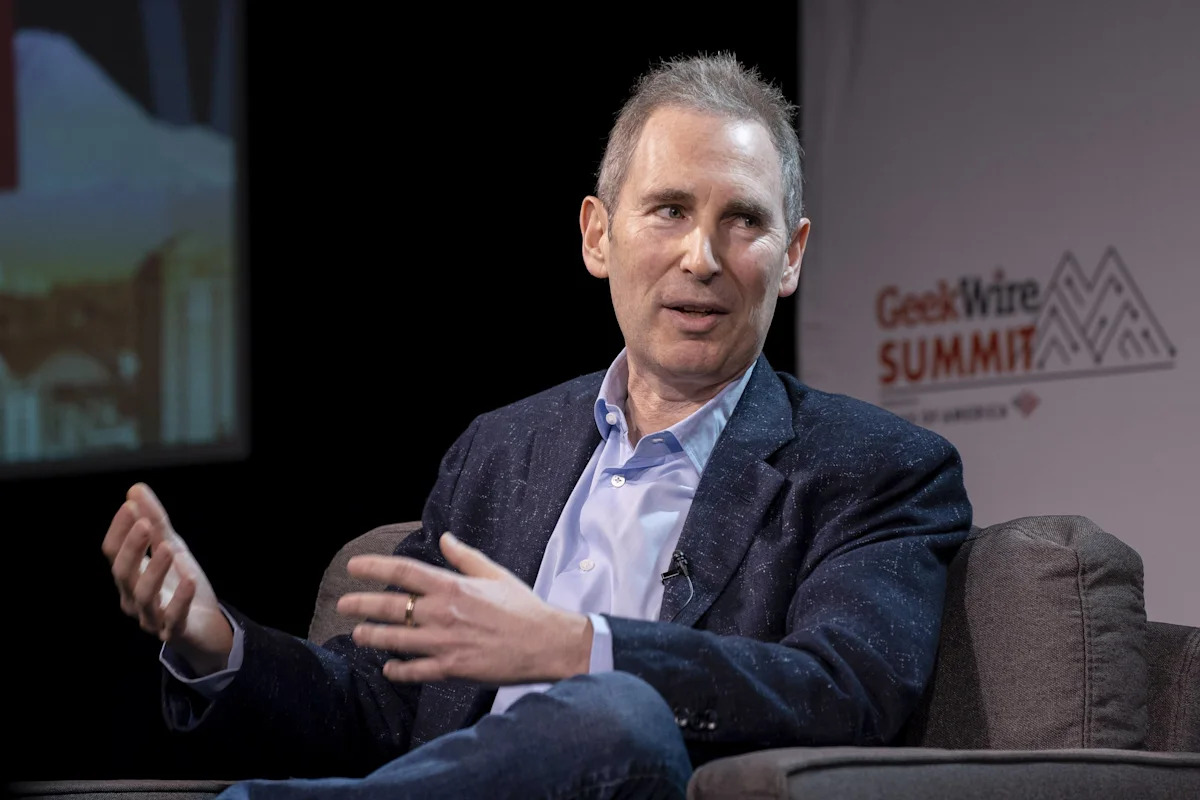
CEO Andy Jassy told analysts on the earnings call that capital expenditures are climbing faster than expected. "We now believe we will spend approximately $220 billion in cash CapEx in 2026. The higher cost of memory [is] pushing this number up from our prior estimate of about $200 billion," Jassy said. "Even at that amount, we will still not have enough capacity to meet all the demand we have in 2026, and I believe this dynamic will also be true in 2027."
The spending is already weighing on free cash flow. Q2 free cash flow was negative $7.6 billion, a sharp swing from positive $1.2 billion in Q1 and $18.2 billion in the same quarter last year.
Amazon also disclosed a new commitment to OpenAI. "Subsequent to June 30, 2026, we invested the remaining $21.3 billion Commitment Amount in shares of Series C Preferred Stock of OpenAI," the company said. The Financial Times reported the final tranche closed in the last week of July.
Nowak's bull case rests on AWS, which he called in pole position for generative AI adoption. AWS revenue grew 36.8% year over year, an 840-basis-point acceleration. The team raised their 2027 AWS revenue estimate to 41% year-over-year growth and bumped 2027 EPS estimates by 2%. They noted AWS's backlog of $496 billion was about $20 billion better than expected, calling it a signal of multi-year growth.
But the thesis has a blind spot. Two of the main drivers of AWS growth are OpenAI and Anthropic, both unprofitable companies funded by Amazon. The more Amazon invests in them, the more they spend on AWS capacity. That circular flow looks strong until one of them runs into funding trouble.
There are signs that trouble is already surfacing. SoftBank has been trying to secure a $10 billion loan using its OpenAI shares as collateral. Bloomberg reported that SoftBank reduced the request to $6 billion, but talks still stalled. That suggests private valuations for OpenAI are not translating into credit-market acceptance.
The Wall Street Journal reported that Nvidia is in talks to provide roughly a $250 billion backstop for OpenAI's data-center project, which would be built by SoftBank Energy. The structure points to a basic problem: both OpenAI and Anthropic need more money and more capacity, and the capital markets are not eager to lend against their equity.
Meta is also exploring an entry into cloud infrastructure. Bloomberg reported that the company is developing a plan to sell excess AI capacity. CEO Mark Zuckerberg said on Meta's Q2 call, "We're getting a lot of offers for compute at a significant premium over what we paid for it." If Meta launches a competing hyperscaler service, a price war could squeeze AWS margins and undermine the Rule of 70 framework Nowak cited.
Morgan Stanley's bear case pegs a price target of $215, implying roughly 21% downside from current levels.
Of the 59 analysts covering Amazon, 56 rate it a buy and three rate it a hold, according to MarketBeat. The average price target is $322.12.
The core question is whether AWS growth can sustain its current trajectory without continued capital injections into its largest customers. The earnings report showed a business that is growing fast and spending faster. The next few quarters will test whether the funding chain holds together.