Back to Markets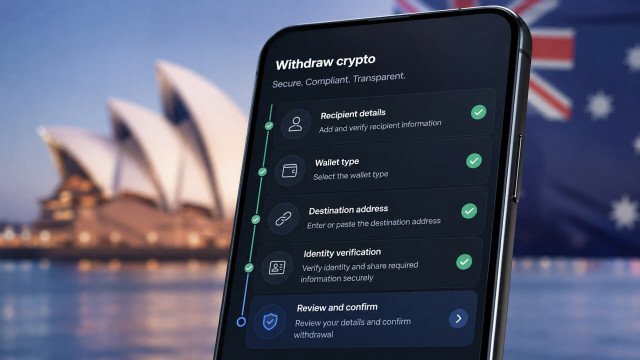
Crypto● Neutral
Australia Travel Rule: No Small-Transfer Carve-Out Hits Exchange Withdrawals
AUSTRAC's July 1 deadline eliminates small-transfer exemptions. Self-custody remains private, but exchange withdrawals now require wallet classification, identity checks, and counterparty validation at any amount.
Continue with
Australia’s July 1 AML/CTF deadline changed how regulated crypto transfers work. The change is not about holding or moving assets in self-custody – that still works. The friction hits when funds pass through an exchange or any reporting entity.
AUSTRAC’s transitional rules deferred some obligations until July 1, 2026 for new services. That runway is closed for existing providers. From July 1, a transfer instruction triggers more than a blockchain send. Identity collection and verification, wallet classification, counterparty checks, secure message routing, and record-keeping may all be required before assets move or become available.
No small-transfer carve-out
The sharpest user-facing detail is the absence of a minimum threshold. AUSTRAC’s guidance on when the Travel Rule does not apply states there is no minimum amount for a value transfer. The rule covers international or domestic transfers of any size unless a specific exception applies. Crypto users often expect extra checks only for large withdrawals or suspicious flows. Australia’s framework does not work that way. The key question is whether a reporting entity provides a covered value-transfer service – not how much is moving.
For users, that can mean more prompts, more required recipient or wallet information, and more delays when an exchange needs to classify a destination or resolve missing data. For exchanges, even routine transfers now need systems that consistently collect and route information, rather than relying on manual reviews for higher-value activity.
Self-custody at the exchange boundary
AUSTRAC’s virtual-asset guidance includes specific rules for self-hosted wallets. A transfer to a self-hosted wallet is exempt from sending Travel Rule information to another business in the transfer chain. But (this is a rare use of