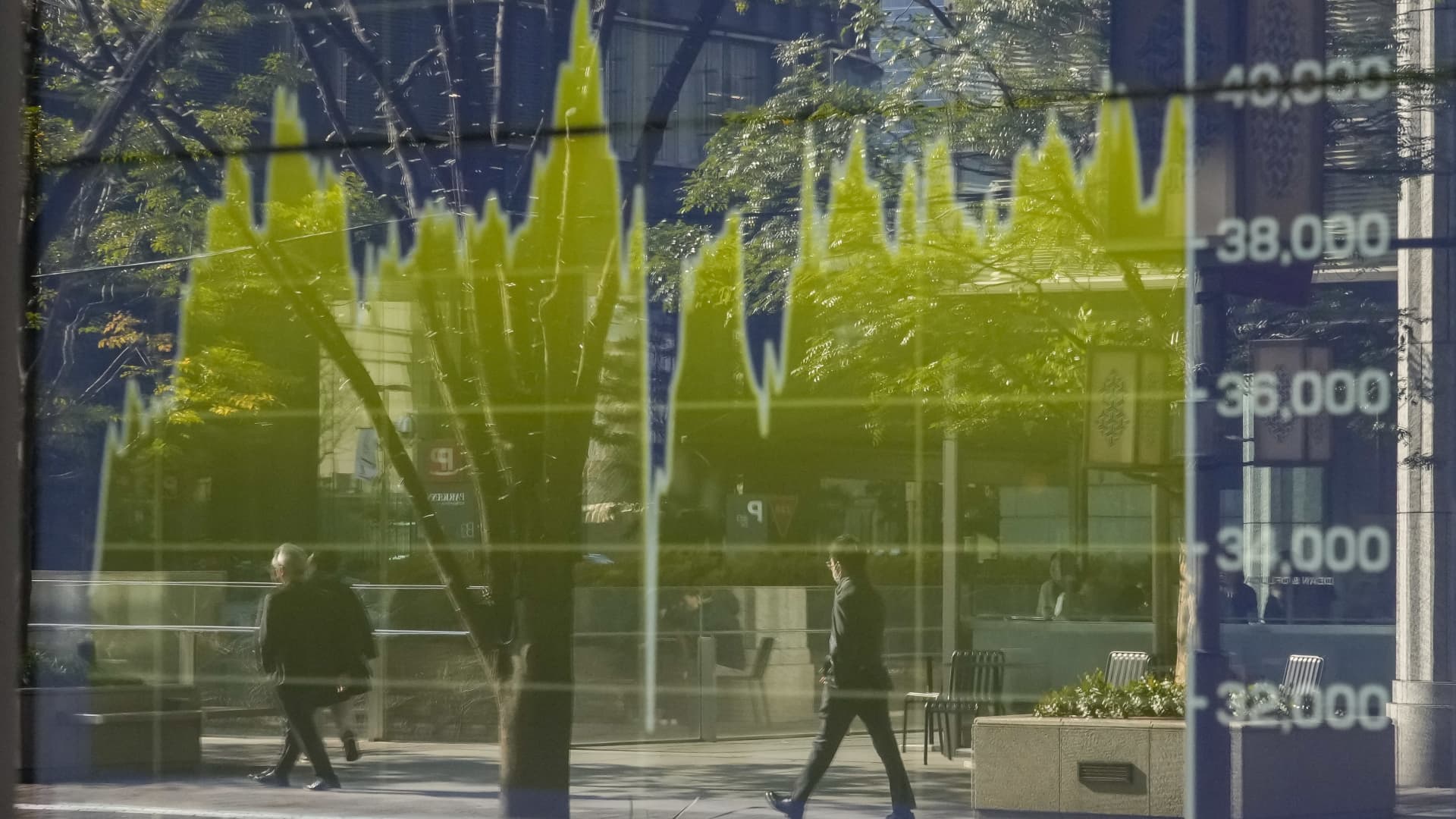
A Cautious Relief Rally for Asian Equities
Asian markets are positioned for a positive opening session as investors digest the implications of a fragile ceasefire agreement between the United States and Iran. The de-escalation of hostilities, which had previously sent shockwaves through global risk assets, appears to have provided a temporary floor for sentiment, allowing regional equity indices to recalibrate after a period of heightened volatility.
Market participants are closely tracking the Nikkei 225 as a primary bellwether for regional performance. Data from the Chicago Mercantile Exchange (CME) shows the Nikkei futures contract trading at 56,735, while the Osaka Exchange (OSE) equivalent is tracking slightly higher at 57,000. This disparity between the Chicago and Osaka prints often suggests a slight arbitrage-driven adjustment as traders account for overnight liquidity flows and the shifting risk premium associated with Middle Eastern stability.
Geopolitical Context and Market Sentiment
The recent cooling of tensions follows a period of extreme uncertainty regarding potential military escalation. For traders, the primary concern has been the stability of energy supply chains and the potential for a spike in crude oil prices, which historically acts as a significant headwind for the Japanese economy—a major oil importer. While the ceasefire is described as 'fragile,' the mere avoidance of immediate kinetic conflict is being viewed by institutional desks as a 'buy the dip' signal for regional indices that were previously oversold on fear.
However, the market remains fragile. In professional trading circles, the focus has shifted from panic-driven hedging to assessing the sustainability of this current peace. Traders are cautioned that while the immediate threat of a wider regional war has receded, the underlying geopolitical friction remains unresolved, keeping the 'war premium' in commodities and safe-haven assets elevated above historical norms.
Implications for Traders
The divergence in Nikkei futures pricing—between the 56,735 level in Chicago and the 57,000 level in Osaka—is a critical metric for intraday participants. This 265-point spread often reflects the difference in participation levels between Western institutional desks and domestic Japanese investors. Traders should watch for the convergence of these prices shortly after the Tokyo open, as this typically signals the stabilization of the index.
For those monitoring broader Asian indices, the focus will be on whether the Nikkei can sustain its momentum above the 57,000 handle. A failure to hold this level could suggest that the relief rally is purely tactical rather than structural, potentially inviting a retest of lower support levels if headlines surrounding the U.S.-Iran situation turn negative once more.
Looking Ahead: What to Watch
As the trading week progresses, investors should prioritize three key areas:
- Energy Volatility: Any sudden moves in WTI or Brent crude oil will likely act as a leading indicator for equity volatility.
- Currency Sensitivity: The Yen’s reaction to the risk-on move will be crucial. A strengthening Yen could cap gains for export-heavy Japanese firms, despite the overall positive sentiment.
- Diplomatic Updates: Given the 'fragile' nature of the current deal, any breakdown in communication between Washington and Tehran will likely trigger a rapid reversal in sentiment, making tight stop-loss management essential in the current environment.
For now, the outlook is cautiously optimistic, with the market pivoting from a defensive posture to a tactical recovery phase. Traders are encouraged to remain vigilant, as geopolitical catalysts remain binary in nature, capable of overriding technical setups on short notice.