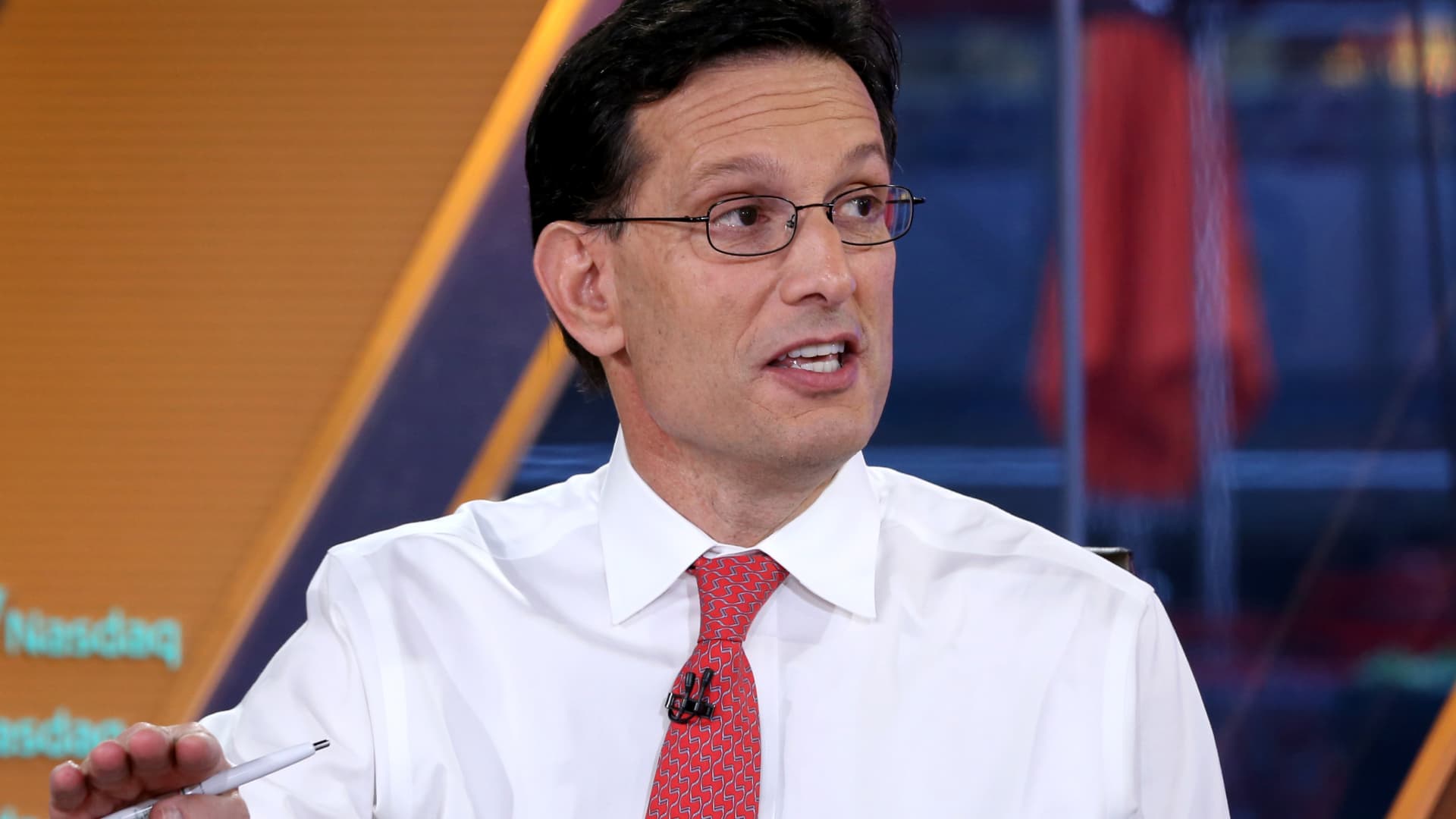
Eric Cantor, the former House majority leader turned Moelis & Company vice chairman, told CNBC that Asian investors are brushing aside the Trump administration's combative trade rhetoric. They keep directing capital into the U.S. because the country still offers the legal protections of the rule of law.
"I do think that most of the countries in Southeast Asia... North Asia and Japan, Korea, they want to be a partner, they want to invest in the United States," Cantor said on "Squawk Box Asia." He added that investors recognize the opacity in China makes it hard for businesses to operate there.
Singapore is a case in point. The city-state faces U.S. baseline tariffs despite running a trade deficit with Washington. Yet Deputy Prime Minister Gan Kim Yong said the U.S. is Singapore's largest foreign investor, with about 6,000 American companies on the ground. U.S. investment in Singapore nearly doubled from S$292 billion in 2018 to S$574 billion in 2022.
Cantor said Singapore investors remain focused on maintaining dialogue with the Trump administration and filtering out the political noise. The same dynamic plays across the region.
On the U.S.-China trade relationship, Cantor pointed to the lessons from Covid – the American realization that critical supply chains had become dangerously dependent on a single source. "That has fueled a broader reassessment of U.S. reliance on China and other foreign suppliers for critical goods," he said. The back-and-forth over high-performance chips and rare earths is part of that recalibration.
Cantor also weighed in on the midterm elections. He expects the Republican Party to keep control of the House of Representatives in November. Republicans hold a 217–212 majority, though opinion polls show a 55.3% unfavorable rating for the party. The deciding factor, Cantor said, is turnout among low-propensity voters who have been drawn to Trump.
Asian investors looking to build U.S. exposure can track structural themes like the supply-chain pivot and regulatory stability. For broader context on equity market trends, see our stock market analysis.