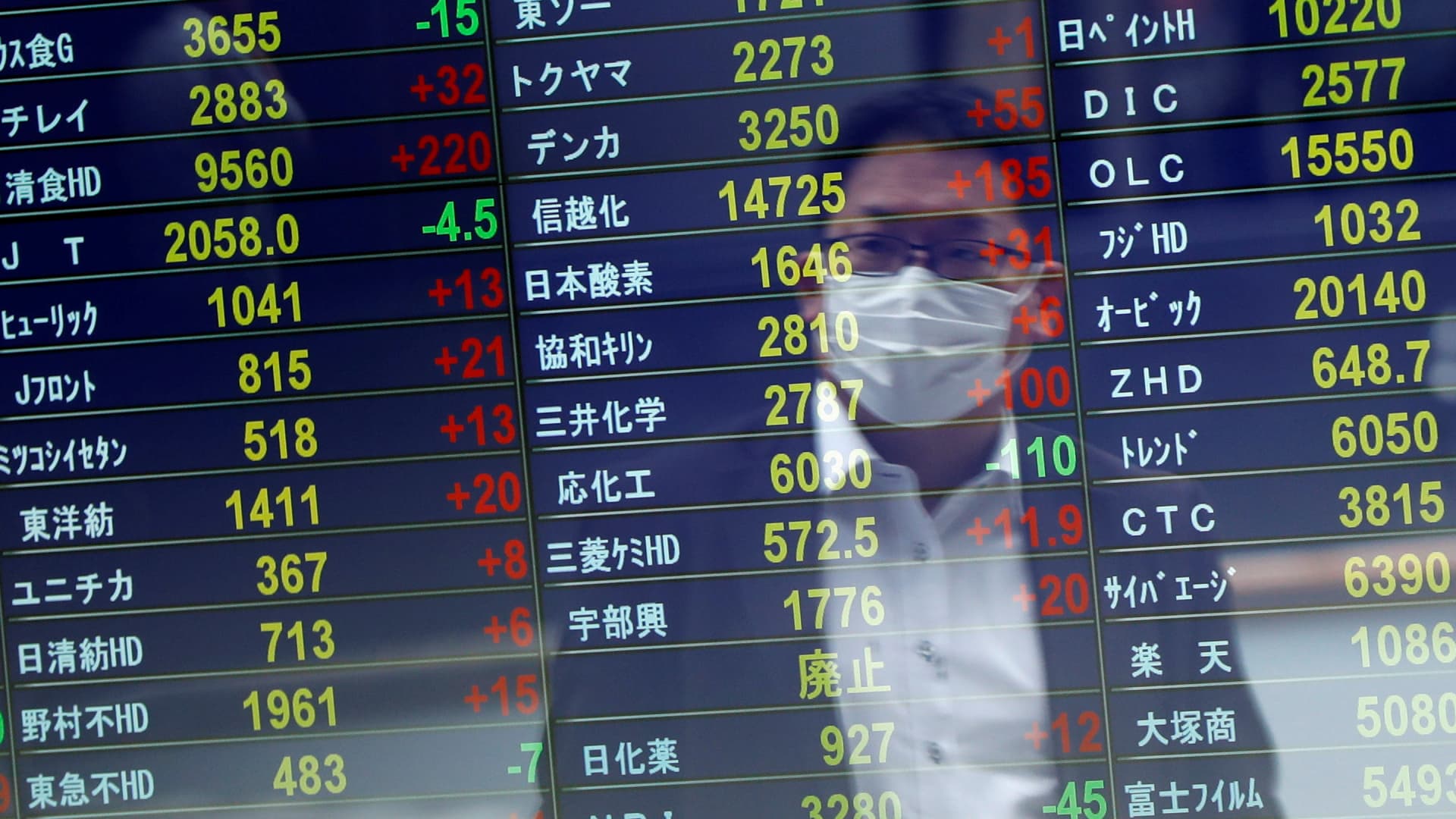
Asia-Pacific equity indexes opened broadly lower Wednesday, with South Korea’s Kospi losing 2.15%, after a hotter-than-expected U.S. inflation reading for April and fresh threats of U.S. military strikes on Iran revived two separate risk channels simultaneously.
- South Korea's Kospi: -2.15%
- Japan's Nikkei 225: -0.52%
- Australia's ASX: -0.56%
- Hong Kong Hang Seng futures: 26,264 (below last close of 26,347.91)
Japan’s broader Topix added 0.28%. The overnight slide followed a U.S. session in which the S&P 500 slipped 0.16% and the Nasdaq Composite lost 0.71%. The Dow Jones Industrial Average added 56.09 points, or 0.11%. U.S. futures were near flat early Wednesday. Crude oil, the common thread linking the Iran risk to the inflation read, edged lower overnight. West Texas Intermediate for June delivery was down 0.51% at $101.66 per barrel, while Brent crude for July fell 0.57% to $107.16. The decline did little to ease the pressure that triple-digit oil exerts on Asian net-importers.
Oil and Iran Tensions Resurface as Ceasefire Falters
President Donald Trump on Monday called the month-old U.S.-Iran ceasefire “unbelievably weak” and on “massive life support” after rejecting a counterproposal from Tehran. Defense Secretary Pete Hegseth then stated that Trump does not need congressional approval to restart strikes, a comment that landed after the administration passed the 60-day threshold that triggers federal war powers review.
The direct transmission runs through crude supply expectations. Renewed strikes would threaten production and transit around the Strait of Hormuz. The reaction in oil prices was oddly muted – Brent at $107.16 is still roughly 12% above the late-March trough – implying the market had not fully discounted a durable ceasefire. The Asia equity reaction, measured by the Kospi’s 2.15% drop, priced a sharper shock. South Korea imports virtually all of its crude oil. A sustained supply disruption would widen the country’s import bill, weaken the won, and trigger foreign outflows from an equity market already sensitive to global risk appetite. That transmission is not just “risk-off.” It is a terms-of-trade story that makes the Kospi a more direct proxy for oil supply risk than most indices. The Kosdaq’s smaller 0.74% decline suggests large-cap exporters bore the brunt, consistent with a macro deleveraging rather than a domestic panic.
Inflation Surprise Pressures Rate-Sensitive Equities
The April inflation print undercut expectations for a near-term rate pivot. The Nasdaq had already dropped 0.71% on Tuesday, and S&P 500 futures stalled near the flatline. In Asia, the transmission followed the classic playbook: a reacceleration in U.S. consumer prices pushes back the timeline for Federal Reserve rate cuts, lifts the dollar, and tightens financial conditions globally. Markets with heavy foreign portfolio investment, particularly South Korea and Taiwan, tend to leak capital first when the dollar strengthens on rate repricing. The Kospi’s leverage to technology exporters amplifies the move because higher rates hit growth stocks most directly. The Nikkei 225 held up better, falling only 0.52%, helped by the Topix’s 0.28% gain, suggesting domestic-oriented shares found support from a weaker yen rather than a broader risk reduction.
The simple read is that hotter inflation forced the market to surrender rate-cut hopes. The better read is that the inflation pulse arrived at the same moment oil was already repricing, creating a feedback loop: oil feeds headline inflation, which delays rate cuts, which strengthens the dollar, which pressures emerging-market risk assets, which tightens liquidity, which hits the most crowded positions. The two channels – geopolitics and macro – are no longer separate.
Trade Jitters: Trump-Xi Meeting Looms
The upcoming meeting between Trump and Chinese President Xi Jinping adds a third transmission lane. Trade is expected to be the main agenda item. The Hang Seng index futures at 26,264, below the cash close, suggest that Hong Kong is not fully pricing a benign outcome. The Kospi’s abnormal underperformance relative to other regional benchmarks hints at a competitive worry: any U.S.-China trade framework that grants Chinese exporters better access to the U.S. market could erode the advantage Korean firms gained during the earlier trade war. Korean equities have frequently been a beta play on U.S.-China trade friction; a partial resolution can sometimes unwind that temporary benefit. The meeting also holds the power to either amplify or dampen the dollar-driven tightness that the inflation print set in motion. A breakdown would likely send the yuan lower, dragging the won and other Asian currencies with it, tightening dollar liquidity further.
The next concrete decision point is the Trump-Xi meeting itself. If it produces a workable framework on trade, the risk appetite that deflated across Asia on Wednesday could rebound quickly, especially in Korea and Hong Kong. If the meeting collapses, the market faces a compound event: a trade shock layered onto an oil supply premium and a Fed forced to stay higher for longer. That scenario has not yet been priced into Brent at $107 or a Kospi still only 6% below its recent high.