The US Army awarded Genesis Systems a nearly $50M contract for atmospheric water generators that pull drinking water from the air for troops in austere environments.
The US Army has handed Florida-based Genesis Systems a nearly $50 million contract for machines that act as giant dehumidifiers, pulling drinking water from the air for troops in remote locations where resupply could be difficult or dangerous.
The award, posted to the Pentagon's website this month, covers research, development, testing, and procurement of the company's WaterCube Atmospheric Water Generation systems. The stated goal: "scalable, on-site potable water production in austere and contested environments."
Genesis's largest unit, housed in a 20-foot shipping container, produces roughly 1,000 gallons of water a day in humid weather, according to the company's website. The cubes can be monitored remotely and were prepositioned for emergency use in 2024 when Hurricane Milton knocked out utilities for hospitals, tech outlet Wired reported.
Smaller versions start at $6,500 and can run on solar power with no internet connection, marketed toward off-grid homeowners.
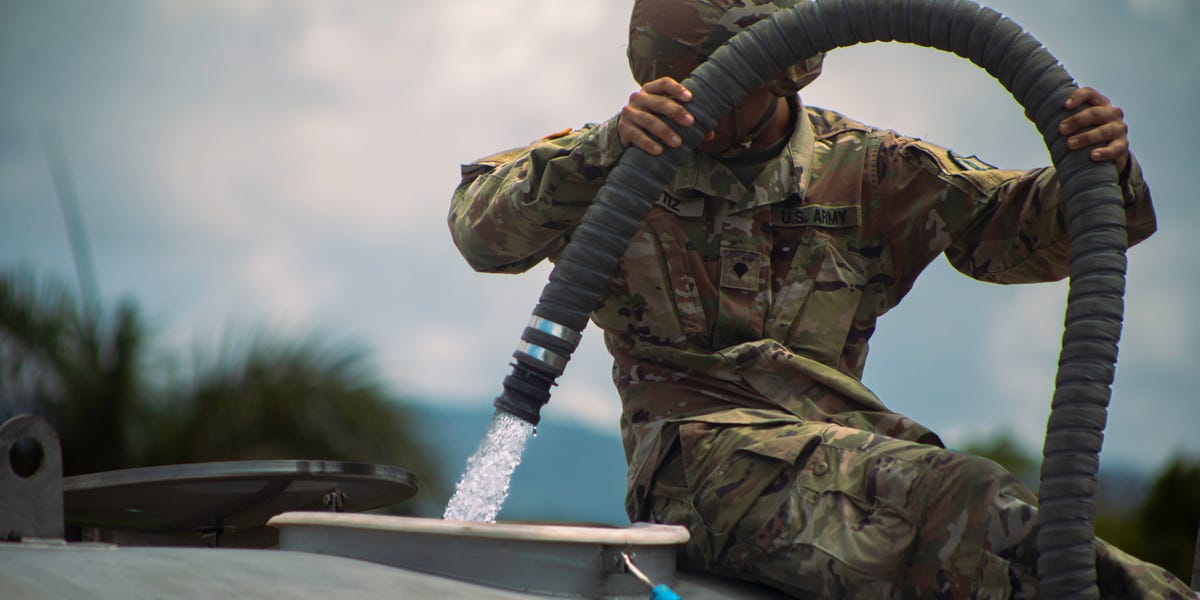
The contract reflects a broader Army push to produce more of what troops need closer to the battlefield, part of a massive effort to reinvent the service for a high-tech, violent future fight. During the Global War on Terror, pallets of bottled water were trucked or flown to bases across the Middle East, a heavy burden requiring manpower, vehicles, and fuel. The military also stores water in large bladders and tanker trucks, but those approaches depend on established, reliable logistics networks. In a large-scale conflict where resupply may be vulnerable to attack, fresh water is much harder to deliver.
Army researchers said in December that generating drinking water from the air could offer an alternative to hauling it in by convoy, part of the push to sustain troops in contested environments where they may be cut off from the support soldiers had during the GWOT.
Last year, the Army also tapped Genesis and another firm, AirJoule, to explore "waste-heat utilization," according to an Army press release.
Atmospheric water generation does not eliminate the logistics challenge entirely. The large generators need ample electricity and maintenance. They also work best in humid climates, which limits their usefulness in dry regions like the western US states of California, Colorado, New Mexico, and Utah, where water scarcity is a growing concern. Some units have already been marketed toward data centers, which consume massive amounts of water to keep servers cool.
The contract's path from research to field deployment will depend on how the systems perform in testing and whether the Army can integrate them into its logistics planning. The Pentagon announcement did not specify a timeline for delivery or fielding.
Drafted by a large language model from the source reporting linked above, then screened by automated publishing checks. It is not read by a journalist before publication. Some articles cite our Alpha Score. Verify prices and figures against the original source. Educational coverage, not personalized advice.