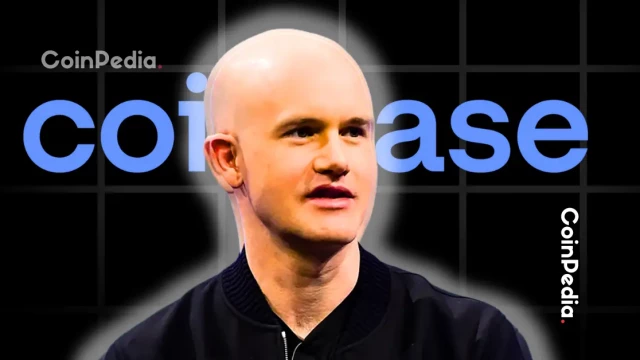
Brian Armstrong delivered a detailed thread this week listing eight “jobs not done” in modern finance. The Coinbase CEO called for tokenization of real-world assets, 24/7 global trading, next-generation stablecoin payments, AI-powered compliance, self-custodial wallets for every smartphone user, sound-money discipline, capital formation, and agentic cross-border payments. The practical risk event is not the vision itself. It is the signal that Coinbase sees U.S. regulatory inaction as the binding constraint.
Traders mapping the list will find each item blocked by the same Wall: the SEC enforcement-first stance and the absence of stablecoin legislation. Armstrong’s thread looks like a product roadmap. The better market read is a public ultimatum to U.S. regulators: adapt to blockchain infrastructure or watch capital migrate to jurisdictions that already have clear rules.
The Eight Jobs and the Regulatory Wall
Tokenization: Stalled by SEC Inaction
Armstrong wants stocks, bonds, and real estate fully onchain with instant settlement and fractional ownership. This is the highest-regret item if it fails. BlackRock and Franklin Templeton already moved tokenized money market funds onchain via Ethereum. Broad equity and debt tokenization in the U.S. remains blocked by the SEC’s refusal to approve tokenized stock exchanges. The risk is that regulatory inaction turns Armstrong’s target into a multiyear wait, draining liquidity from projects like Polymesh, Avalanche (AVAX), and Ethereum that host real-world asset issuance.
A positive shock would be SEC approval of a tokenized stock trading venue, even on a pilot basis. No such application is pending publicly.
Trading and Payments: Waiting on Stablecoin Legislation
24/7 global trading and next-generation stablecoin payments require settlement rails that operate every hour. Armstrong’s “next-gen stablecoins” implies yield-bearing or permissionless tokens that replace current custodial models. Stablecoin issuers – Tether (USDT) and Circle (USDC) – already offer near-instant transfers. Mainstream adoption is stalled by bank partnerships and compliance hurdles.
The timeline depends on U.S. stablecoin legislation. The Lummis-Gillibrand Responsible Financial Innovation Act has stalled. The FIT21 bill passed the House but faces an uncertain Senate path. No vote is scheduled this session.
Compliance and Self-Custody: Direct Challenge to SEC Authority
Armstrong called for AI-driven compliance tools to bridge TradFi and blockchain regulation. This is a direct answer to the SEC’s enforcement-heavy approach, which treats every onchain activity as a potential securities transaction. Self-custodial wallets remove intermediaries from asset control. The SEC views that as a threat to its authority. The risk is that regulators tighten rules on non-custodial wallets, effectively blocking the “smartphone bank” vision Armstrong promotes.
Coinbase itself offers both custodial and self-custodial options via Coinbase Wallet. Exchanges that lack a self-custody product may lose share if self-custody becomes mainstream.
Why This Is a Political Document, Not a Product Roadmap
Armstrong’s thread functions as a public ultimatum. If the U.S. does not adapt, capital migrates. The eight jobs all require clear regulatory guardrails. Coinbase revenue mix – transaction fees, staking, asset custody, and the Base layer-2 network – depends on the same clarity. The thread signals frustration, not a near-term catalyst.
Timeline: No Legislative Action Expected This Session
- No date targets in Armstrong’s thread.
- Lummis-Gillibrand stalled in the Senate.
- FIT21 passed the House but Senate path uncertain.
- SEC continues enforcement actions, including the Wells notice to Coinbase last year.
Until a concrete policy event occurs – a SEC no-action letter, a tokenized stock pilot approval, or a stablecoin bill signing – the eight jobs remain aspirational.
What Would Confirm the Setup
The bull case requires observable milestones. The most impactful would be:
- SEC approval of a tokenized stock trading venue, even on a pilot basis.
- Passage of a federal stablecoin bill that provides a compliance safe harbor.
- A CFTC-SEC joint rule clarifying when a token is a security vs. a commodity.
Any of these would increase the probability that Armstrong’s list becomes a real revenue driver for Coinbase and the broader crypto ecosystem.
What Would Break the Thesis
The most direct risk is continued or intensified SEC enforcement against tokenized securities, self-custodial wallets, or stablecoins. Specific negative signals include:
- A regulatory action that shuts down a tokenized asset project.
- Congressional failure to pass stablecoin legislation this session.
- Broader tightening on non-custodial wallet requirements.
Armstrong’s thread implicitly acknowledges this: “Tech innovation and policy work needs workup.” Translation: the U.S. is not ready.
Coinbase’s Exposure and Affected Assets
Coinbase (COIN) is the most exposed publicly traded entity. A shift toward tokenized securities and 24/7 trading would expand Coinbase’s addressable market beyond spot crypto into equities and fixed income. If the shift does not occur, Coinbase remains a volatile middleman in a restricted market.
Affected assets across the eight jobs:
- Bitcoin (BTC) and Ethereum (ETH) – foundational settlement layers for tokenized assets and stablecoin payments.
- Tokenization platforms – Polymesh, Avalanche (AVAX), Ethereum – host real-world asset issuance.
- Stablecoin leaders – USDT, USDC, and any emerging yield-bearing stablecoin.
- Coinbase (COIN) – most direct equity proxy for regulatory progress.
A positive regulatory shift would likely lift all of these simultaneously. A negative event, such as an SEC enforcement action against a tokenized asset, could compress valuations across the group.
Market Signal: Low Probability of Near-Term Execution
Armstrong’s eight-point plan is not a product announcement. It is a political document. For traders, the proper response is to treat it as a risk-mapping tool. Each item corresponds to a regulatory hurdle that will either clear or persist. The market will price the probability of each hurdle being removed based on legislative and enforcement activity, not on the vision itself.
Bottom line for traders: Assign a low probability to near-term execution until the SEC or Congress delivers a concrete green light. Monitor tokenization ETF flows and stablecoin supply growth as leading indicators of actual adoption. For broader context on crypto market trends and regulatory risks, see AlphaScala’s crypto market analysis and the Coinbase CEO Armstrong Outlines Eight Tokenization Upgrade Targets article.