Arm Holdings shares surged more than 13.5% on Thursday, pushing one-month gains north of 73% and leaving the stock more than tripled year to date. The rally erased Wednesday's near-6% slide and set Arm up for another record close. The immediate catalyst list is familiar: Mizuho Securities raised its price target to $360 from $290, Snowflake announced a $6 billion cloud commitment with Amazon that explicitly names Graviton CPUs, and anticipation is building for Nvidia's Computex keynote next week – where CEO Jensen Huang promised a "surprise new product."
Parabolas demand scrutiny. The simple story – "CPUs matter for AI, therefore Arm wins" – has been the same headline for months. What changed this week are three concrete triggers that, taken together, give the move more mechanism than the usual momentum chase.
Arm's 73% Rally: The Simple Read vs. The Market Read
The naive interpretation pins Thursday's jump on the Mizuho PT hike alone. A single analyst target to $360 – about 20% above the current price – does not normally produce a 13% single-day move in a stock that already tripled. The better read looks at the Snowflake-Amazon deal as a royalty-validation event and Computex as an options-implied volatility catalyst. Arm is not just riding AI hype; it is collecting a royalty on every Graviton chip Amazon ships, and Snowflake's commitment signals that enterprise cloud workloads will scale on Arm-based infrastructure.
What Confirms the Better Read
The Snowflake-Amazon Graviton connection gives the rally a fundamental anchor that the Mizuho note alone lacks. Amazon debuted Arm-based Graviton in 2018 and is now on its fifth generation. Every chip that contains Arm's instruction set generates a royalty. The $6 billion Snowflake deal does not flow directly to Arm's revenue line tomorrow, it increases the probability that Graviton demand – and therefore Arm royalties – will compound faster than the market previously modeled.
What Weakens the Better Read
Parabolic moves ignore valuation until they don't. Mizuho's $360 target is only a modest upside from current levels, and other analysts may not follow with similar increases. The stock has already priced in a scenario where AI workloads accelerate Arm's royalty growth substantially. If any signal from Computex disappoints – vague product roadmaps, no new licensing deals, or a competitor like Intel or AMD showing meaningful CPU gains – the re-rating could reverse quickly.
The Snowflake-Amazon Graviton Angle: Why It Matters for Arm
The Snowflake-Amazon cloud commitment is the most concrete demand signal in the current catalyst stack. Snowflake will use Amazon's Graviton CPUs as part of a multiyear agreement. Those Graviton chips license the Arm instruction set, meaning every Graviton sale generates a royalty for Arm – not just the initial chip, each unit deployed. In a business that monetizes through licensing and per-chip royalties, a long-term cloud commitment from Snowflake – a data-warehousing giant – is a volume signal, not a price signal.
How This Changes the Investment Case
Before this week, Arm's revenue growth largely relied on handset royalty pools and data-center licensing wins that were hard to verify. The Snowflake-Amazon tie-up gives investors a named enterprise customer explicitly expanding its Arm-based cloud footprint. If more enterprise cloud deals follow – especially from the hyperscalers that already license Arm IP – the royalty stream becomes more predictable and earnings multiples can expand.
Computex Catalysts: What to Watch From Nvidia and Arm
Nvidia's Computex keynote on Monday, Taiwan local time, is the next high-probability volatility event. CEO Jensen Huang flagged a "surprise new product" on the May 20 earnings call, and Nvidia's bullish comments about its own CPUs already moved Arm shares last week. Nvidia licenses Arm IP for its Grace and Vera CPUs. If the surprise product is a new CPU or a deeper integration with Arm's architecture, it could reset expectations for how much Arm IP will penetrate the AI server segment.
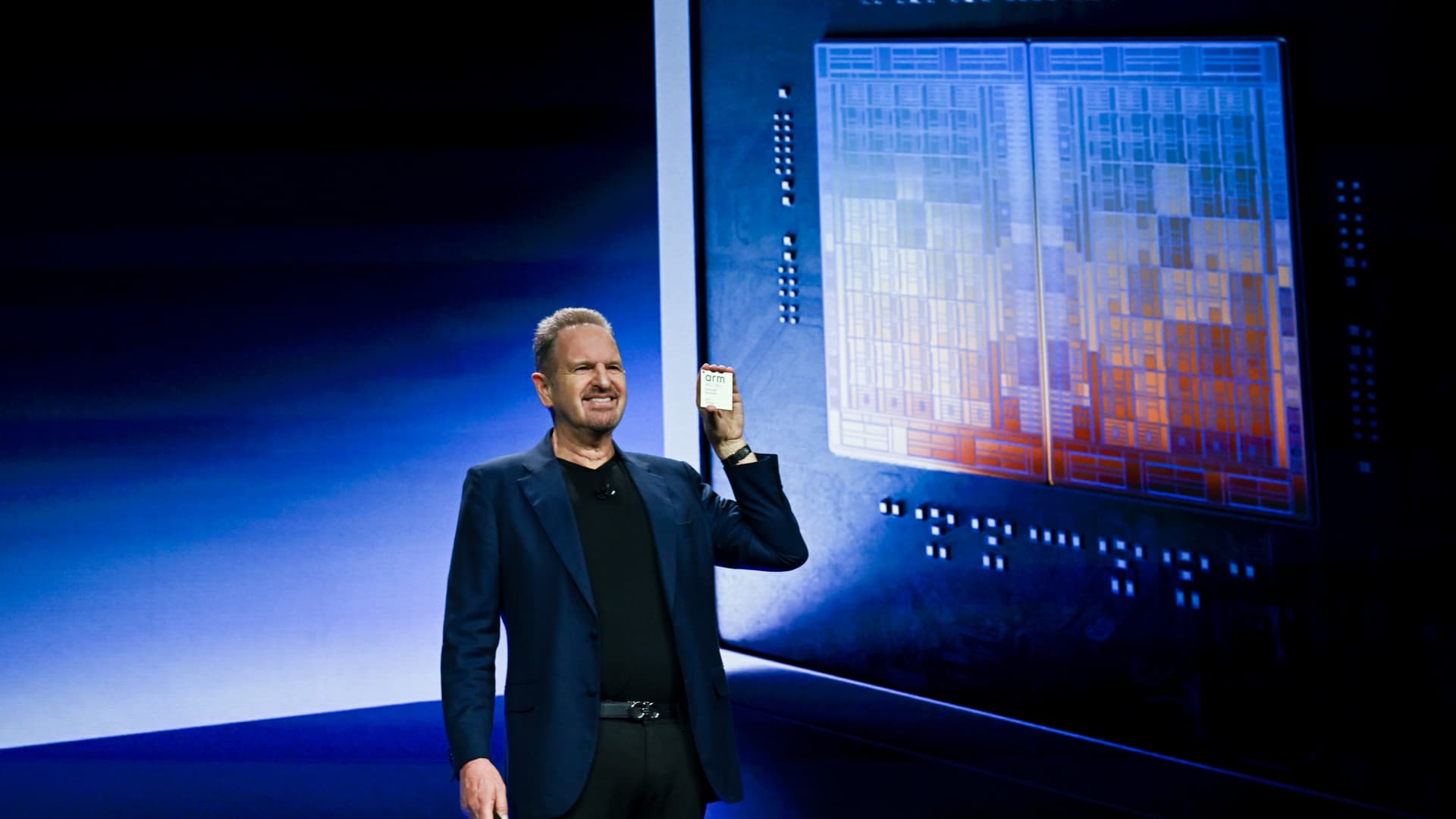
Arm CEO Rene Haas is also delivering a Computex keynote on Tuesday. The two keynotes back-to-back create a concentrated information window. Markets will learn:
- Whether Arm has new licensing wins with hyperscalers beyond Amazon
- Whether the roadmap for next-generation CPU cores extends beyond the current generation
- Whether Intel or AMD responds with competing architectures that challenge Arm's performance-per-watt advantage
Valuation Risk in a Momentum Stock
Arm's one-month gains are north of 73%. The stock has more than tripled year to date. For context, AMD was up a more modest 5% on the same day, while Intel fell nearly 1%. The divergence among CPU suppliers suggests Arm's move is partly speculative positioning into Computex rather than a broad sector repricing.
AlphaScala's NVDA profile shows an Alpha Score of 71/100 with a Moderate label. Nvidia's keynote will indirectly affect Arm's margin of safety. If Nvidia delivers a clear CPU roadmap, Arm benefits. If the surprise product is non-committal on Arm IP, the rally loses its catalyst.
Confirm or Weaken: The Post-Computex Risk Path
A repeat reader needs to know what changes the setup, not just what happened today.
What Confirms the Thesis
- New licensing deals: If Arm announces a named hyperscaler outside Amazon (Microsoft, Google, Oracle) during Computex, the royalty base expands visibly.
- Product roadmap specificity: If Haas shows a concrete roadmap for next-generation cores targeting AI inference, the total addressable market becomes easier to quantify.
- Earnings revision momentum: If analyst estimates for FY2025 revenue rise after Computex, the current valuation has a fundamental catch-up path.
What Weakens the Thesis
- Vague guidance: If keynotes present aspirational slides without specific performance metrics or customer commitments, the speculative premium evaporates.
- Competitive response: If Intel or AMD announces a competing instruction-set architecture that threatens Arm's licensing model – unlikely in the short term but worth monitoring.
- Insider selling or secondary offering: Arm has used parabolic moves to raise capital in the past. Any capital markets activity would signal that the company itself sees the stock as fully valued.
The Forward Tension
Arm's rally reflects genuine structural demand for CPU IP in AI workloads. The Snowflake-Amazon deal gave that narrative a named customer. The Mizuho PT hike gave it a target the market could anchor to. The Computex keynotes will either validate the speculation or end it. For traders, the decision is simple: the stock has either already priced the good news, or the good news gets better. That ambiguity is what creates the next setup.
For more context on how AI monetization is changing enterprise cloud spending, see AlphaScala's analysis of Snowflake's $5.84B FY27 guide. For broader stock market positioning, check our stock market analysis.
Discipline matters in parabolic stocks. The CNBC Investing Club trimmed Arm on Tuesday because of its velocity. That is not a negative call on the business – it is a risk-management acknowledgment that momentum can fade as fast as it forms. The next two days will determine whether this rally has legs or becomes a textbook example of peak speculative enthusiasm.