Back to Markets
Commodities● Neutral

Arizona Eagle Mining Expands Silver Footprint via Strategic Asset Acquisition

Arizona Eagle Mining Expands Silver Footprint via Strategic Asset Acquisition
ONAKEYASAZEM

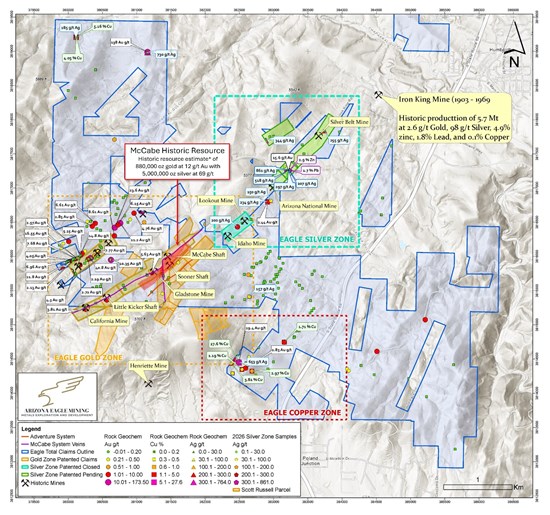
Arizona Eagle Mining has acquired three past-producing silver mines in Arizona, aiming to scale its Eagle Project and leverage historical data to accelerate potential production.

AlphaScala Research Snapshot
Live stock context for companies directly referenced in this story
Alpha Score
45
Weak

Alpha Score of 45 reflects weak overall profile with strong momentum, poor value, poor quality, weak sentiment.

Alpha Score
55
Moderate

Alpha Score of 55 reflects moderate overall profile with moderate momentum, moderate value, moderate quality. Based on 3 of 4 signals — score is capped at 90 until remaining data ingests.

Financials
Alpha Score
70
Moderate

Alpha Score of 70 reflects strong overall profile with strong momentum, strong value, moderate quality, moderate sentiment.

Consumer Cyclical
Alpha Score
47
Weak

Alpha Score of 47 reflects weak overall profile with moderate momentum, poor value, moderate quality. Based on 3 of 4 signals — score is capped at 90 until remaining data ingests.

This panel uses AlphaScala-native stock data, separate from the source wire linked above.

Arizona Eagle Mining (TSXV: AZEM) has moved to consolidate its position in the regional silver market by acquiring three past-producing high-grade silver mines. This expansion integrates directly into the company’s existing Eagle Project, signaling a shift toward scaling production capacity within the Arizona mining district. By securing assets with a documented history of extraction, the company aims to bypass initial greenfield exploration risks and focus on resource definition and potential restart operations.

Historical Production and Resource Upside

The acquisition centers on assets that previously yielded high-grade silver, providing a foundation of geological data that is often absent in early-stage exploration. Past-producing mines offer a distinct advantage in terms of infrastructure and established mineralized zones. For Arizona Eagle Mining, the primary objective is to leverage this historical data to identify untapped extensions of known veins. This strategy reduces the capital intensity typically associated with identifying new deposits from scratch.

Integrating these mines into the Eagle Project creates a larger, contiguous land package. This consolidation allows for more efficient exploration programs and potential economies of scale if the company moves toward a centralized processing model. The focus remains on identifying high-grade pockets that can be brought back into production with lower relative capital expenditure compared to new mine development.

Regional Infrastructure and Operational Logistics

Arizona remains a critical jurisdiction for silver production due to its established mining regulatory framework and proximity to existing processing facilities. The acquisition of these three sites provides the company with a strategic foothold in a region where logistics and transport infrastructure are already optimized for mineral extraction. Access to power and water, combined with existing access roads, significantly lowers the barrier to entry for the next phase of development.

Effective resource management in this district relies on the ability to move ore efficiently to local mills. By controlling multiple historical sites, Arizona Eagle Mining can better manage the variability of ore grades across its portfolio. This operational flexibility is essential for maintaining consistent output levels as the company transitions from an exploration-focused entity to one with a multi-asset production strategy.

Strategic Integration and Next Steps

Market interest in silver assets often tracks closely with industrial demand and the metal’s role as a hedge against currency volatility. As the company integrates these new properties, the focus will shift toward technical reporting and updated resource estimates. Investors should look for the next technical disclosure regarding the geological survey results of the newly acquired sites. These filings will serve as the primary indicator of whether the historical grades can be replicated under modern mining standards.

For further context on the broader sector, see our commodities analysis and our gold profile for comparisons on precious metal mining trends. The company’s ability to convert these historical assets into an active production pipeline will be the key metric for evaluating the success of this acquisition. The next concrete marker will be the release of a consolidated development plan or an updated mineral resource estimate that incorporates the new properties into the Eagle Project framework.

How this story was producedLast reviewed Apr 20, 2026

AI-drafted from named sources and checked against AlphaScala publishing rules before release. Direct quotes must match source text, low-information tables are removed, and thinner or higher-risk stories can be held for manual review.

Editorial Policy·Report a correction·Risk Disclaimer