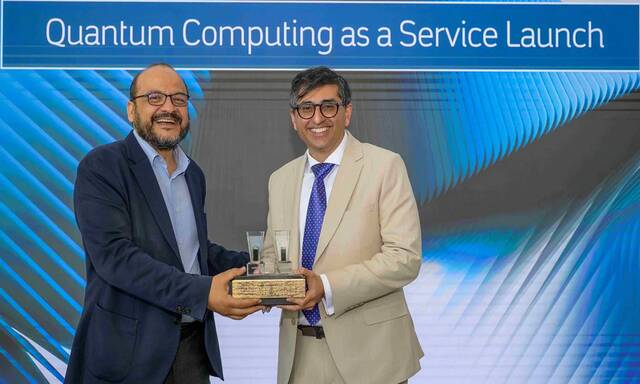
Aramco partnered with Pasqal to launch the Middle East’s first commercial quantum computing platform, a move that directly targets optimization in energy, materials, and industrial supply chains. The deployment of a 200-qubit quantum processing unit at Aramco’s Dhahran data center opens QCaaS to external clients, marking a shift from theoretical research to production-ready computation for commodity producers.
Why Aramco Needs Quantum for Energy Commodities
Oil and gas reservoir modeling, supply chain logistics, and lower-carbon fuel development all involve combinatorial problems that classical computing struggles to solve at scale. Aramco Executive Vice President of Technology & Innovation Ahmad O. Al Khowaiter made the rationale explicit:
“By investing in joint training and research, we are building world class quantum expertise right here in the Kingdom–an expertise that will power the next generation of energy solutions, accelerate lower carbon fuel development, and enhance reservoir and supply chain optimization.”
The statement ties quantum capability directly to commodity extraction efficiency and logistics cost reduction. For a company that delivered SAR 433.10 billion in revenue in Q1 2026, even fractional improvements in reservoir recovery rates or supply chain throughput translate to billions of riyals.
The 200-Qubit QPU and Low-Latency Cloud Access
Pasqal’s neutral-atom technology controls 200 programmable qubits in a system deployed at Aramco’s Dhahran data center since November 2025. The QCaaS model means clients – initially Aramco as a foundational customer, then external research institutions, universities, and enterprises – get secure, low-latency access via Pasqal’s cloud platform. This bypasses the typical bottleneck of building proprietary quantum hardware, lowering the entry cost for industrial users in the region.
Industrial Sector Read-Through: Materials and Manufacturing
Quantum computing’s ability to simulate molecular interactions makes it directly relevant to materials science and chemical manufacturing – sectors that overlap with Aramco’s downstream operations. Pasqal CEO Wasiq Bokhari described the deployment as evidence that “the most demanding industrial challenges in the world are now being tackled with Pasqal's quantum processors, software and specific solutions.”
Pasqal's Roadmap and Aramco's Use Cases
Under the partnership terms, Aramco will progress a roadmap of use cases on a production-ready QPU, accelerating development of quantum-hybrid solutions for energy, materials, and industrial programs. Bokhari added: “For Pasqal, deploying our system for use in Aramco's business-critical operations, while also being available to the region's enterprises and research community, is a part of our core mission: to enable practical and secure quantum computing at scale today.”
The industrial read-through extends to any Saudi or regional firm operating in petrochemicals, mining, or heavy manufacturing that gains cloud access to the same QPU. Companies such as SABIC and Maaden – both active in commodity supply chains – could eventually use the platform for chemical reaction simulation or mine-to-market logistics optimization, though no agreements have been announced yet. The infrastructure exists; the use-case catalog is still being built.
The Investment Path: Wa'ed Ventures and Ecosystem Building
Aramco’s domestic venture capital arm Wa’ed Ventures invested in Pasqal in January 2023, before the hardware deployment. That early capital was designed to localize advanced quantum technologies and accelerate the regional quantum ecosystem. The current inauguration validates that two-year bet: Pasqal’s system is now physically inside Aramco’s data center, not running from a lab in France.
What This Means for Commodities Traders and Analysts
For anyone covering energy and industrial commodities, the practical near-term value is limited but real. Reservoir simulation and supply chain optimization are the most immediate candidates for quantum acceleration. If Aramco publishes specific improvements in recovery rates or logistics cost savings from quantum-hybrid runs, it will set a precedent for the entire sector. Until then, the platform is an infrastructure play – a capability demonstration that gives Aramco a data advantage in modeling complex systems that peers like Saudi Aramco (the same entity) already dominate.
The AlphaScala read: the catalytic value for commodity traders lies in whether the platform produces measurable efficiency gains in Aramco’s own operations within the next 12-18 months. If it does, the quantum supply chain for oil and gas becomes a real narrative. If it does not, the region’s first commercial QCaaS remains a prestige project with limited near-term impact on commodity flows.
Quantum Computing as a Commodities Input
Pasqal’s QPU joins a short list of production-ready quantum computers globally. The choice of neutral-atom architecture – rather than superconducting or trapped-ion – gives it unique advantages in scalability and coherence time, both of which matter for industrial workloads. The 200-qubit count, while modest compared to theoretical roadmaps, is sufficient for the constrained optimization problems that dominate energy logistics.
Confirmed Facts vs. Inference
The source confirms Aramco will use the QPU as a foundational customer and that the platform is available to external organizations. The inference that SABIC, Maaden, or other Saudi industrial firms will adopt it is plausible but unconfirmed. The inference that quantum computing will immediately improve commodity price modeling or trading strategies is not supported by the source; the platform is aimed at operational challenges, not financial speculation.
The most concrete sector read-through is the energy technology services sub-sector. Firms providing classical simulation software – Schlumberger, Halliburton, Baker Hughes – will need to either partner with quantum players or build their own stacks to stay competitive on reservoir modeling. Aramco’s move pressures those vendors indirectly.
The Next Marker
The partnership gives Aramco a first-mover position among oil majors investing directly in quantum hardware. The next concrete marker is the publication of use-case results – specific cost savings, time reductions, or yield improvements attributed to quantum computation. Without that, the deployment remains a capability demonstration. With it, the quantum read-through for energy and industrial commodities becomes investable.