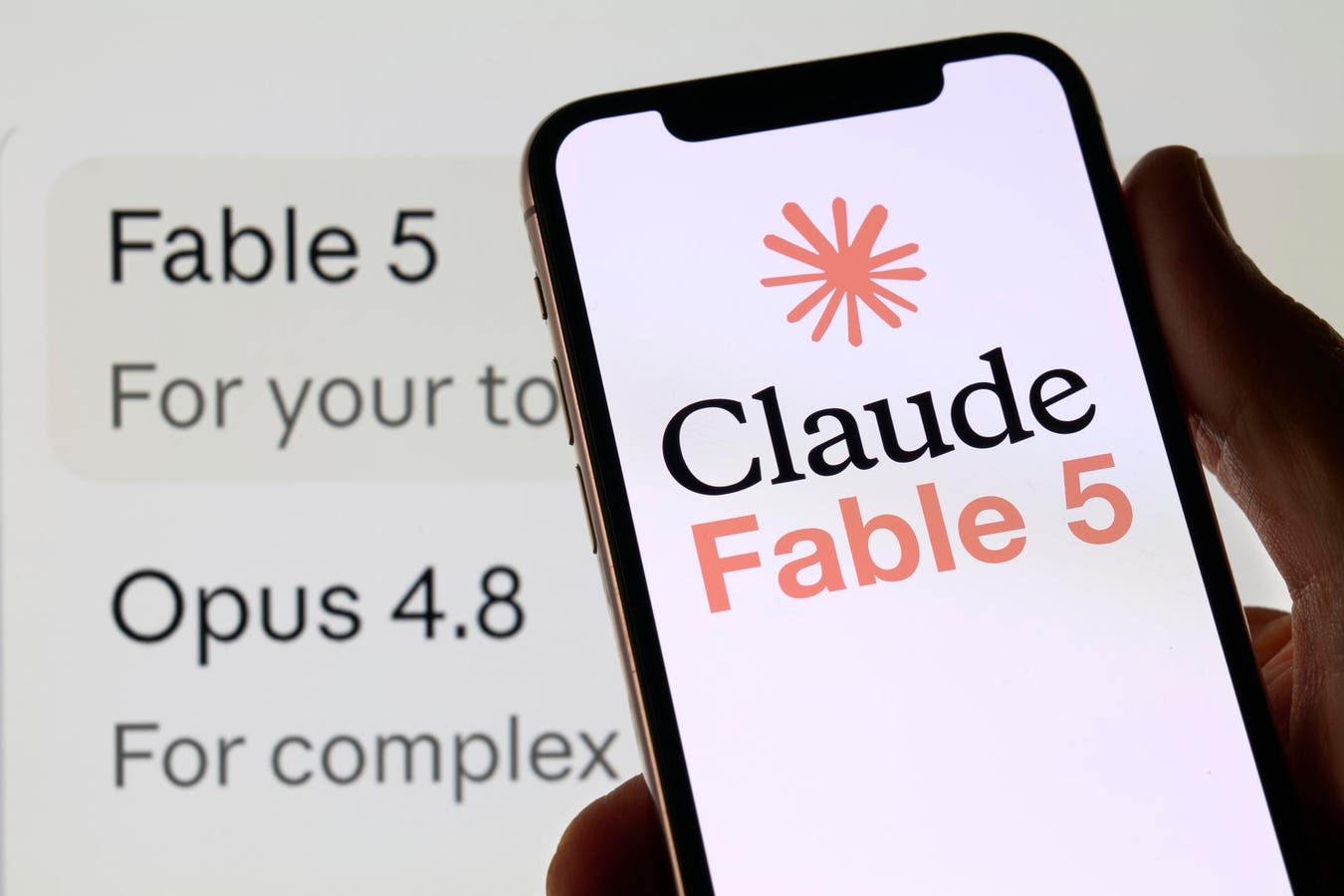
The Commerce Department ordered Anthropic to restrict access to its Fable 5 and Mythos AI models to U.S. nationals only, effective Friday at 5:21 p.m. ET, CNBC reported. The directive, issued under Secretary Howard Lutnick's Bureau of Industry and Security, targets the guardrailed version of Anthropic's Mythos model after the government said it found a method users could exploit to bypass Fable's safety guardrails.
Anthropic called the exploit a "jailbreak" and pushed back against the order in a blog post Friday, arguing the government's response was disproportionate to the actual risk. Bloomberg reported that Anthropic is complying with the Trump administration directive anyway, suspending foreign nationals from accessing both Fable 5 and Mythos.
The order follows years of Anthropic positioning itself as the most vocal AI lab arguing that policymakers should take frontier AI risks seriously. The company stated in April that Mythos was "too dangerous" for broad release because "the fallout for economies, public safety, and national security could be severe." Fable 5 launched as a compromise, a heavily guardrailed alternative designed to capture some of Mythos' capabilities while containing its worst behaviors.
No AI model in history has avoided jailbreaking entirely. Anthropic invested in red-teaming Fable 5, searching for exploitable weaknesses in its defenses. The company leads the industry in "observability research," the effort to understand how large language models behave at scale. Yet as Anthropic itself knows, no one fully understands these models. Their behavior remains partly opaque even to their creators.
If Mythos represents the danger Anthropic claimed, Fable 5 likely carries some version of that same risk. The guardrails reduce the probability of harmful outputs. They do not eliminate it.
The directive follows a broader White House approach to AI regulation that Sean Cairncross has helped shape. An executive order directs federal agencies to establish a voluntary framework requiring AI developers to grant the government secure access to frontier models for up to 30 days before broader release, Semafor reported. Friday's directive to Anthropic suggests the voluntary phase is ending.
Anthropic has foreign nationals throughout its workforce, as do OpenAI, Google DeepMind, and Meta. Restricting these models to U.S. citizens only makes frontier AI development economically irrational and potentially illegal. If every major AI lab faces the same restrictions, the talent pipeline that powers American AI leadership dries up. Foreign nationals, including some of the world's leading AI researchers, would find themselves unable to work on frontier models inside the United States.
That creates a perverse outcome. The government's attempt to secure American AI dominance may accelerate the brain drain it threatens. Talented researchers who cannot access frontier models at U.S. labs will relocate to other countries. They will continue their work abroad, outside American oversight and potentially outside American security interests.
Anthropic's complaint is understandable from a business perspective. The company bears some responsibility for this outcome. For years, Anthropic has been the most vocal AI lab arguing that governments should take frontier AI risks seriously. The company funded safety research, published warnings about AI dangers, and positioned itself as the "responsible" alternative to competitors it saw as reckless. When a company spends that much political capital warning about existential risk, policymakers eventually act on those warnings.
The real question is whether Fable actually needed this level of restriction. Or whether Anthropic oversold the dangers of Mythos to justify the company's safety-first positioning. The government may have overreacted. Anthropic may have overstated the risks. In that case, American AI leadership pays the price, while competitors in China and Europe accelerate their own frontier research without similar constraints.
For enterprises building on frontier models, the lesson lands hard: regulatory risk now belongs in vendor selection criteria. Any company that integrated Fable 5 or Mythos 5 into production workflows lost access overnight, with no transition window. The companies that treated AI procurement as a pure capability decision just learned that government action can override capability in a single afternoon. The ones who built optionality into their AI stack will keep operating while competitors scramble.
Anthropic's decision to comply with the directive by disabling Fable for all users marks a critical juncture in AI governance. The tension between safety concerns, national security interests, and frontier innovation remains unresolved. What Friday's order makes clear is that government involvement in frontier model access is no longer voluntary.