Macro● Neutral
Anthro Energy Hires Battery Manufacturing Veteran for Scale-Up
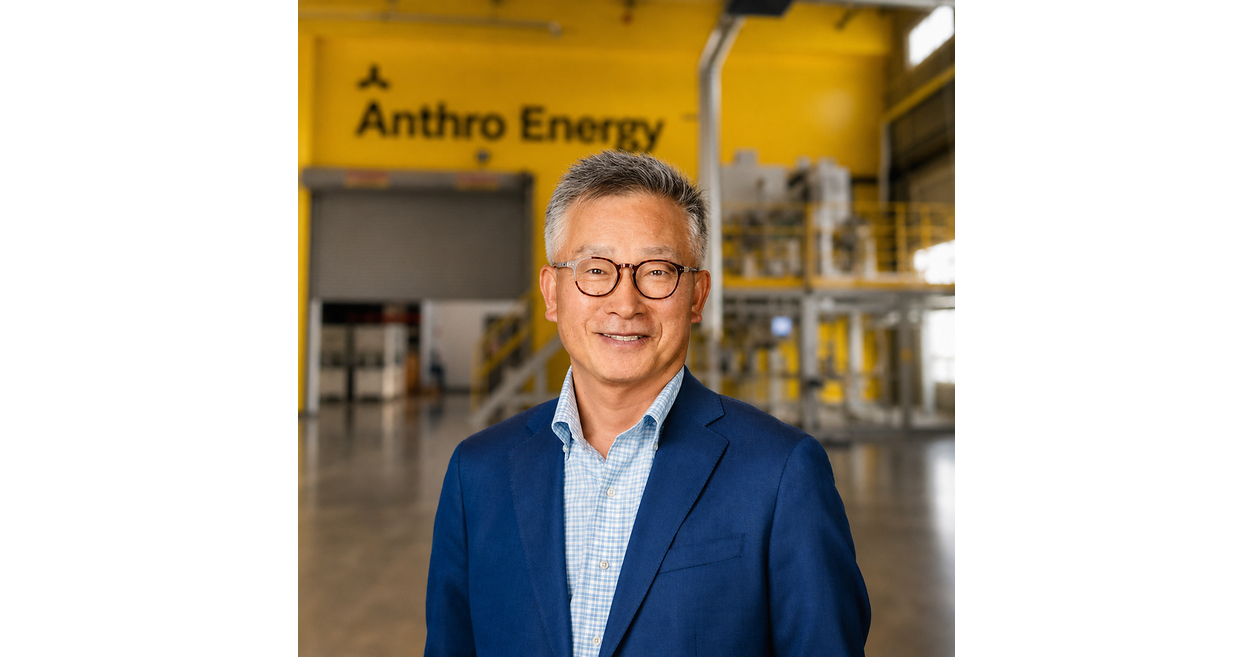
Anthro Energy appoints Dr. Hyungrak Kim, ex-Solid Power EVP, to scale its polymer electrolyte platform. The 30-ton pilot line veteran faces the challenge of moving from pilot to large-scale domestic production.
Continue with
Anthro Energy, a California-based developer of advanced polymer electrolytes for lithium-ion batteries, has appointed Dr. Hyungrak Kim as Executive Vice President of Manufacturing. The hire is a signal that the company is shifting from pilot-scale development toward large-scale domestic production, a transition where many battery technology startups stall or fail.
Kim arrives with more than a quarter-century of experience in electrolyte and battery manufacturing. He most recently served as Executive Vice President of Electrolyte Technologies at Solid Power, the publicly traded developer of all-solid-state batteries. Before that, he was Plant Manager at Dongwha Electrolyte, a major supplier of lithium-ion battery materials. At Solid Power, Kim managed a 30 metric ton-per-year pilot manufacturing line, a scale that sits between laboratory production and what a commercial facility requires.
What the Kim Hire Signals for Anthro's Manufacturing Roadmap
Anthro Energy's core product is the Anthro Proteus™ platform, a polymer electrolyte designed to improve safety, energy density, and mechanical robustness while remaining backward-compatible with existing gigafactory equipment. The promise of backward compatibility is critical. Battery manufacturers do not want to retool multi-billion-dollar production lines. Anthro's pitch is that its electrolyte can drop into existing processes.
Still, moving from a successful pilot to a high-yield commercial line is a capital-intensive and technically risky step. Kim's mandate appears to be exactly that: scale production of the electrolyte and of high-performance lithium-ion cells at the company's sites in Alameda, California, and Louisville, Kentucky. The Louisville facility is described as a planned large-scale advanced electrolyte plant.
Why a veteran from solid-state matters for a polymer electrolyte company
One naive reading is that Kim's background in sulfide solid-electrolytes at Solid Power is irrelevant to a polymer platform. The better read is that the shared challenge is scale-up discipline. Kim has overseen moving a material from jar-scale to pilot-line to supplier qualification. That discipline – yield management, impurity control, supply chain logistics, customer testing – transfers across electrolyte chemistries.