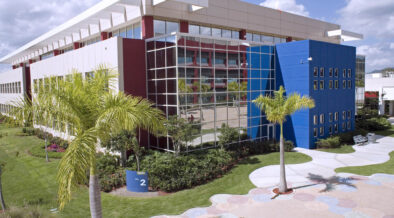
Amgen is accelerating its domestic manufacturing footprint with a fresh $300 million capital injection into its Juncos, Puerto Rico, biologics facility. This latest commitment pushes the company’s total planned investment on the island to nearly $1 billion over the last twelve months, reinforcing a broader strategy to localize production within the United States. When aggregated with other recent capital expenditures, including $900 million in Ohio, $600 million in California, and $1.5 billion in North Carolina, Amgen’s total U.S. manufacturing pledges now approach $2 billion.
The Strategic Shift in Biologics Manufacturing
The Juncos site, which has been operational since 1992, currently functions as one of the largest biologics manufacturing facilities globally, serving distribution networks in more than 60 countries. By directing this additional $300 million into the site, Amgen is focused on integrating next-generation manufacturing technologies and expanding production capacity. This move follows an earlier $650 million allocation to the same facility, signaling a concentrated effort to harden the company's supply chain against potential external disruptions.
For market observers, this capital allocation is less about immediate capacity expansion and more about structural risk mitigation. As global drugmakers navigate evolving tariff policy proposals that threaten to increase the cost of pharmaceutical imports, the shift toward domestic production serves as a hedge against trade volatility. The decision to double down on Puerto Rico leverages existing infrastructure and a specialized workforce that has supported the biopharmaceutical sector for over 60 years.
Capital Allocation and Operational Risk
Amgen’s move reflects a broader industry trend where multinational pharmaceutical firms are prioritizing supply chain resilience over the lower-cost, offshore manufacturing models that dominated the previous decade. While the investment creates hundreds of construction jobs and bolsters local economic development, the primary market implication is the reduction of dependency on international logistics and tariff-sensitive import channels.
Robert A. Bradway, Amgen’s chairman and chief executive officer, emphasized the necessity of this domestic push, stating, "By growing our operations in Puerto Rico, we are ensuring patients have access to the medicines they need, investing in the long-term strength of our domestic supply chain and supporting American jobs."
Evaluating the Manufacturing Footprint
To understand the scale of this capital deployment, consider the following distribution of Amgen's recent U.S. manufacturing commitments:
| Location | Investment Amount |
|---|
| Puerto Rico (Juncos) | $950 Million (Total) |
| North Carolina | $1.5 Billion |
| Ohio | $900 Million |
| California | $600 Million |
This geographic diversification is designed to insulate the company from regional operational risks. However, the concentration of nearly $1 billion in Puerto Rico specifically highlights the island’s role as a critical node in the company's global supply chain. While the investment provides a buffer against tariff-related margin compression, it also ties a significant portion of future production capacity to a single jurisdiction. Investors should monitor whether these capital expenditures yield the expected improvements in production efficiency or if the costs of maintaining such a vast domestic footprint begin to weigh on long-term operating margins.
Monitoring the Regulatory and Trade Environment
The success of this strategy is contingent upon the stability of the U.S. regulatory environment regarding pharmaceutical imports. If tariff proposals are enacted, Amgen’s early move to localize production could provide a competitive advantage by avoiding the cost spikes that may impact peers with higher import dependencies. Conversely, if trade tensions ease or if the cost of domestic manufacturing continues to outpace international alternatives, the return on these multi-billion dollar investments may face scrutiny.
For those tracking market analysis, the focus remains on whether these capital-intensive projects can maintain high utilization rates. The integration of next-generation technologies at the Juncos facility is intended to offset higher domestic labor and operational costs. If these technologies fail to deliver the projected efficiency gains, the company may face pressure to rationalize its manufacturing network, potentially leading to future impairment risks. For now, the commitment underscores a clear preference for supply chain security over the pursuit of absolute lowest-cost production, a trade-off that is becoming increasingly common in the current macro environment. As the company continues to execute these projects, the primary indicator of success will be the sustained stability of its supply chain throughput despite the shifting global trade landscape.