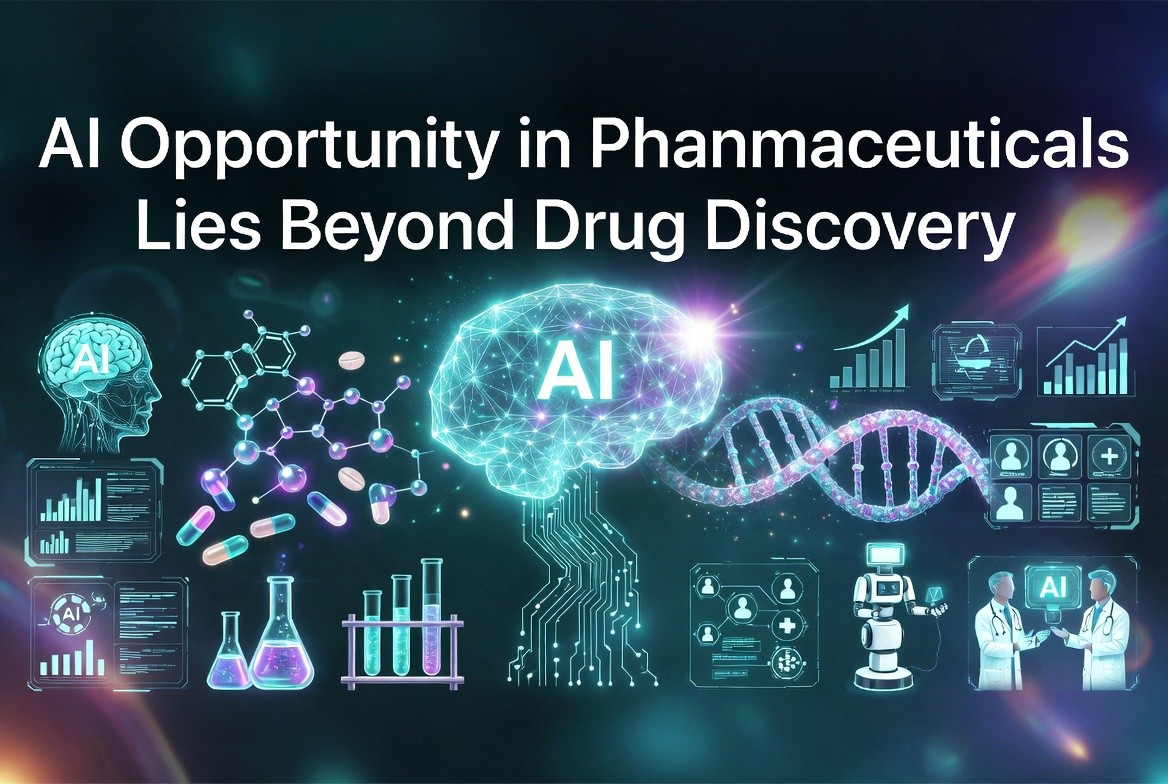
Pharma's AI push is shifting from drug discovery to factory floors. GlobalData says digital twins and predictive maintenance can boost output without new plants. FDA and EMA are taking different regulatory approaches.
Alpha Score of 53 reflects moderate overall profile with moderate momentum, moderate value, moderate quality, poor sentiment.
The drug industry's AI story has mostly been about discovery – finding new molecules faster. GlobalData thinks the bigger near-term opportunity sits somewhere else entirely: the factory floor.
Pharmaceutical companies are starting to use AI to make production faster and more reliable, according to the intelligence firm's latest "Bio/Pharmaceutical Outsourcing" report. The technologies getting deployed include digital twins, predictive maintenance, and real-time quality monitoring. These tools let manufacturers test production changes in a simulated environment before running them on live equipment. The goal is to cut downtime, reduce waste, and improve batch consistency.
None of this is fully baked yet. Many companies are still running pilot programs. The urgency comes from a capacity crunch. Demand is rising fast in high-value therapy areas like obesity and diabetes, where manufacturing capacity is already tight. Building new plants takes years and billions of dollars. AI offers a cheaper path: squeeze more output from existing facilities.
Edita Hamzic, Healthcare Analyst at GlobalData, said implementation is the hard part. "Many companies face problems with outdated systems, uneven data quality, and difficulties in moving from pilot projects to routine use in highly regulated environments," she said. "Success will depend on execution and the ability to combine manufacturing expertise with digital infrastructure."
Regulators are watching too, though they are taking different approaches. The FDA is already using AI to decide where to send inspectors under its new one-day inspection pilot. The agency wants AI to flag lower-risk sites so inspectors can focus on facilities where compliance problems are more likely. The criteria behind that system remain opaque. The EMA is more cautious. The European agency sees AI as useful across the medicine lifecycle, Hamzic said, only if it is used in a transparent and human-centered way.
Hamzic framed the shift as an evolution, not a replacement. "Rather than replacing established manufacturing practices, AI is being harnessed to strengthen them," she said. The sector is moving toward systems that link production, quality, and regulation more closely than before.
For investors tracking pharma supply chains, the distinction matters. AI in drug discovery is a long-odds bet on pipeline value. AI in manufacturing is a near-term operational lever – one that could show up in margin improvement and capacity utilization within quarters, not years. The companies that treat AI as part of their operational model, not a standalone technology project, are the ones most likely to benefit, Hamzic said.
Prepared with AlphaScala research tooling and grounded in primary market data: live prices, fundamentals, SEC filings, hedge-fund holdings, and insider activity. Each story is checked against AlphaScala publishing rules before release. Educational coverage, not personalized advice.