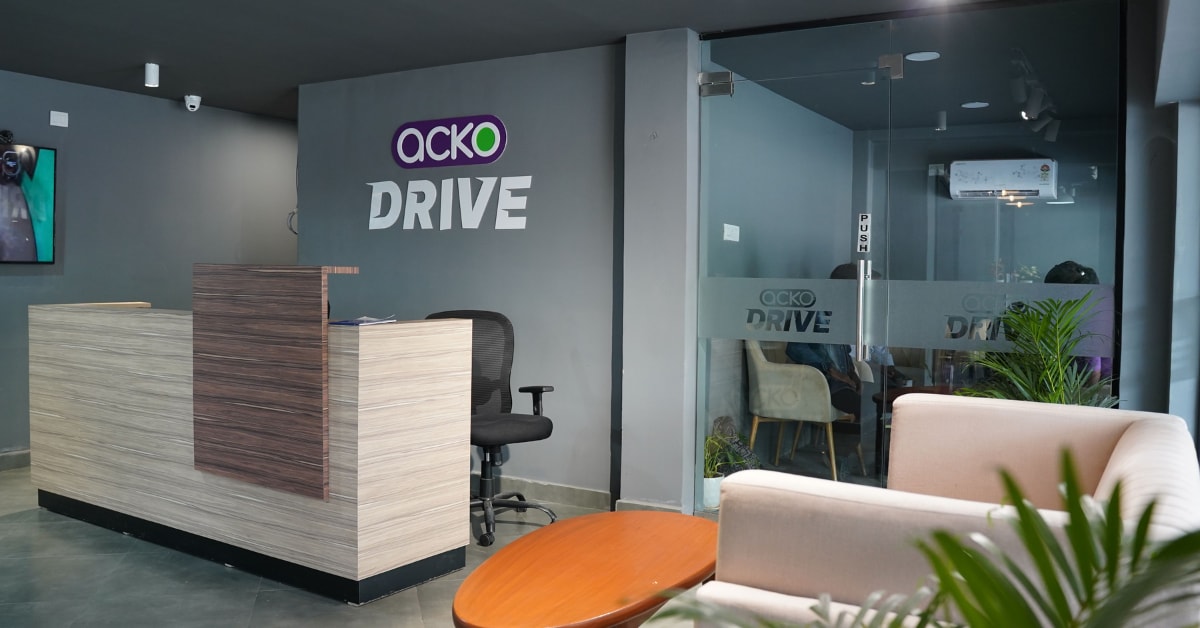
IPO-bound insurtech unicorn Acko has appointed four new vertical heads as it prepares to file a confidential draft red herring prospectus (DRHP) in the second half of 2026 and list in the first half of 2027. The hires include a former Meta executive for health insurance and a former Zepto executive for customer experience. The leadership reshuffle follows a restructuring round last month in which Acko laid off nearly 5% of its workforce, about 60 employees, citing AI-led automation.
Apoorv Kalra, formerly of Junglee Games, will lead the auto insurance business. Kunal Kapur, an ex-Meta executive, takes over the health insurance vertical. Vivek Sharma (co-founder of now-defunct car servicing platform Fixcraft) will head the Acko Drive Ecosystem, overseeing car buying and servicing. Neha Gupta, a former Zepto executive, will lead the “assisted experience” vertical, building tech-enabled customer service across pre-sales and post-sales journeys.
Acko sells automobile, health, and travel insurance and entered life insurance in 2024. The company recorded operating revenue of ₹2,836.8 Cr in FY25, up 34.7% year over year from ₹2,106.3 Cr in FY24. Consolidated net loss narrowed 36.7% to ₹424.4 Cr from ₹669.9 Cr.
Auto and Health Get Dedicated Leaders
Segment-Specific Execution
The two core insurance lines – auto and health – now have executives with digital platform experience. Kalra’s background at Junglee Games (a mobile gaming company) and Kapur’s stint at Meta suggest Acko wants to apply user acquisition and retention models to insurance distribution.
Health Insurance Vertical
Kapur’s role is particularly important because health insurance premiums in India are growing faster than auto. Acko’s health book needs underwriting discipline and claims management. Kapur’s experience at Meta, a company with an Alpha Score of 58 (Moderate) on AlphaScala’s risk-reward framework, may indicate Acko is prioritizing tech-driven customer engagement over traditional agency sales.
Auto Insurance Vertical
Auto insurance remains Acko’s largest segment by premium. Kalra’s mandate includes partnership management with auto manufacturers and aggregators. The appointment comes as Acko Drive (the auto marketplace arm) expands into car buying and servicing under Vivek Sharma.
Ecosystem and Assisted Experience Roles
Acko Drive Ecosystem
Sharma, a Fixcraft co-founder, will integrate insurance with car purchasing and repair. This full-stack approach mirrors strategies used by Lemonade and Root Insurance in the US. The ecosystem vertical may raise operating costs in the short term but could improve customer lifetime value – a metric IPO investors will scrutinize.
Assisted Experience
Gupta’s “assisted experience” vertical implies Acko is investing in human-assisted digital sales, not purely self-serve. That increases variable costs but may boost conversion and retention. The role sits between product and customer support, suggesting Acko wants to differentiate on service quality rather than price alone.
Layoff Context: Reallocation, Not Across-the-Board Cuts
AI Automation Reduces Headcount
The 5% workforce reduction affected roles that could be automated. Acko is reallocating savings toward senior talent for IPO-critical functions. This pattern is common in late-stage private companies: reduce fixed costs by cutting junior or redundant roles, then layer on experienced executives to satisfy underwriters and institutional investors.
Cost Control Trend
The net loss reduction of 36.7% in FY25 partly reflects cost management. Revenue grew faster than expenses. If Acko can sustain this trajectory, the path to profitability shortens. The company needs to demonstrate a combined ratio below 100% in any segment to strengthen the IPO narrative.
Financial Profile: Revenue Up 34.7%, Loss Down 36.7%
| Metric | FY24 | FY25 | Change |
|---|
| Operating Revenue | ₹2,106.3 Cr | ₹2,836.8 Cr | +34.7% |
| Net Loss | ₹669.9 Cr | ₹424.4 Cr | -36.7% |
| Net Loss as % of Revenue | 31.8% | 15.0% | -16.8 ppt |
Margin Improvement Drivers
Revenue growth came from expansion across auto, health, and travel insurance lines. The loss compression reflects both top-line growth and cost control, likely aided by automation. The net loss margin halved to about 15% of revenue, still high compared to profitable incumbents like ICICI Lombard (sub-5% net margin). Acko needs to push below 10% to attract IPO investors without a deep discount.
IPO Timetable and the Valuation Question
Banker Syndicate
Acko has hired ICICI Securities, Morgan Stanley, and Kotak Securities as lead bankers. Morgan Stanley’s involvement adds a global underwriter familiar with tech listings. The bank carries an Alpha Score of 63 (Moderate) on AlphaScala’s risk-reward scale, indicating a balanced profile.
Valuation Range
The targeted valuation of $2 Bn to $2.5 Bn represents roughly 2.5x to 3x FY25 operating revenue of about $340 Mn. That multiple is lower than the 4-5x seen in some recent Indian tech IPOs, reflecting market caution around insurtech profitability. The IPO will include a fresh issue of shares and an offer-for-sale (OFS) component, allowing early investors to partially exit.
DRHP Timeline Risk
Filing a confidential DRHP in H2 2026 gives Acko nearly two years to show consistent quarterly performance. Any slippage beyond mid-2027 would be negative. The company will need to maintain revenue growth above 30% and reduce net loss further to justify the high end of the valuation range.
Post-Hire Setup: What Confirms or Weakens the Thesis
Confirmation Signals
- Sequential revenue growth in the next two quarters (Q1 and Q2 FY26) above 30%.
- Combined ratio improvement in auto or health segment below 100%.
- Minimal dilution from OFS component (early investors selling less than 20% of convertible shares).
Weakness Signals
- DRHP filing delayed beyond H2 2026 or pushed to 2027.
- Rising net loss in absolute terms for H1 FY26.
- Down round valuation by existing investors before IPO.
For traders tracking the Indian insurtech space, Acko’s leadership moves are concrete steps toward a public offering. The next two quarterly results will be decisive. Investors can follow broader market context via AlphaScala’s stock market analysis and the META stock page for comparison on Kapur’s profile. Morgan Stanley’s stock page is also available for those monitoring the banker syndicate's reputation.