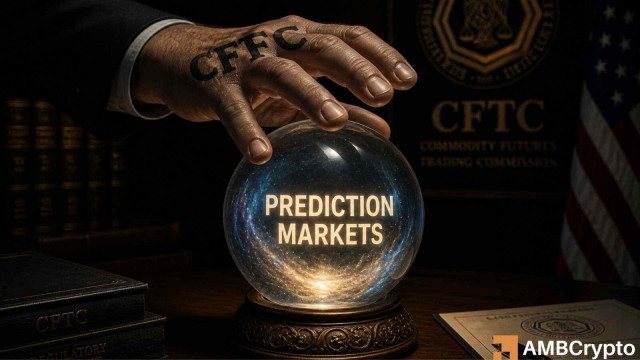
Andreessen Horowitz argues that federal CFTC oversight is essential to prevent state-level bans from fragmenting liquidity in prediction markets.
HASBRO, INC. currently carries an Alpha Score of n/a, giving AlphaScala's model a neutral read on the setup.
Andreessen Horowitz has formally advocated for federal oversight of prediction markets, arguing that the Commodity Futures Trading Commission should serve as the primary regulator for the sector. The venture capital firm contends that allowing individual states to impose fragmented rules would create significant barriers to entry and threaten the stability of these platforms. By centralizing regulatory authority, the firm suggests that the industry can avoid the liquidity issues that often arise from conflicting state-level mandates.
The core of the argument rests on the classification of prediction markets as information machines. According to the firm, these platforms function as essential tools for aggregating data and forecasting outcomes, which requires a uniform national standard to operate efficiently. When states attempt to implement independent bans or restrictive frameworks, the resulting operational complexity forces platforms to restrict access or exit specific jurisdictions entirely. This fragmentation reduces the depth of order books and limits the ability of participants to hedge risks effectively.
For market participants, the push for federal clarity is a reaction to recent state-level efforts to curb the growth of platforms like Kalshi and Polymarket. The firm maintains that the CFTC is uniquely equipped to handle the oversight of these derivative-like instruments, as the agency already manages complex commodity and futures markets. By aligning prediction markets with existing federal standards, the industry aims to move away from the current environment of litigation and toward a predictable operational model.
The potential for state-level bans creates a direct risk to market liquidity. When a platform is forced to block users from specific states, the total volume of activity drops, which in turn widens bid-ask spreads and makes price discovery less reliable. The firm emphasizes that these platforms are not merely gambling venues but are instead sophisticated tools for information discovery. If the regulatory environment remains disjointed, the firm warns that the resulting lack of liquidity will undermine the utility of these markets for institutional and retail users alike.
This debate over jurisdiction is part of a broader trend regarding the a16z challenges state bans on Kalshi and Polymarket platforms. As the industry awaits further guidance, the next concrete marker will be a formal ruling from the CFTC regarding its authority over event-based contracts. This decision will determine whether these platforms can continue to scale under a single federal framework or if they must navigate a patchwork of state-level restrictions that could stifle growth for the foreseeable future. Investors should monitor upcoming federal hearings for signs of a unified policy shift.
AI-drafted from named sources and checked against AlphaScala publishing rules before release. Direct quotes must match source text, low-information tables are removed, and thinner or higher-risk stories can be held for manual review.