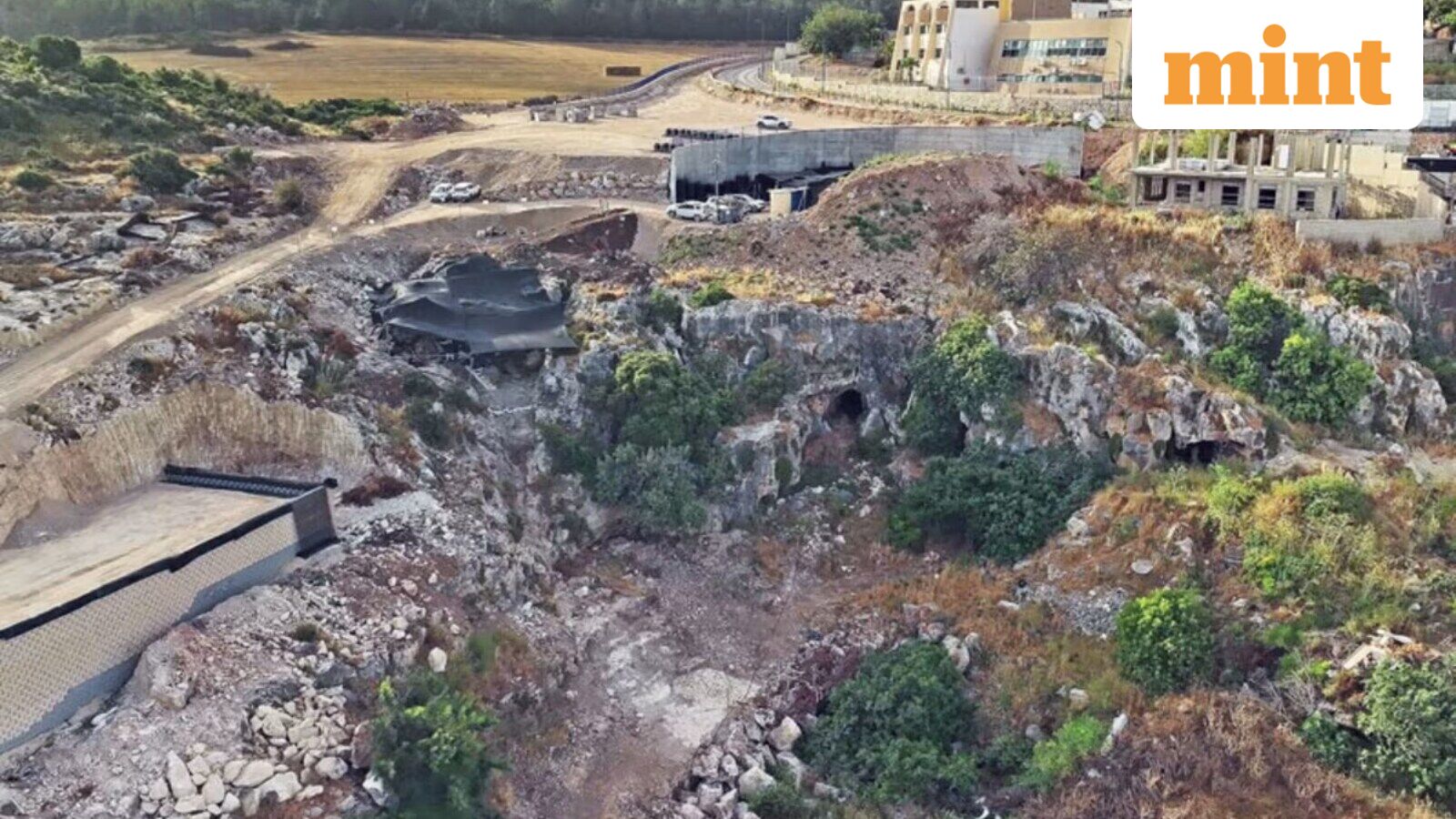
A cave in northern Israel was inhabited 400,000 years ago, doubling earlier estimates. Evidence of fire use and organized hunting suggests complex pre-Neanderthal social life.
A cave in northern Israel has pushed back the known timeline of pre-human habitation in the region by roughly 200,000 years, forcing a re-evaluation of how early hominin societies organized themselves.
The site, discovered during infrastructure surveys near the town of Fureidis, was first examined in the 1970s. Archaeologists at the time dated it to around 200,000 years ago. Recent excavations by the Israel Antiquities Authority and the University of Haifa have revised that estimate dramatically. The cave was inhabited between 400,000 and 250,000 years ago by members of the Acheulo-Yabrudian culture, a pre-Neanderthal population that lived across the Levant.
"It was a big surprise," Dr. Kobi Vardi of the Israel Antiquities Authority told CNN. The revised age places the site among a handful of well-preserved archaeological locations from the late Lower Palaeolithic period in the Levant.
Researchers identified the age through characteristic stone tools – hand axes, scrapers and blades – associated with the Acheulo-Yabrudian culture. Animal remains found at the site, including bones from fallow deer and gazelles, offer a window into the hunting practices and survival strategies of its inhabitants.
What has drawn particular interest is the cave's state of preservation. Researchers describe it as a "time capsule" that remained sealed for hundreds of thousands of years, protecting layers of sediment and evidence of human activity from disturbance. The excavations have uncovered evidence of repeated habitation patterns, organized hunting and the use of fire.
That evidence points to a level of social complexity not always associated with early human ancestors. Professor Ron Shimelmitz of the University of Haifa described it as "suggesting complex and rich camp life" in a statement published by Israel's Ministry of Foreign Affairs on June 11.
No significant human remains have been found at the site, mirroring a broader challenge facing researchers studying the Acheulo-Yabrudian culture. The identity of the cave's inhabitants remains uncertain, though scientists believe they may represent an evolutionary population that existed before the emergence of both classic Neanderthals and anatomically modern humans.
Further excavations at the Fureidis cave could help answer longstanding questions about how early human societies developed technologies, organized communal life and adapted to their environment during a pivotal stage in human evolution, researchers from the Israel Antiquities Authority and the University of Haifa said.
Prepared with AlphaScala research tooling and grounded in primary market data: live prices, fundamentals, SEC filings, hedge-fund holdings, and insider activity. Each story is checked against AlphaScala publishing rules before release. Educational coverage, not personalized advice.