Macro● Neutral
30-Year Yield Hits 5.16% as Bond Market Priced Debt and Inflation Risks
The 30-year yield hit 5.16%, the highest since 2007, as two Treasury auctions showed investors demanding more compensation for inflation and deficit risks.
Continue with
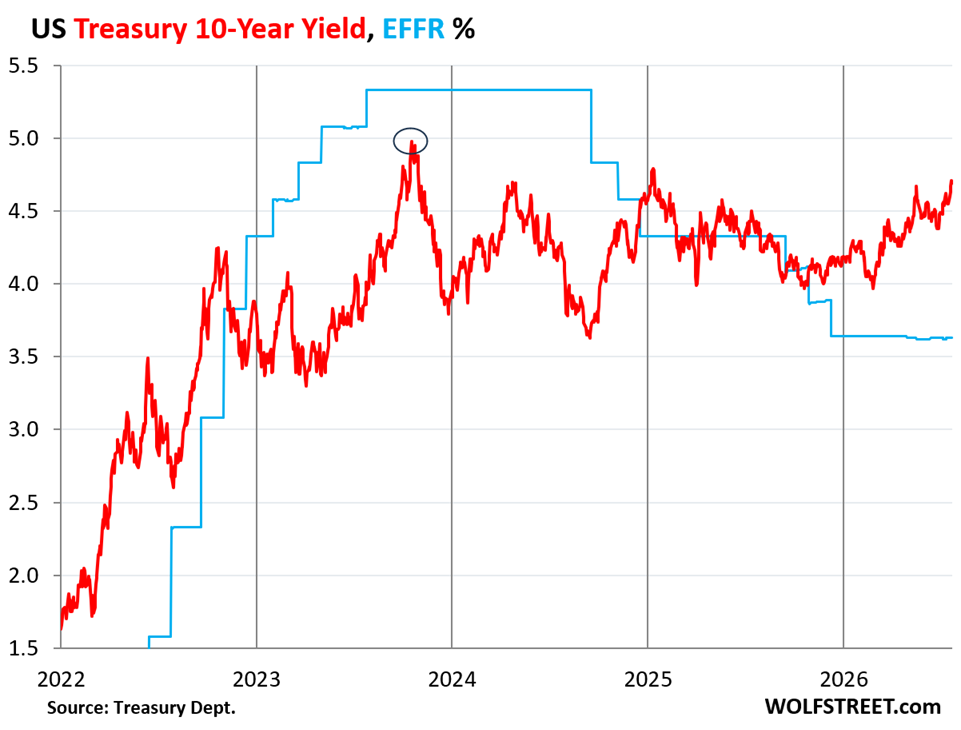
Long-term Treasury yields surged this week. The 30-year yield spiked 10 basis points to 5.16%, briefly touching 5.19% on Thursday. Those were the highest yields, along with a reading in May, since July 2007. The 20-year yield closed Friday at 5.18%, up 11 basis points for the week. The 10-year yield hit 4.71% on Thursday, the highest since the debt scare of October 2023 and, before that, since 2007.
The move came as the bond market priced two overlapping risks. Inflation has reaccelerated even as the Fed cuts rates. And the Treasury must sell a mountain of new debt to fund the deficit.
The Fed has cut its policy rate by 175 basis points since September 2024. Over that same stretch, the 30-year yield has risen 120 basis points. It now sits 153 basis points above the effective federal funds rate, after trading 140 basis points below it before the cuts began. The bond market reads those cuts as dovish at a time when inflation is picking up. Inflation eats the purchasing power of long-dated bonds. The market is demanding more compensation.
Two auctions this week showed the pressure. The 20-year Treasury bond sold Wednesday at a yield of 5.163%. By Thursday, the 20-year yield in the secondary market had risen to 5.20%, the highest since the October 2023 debt scare. The 10-year Treasury Inflation Protected Securities sold Thursday at a yield of 2.438%. That was the highest since the debt scare in October 2023 and, before that, since 2008.