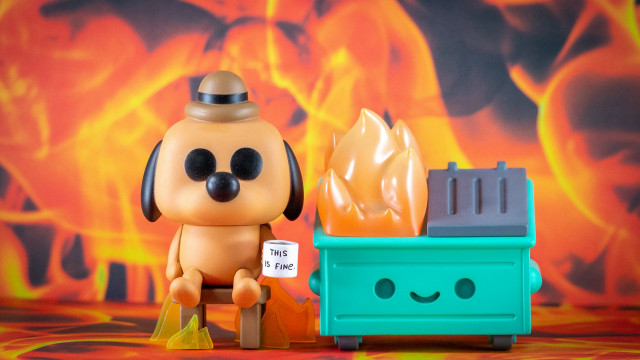
The memecoin sector enters May 2026 with eleven tokens commanding outsized attention across Solana, Ethereum, BNB Chain, and Cardano. The list spans projects with functioning DeFi legs and others that rely almost entirely on social media momentum. That breadth is the immediate risk: when a narrative thins, capital does not exit evenly. It rushes out of the names with the weakest on-chain liquidity and the most concentrated holder bases first, then drags down the rest through correlation and forced deleveraging.
This is not a theoretical concern. The same cycle has played out in every memecoin wave since 2021. What makes this cohort different is the sheer number of tokens that have graduated from pure meme status to ecosystems with decentralised exchanges, staking, NFT integrations, and real-world payment rails. Those features create lock-up effects that can mask selling pressure until redemptions begin. The risk event to watch is not a single hack or regulatory action. It is a liquidity withdrawal cascade that starts in the most speculative names and propagates through the tokens that traders treat as interchangeable.
Solana Memecoins and the Congestion Trigger
Three of the eleven tokens – Ponke, Dogwifhat (WIF), and PENGU – live on Solana. The chain’s low fees and fast finality are the reason they exist. Those same features become a liability when the network slows under load, because memecoin traders rely on split-second entries and exits. A congestion event during a sell-off would trap positions and amplify slippage.
Ponke’s Utility Layer Does Not Eliminate Price Risk
Ponke has built a decentralised exchange, PonkeSwap, and integrated with travel platforms Travala and Travel Swap. Holders can book flights and hotels with the token. That utility creates a floor of demand that purely speculative tokens lack. The floor is thin, however. Travel bookings are discretionary. In a broad crypto drawdown, the marginal buyer using Ponke for a hotel room disappears at the same moment the speculative bid evaporates. The token’s compatibility with Phantom and Coinbase Wallet means it is easy to sell, not just easy to hold.
Dogwifhat: Wide Distribution, Fast Exits
WIF launched without a presale or early allocations. Most of its supply is already circulating, which removes dilution risk. It is listed across major exchanges, so accessibility is high. The trade-off is that accessibility works both ways. When a sell signal flashes, there is no lock-up, no vesting schedule, and no friction to slow the exit. Solana’s throughput normally handles that volume. If the network is congested, WIF’s liquidity profile flips from a strength to a trap.
PENGU and the NFT Connection
PENGU is the token of the Pudgy Penguins NFT project, with a total supply of 88.88 billion. Its value is tied to the health of the NFT collection. If floor prices for Pudgy Penguins drop, PENGU tends to follow. The token is used for gaming, partnerships, and merchandise, which broadens the holder base. That broad base also means a wider set of sell triggers. A single partnership disappointment can ripple through both the NFT and token markets simultaneously.
Community-Driven Tokens and the Concentration Problem
Several tokens on the list are defined by their communities. Pitbull (PIT), Snek (SNEK), and Baby Doge all rely on social media campaigns and holder-driven marketing. That model works until it does not. The risk is not that the community disappears overnight. It is that a small number of large holders can coordinate exits while the broader community is still posting memes.
Pitbull’s Burn Mechanism and the Illusion of Scarcity
Pitbull launched on Binance Smart Chain in March 2021 with a supply of 100 quadrillion tokens. Over 60% has already been burned. The community exceeds 525,000 members. The deflationary mechanic is real, and it has reduced the float. A reduced float, however, also means that a single large sell order can move the price more than it would have when the supply was larger. The burn mechanism creates a narrative of rising scarcity. It does not create a buyer on the other side of the trade.
Snek: Cardano’s Memecoin and the eUTXO Constraint
Snek is Cardano’s first breakout memecoin, with a capped supply of 76.7 billion tokens. It benefits from Cardano’s eUTXO model, which offers predictable fees. The trade-off is that Cardano’s DeFi infrastructure is less liquid than Ethereum’s or Solana’s. In a sell-off, Snek holders may find fewer venues to exit without moving the price. The project has plans for gamification and NFT integrations. Those plans add future catalysts. They also add execution risk. If the roadmap stalls, the community’s patience will be tested.
Baby Doge: Charity Narrative and Correlation Risk
Baby Doge, built on BNB Chain, ties a portion of every transaction to token burns and charitable initiatives. That narrative has kept the project in the public eye. The token tends to move in line with Dogecoin, which means it inherits Dogecoin’s volatility without Dogecoin’s liquidity. When Dogecoin sells off, Baby Doge often falls harder because its order books are thinner. The charity angle does not insulate it from that correlation.
Ecosystem Tokens and the Governance Trap
BONE and Shiba Inu (SHIB) are part of the Shiba Inu ecosystem. Floki has built a multi-chain ecosystem with DeFi, gaming, and education. These tokens have more utility than the average memecoin. That utility creates a different kind of risk: governance tokens can become illiquid when staked, and unstaking queues can delay exits during a panic.
BONE: ShibaSwap Governance and the Unstaking Delay
BONE runs ShibaSwap, the Shiba Inu ecosystem’s decentralised exchange on Ethereum. It has a total supply of 250 million, with 229.9 million in circulation. Holders use BONE for governance and staking rewards. Staked BONE cannot be sold immediately. If a sell-off begins, stakers must wait through an unstaking period while the price moves against them. That dynamic can turn a gradual decline into a cascade when the unstaking window opens and a wave of newly liquid tokens hits the market.
Shiba Inu: Size as a Double-Edged Sword
SHIB has grown into an ecosystem with its own exchange, a layer-2 network, and NFTs. Its sheer size means price jumps are less dramatic than smaller tokens. That same size means that a significant sell-off requires enormous capital to absorb. The original creator stepped away early, leaving the project to evolve without a central figure. That decentralisation is a strength in normal markets. In a crisis, it means no single entity can coordinate a defence.
Floki: Multi-Chain Utility and the Valhalla Gamble
Floki operates on both Binance Smart Chain and Ethereum. Its play-to-earn game Valhalla lets players earn FLOKI tokens. The game is a real product with a user base. If Valhalla fails to retain players, the token loses a demand driver that other memecoins do not have. The multi-chain deployment also means liquidity is fragmented across two networks. In a volatility spike, that fragmentation can cause pricing discrepancies that arbitrage bots exploit, adding to the chaos.
The Speculative Frontier: AI and Pump.fun Launches
Goatseus Maximus (GOAT) and Snorter represent the newest layer of memecoin speculation. GOAT launched through Pump.fun and combines AI and meme narratives. Snorter offers Telegram-based trading tools with AI features. These tokens are the most sensitive to shifts in attention.
Goatseus Maximus: Narrative-Dependent Liquidity
GOAT moves when AI becomes a talking point in crypto. It benefits from short bursts of attention on X and the general traction around Pump.fun launches. The liquidity is shallow. Price swings are sharp. Momentum can shift in hours. A single negative tweet or a shift in the AI narrative can erase days of gains. There is no utility floor to catch the fall.
Snorter: Telegram Tools and Influencer Risk
Snorter has built a niche with its aardvark mascot and Telegram-based trading tools. Coverage from influencers like Jacob Crypto Bury has driven growth. Influencer-driven tokens carry a specific risk: if the influencer moves on to the next project, the community can deflate quickly. The AI features add functionality. They do not add sticky demand.
What Would Reduce the Risk
A sustained rise in on-chain liquidity across these tokens would reduce the probability of a cascade. That means deeper order books on decentralised exchanges, more active market makers, and a broader holder base that is not concentrated in a few wallets. The projects that have built real utility – Ponke with travel bookings, Floki with Valhalla, BONE with ShibaSwap governance – have a better chance of retaining users through a downturn. The projects that rely solely on community sentiment and influencer attention have fewer tools to slow an exodus.
What Would Make the Risk Worse
A coordinated sell-off in the broader crypto market, triggered by a macro event or a regulatory shock, would hit memecoins first and hardest. The correlation between memecoins and major assets like Bitcoin is loose in calm markets. It tightens sharply in a panic. If Bitcoin drops 10% in a day, memecoins can drop 30% or more because liquidity providers pull their bids. The tokens with the largest supplies – SHIB, PENGU, Snek – would face the most selling pressure simply because there are more tokens to sell.
A second aggravating factor is the concentration of these tokens on a few chains. Solana hosts three of the eleven. BNB Chain hosts Pitbull and Baby Doge. Ethereum hosts SHIB, BONE, and Floki. A chain-specific outage or congestion event would isolate those tokens from the broader market, preventing arbitrage and forcing holders to wait. The memecoin trader’s edge is speed. Remove speed, and the edge disappears.
Memecoins have evolved from jokes into marketing engines and, in some cases, functional ecosystems. That evolution has not changed their core vulnerability. They are sentiment assets first. When sentiment shifts, the exit is always narrower than the entrance. The eleven tokens listed here span the spectrum from utility to pure speculation. The risk event to watch is the moment that spectrum collapses into a single trade: sell first, ask questions later.