Back to Markets
Macro● Neutral

Vietnam’s Legislative Leadership Engages Vatican in Strategic Diplomatic Outreach

April 12, 2026 at 02:42 AMBy AlphaScalaSource: e.vnexpress.net
Vietnam’s Legislative Leadership Engages Vatican in Strategic Diplomatic Outreach

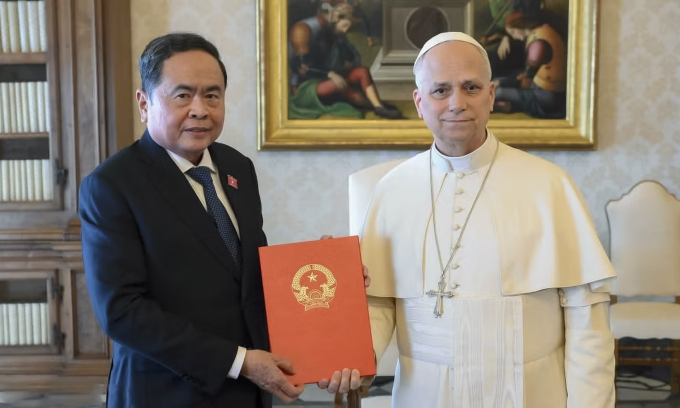
National Assembly Chairman Tran Thanh Man’s high-level meeting with Pope Leo XIV at the Vatican highlights Vietnam's ongoing efforts to strengthen international diplomacy and foster geopolitical stability.

A Diplomatic Milestone in Vatican City

In a significant development for Southeast Asian international relations, National Assembly (NA) Chairman Tran Thanh Man conducted a high-level meeting with Pope Leo XIV at the Vatican on April 11. This visit marks a notable chapter in the ongoing diplomatic dialogue between Vietnam and the Holy See, reflecting Hanoi’s broader strategy to broaden its global partnerships and deepen engagement with international institutions.

While the meeting was primarily diplomatic in nature, the symbolism of the NA Chairman—the head of Vietnam’s legislative body—engaging directly with the leader of the Catholic Church underscores a shift toward more transparent and normalized relations. The meeting took place on local time in Vatican City, serving as a focal point for observers tracking Vietnam's evolving foreign policy landscape.

Contextualizing the Engagement

Vietnam has been systematically working to improve its international standing and resolve historical frictions regarding religious freedom and institutional representation. For market observers and political risk analysts, such meetings are more than ceremonial; they are indicative of a stable political environment and a government willing to navigate complex international sensibilities to foster cooperation.

Historically, the relationship between Vietnam and the Vatican has been characterized by cautious diplomacy. However, recent years have seen an uptick in high-level exchanges. By positioning the National Assembly Chairman at the center of this dialogue, Hanoi is signaling that its commitment to international integration is not merely economic, but institutional and cultural as well.

Why This Matters for Global Markets

For investors and multinational corporations operating within the Vietnamese sphere, the stability of the country’s diplomatic relations is a key variable in risk assessment. Vietnam has emerged as a critical node in the global supply chain, particularly as companies continue to pursue 'China Plus One' strategies. Stability in the political and diplomatic arena is essential for maintaining the investor confidence that has propelled Vietnam’s GDP growth in recent years.

When a country’s top legislative official engages in direct, high-profile diplomacy with a global institution, it typically points to a desire for continued policy predictability. For traders focusing on emerging markets, this meeting acts as a 'soft' indicator of geopolitical stability. A reduction in international friction allows Hanoi to focus more heavily on domestic reform, infrastructure development, and the expansion of its export-oriented manufacturing base.

Analyzing the Diplomatic Ripple Effects

While the specific agenda of the conversation between Chairman Man and Pope Leo XIV remains focused on the broader bilateral relationship, the market impact of such meetings is usually found in the 'stability premium.' Investors favor jurisdictions where top-level officials actively manage international perceptions and maintain open lines of communication with influential global actors.

Looking forward, market participants should watch for follow-up announcements regarding trade delegations, potential shifts in religious policy, or further bilateral agreements that may spring from this visit. As Vietnam continues to integrate into the global financial system, its ability to cultivate these high-level relationships will remain a core component of its national branding. Investors should keep a close eye on how these diplomatic efforts translate into sustained foreign direct investment (FDI) inflows, which have historically been a primary driver of the Vietnamese stock market’s performance.