A Critical Threshold for Vietnam’s Workforce
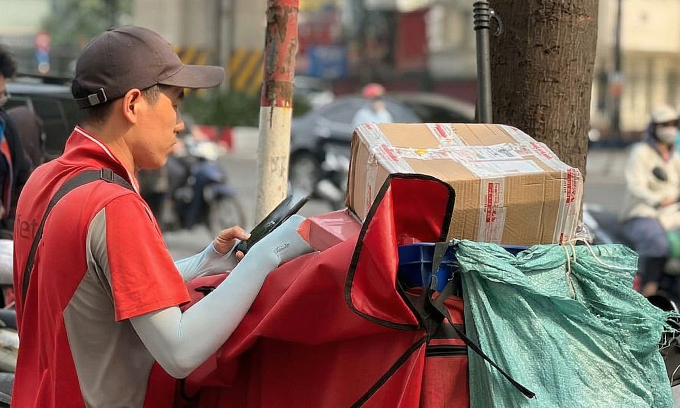
For the delivery riders navigating the sprawling urban landscape of Ho Chi Minh City, the current meteorological reality is becoming a professional hazard of unprecedented proportions. As temperatures soar toward the 40-degree Celsius mark (104 degrees Fahrenheit), the city’s asphalt has transformed into a heat-radiating barrier, placing logistics workers at the front lines of a worsening climate crisis. Recent reports from Vo Van Kiet Street highlight the physical toll of this environment, where riders like Nam—exhausted and visibly suffering from heat-induced fatigue—are forced to seek brief, insufficient refuge in rare pockets of shade while their uniforms remain saturated with sweat.
This is not merely a localized health concern; it is a burgeoning macro-economic issue for Vietnam, a nation that has positioned itself as a critical hub in the global supply chain and the digital economy. The reliance on gig-economy labor for last-mile delivery is a fundamental pillar of Vietnam’s retail and e-commerce growth, yet the physical sustainability of this workforce is being tested by extreme weather patterns that are becoming increasingly frequent.
The Economic Cost of Extreme Heat
Vietnam has seen temperatures climb to dangerous levels, with the 40-degree threshold now becoming a recurring benchmark in major hubs such as Ho Chi Minh City. For businesses, the implications are twofold. First, there is the immediate risk of labor shortages; as heatstroke becomes a tangible threat, the availability of riders during peak daylight hours—the very time when demand for food and parcel delivery is highest—dips significantly.
Second, the heat creates a volatility in operational costs. Delivery platforms now face the challenge of balancing competitive pricing with the need to incentivize riders to work under hazardous conditions. As workers like Nam struggle to maintain their pace, the efficiency of the entire logistics network is compromised. When the human element of the supply chain falters due to heat exhaustion, service latency increases, customer satisfaction scores fluctuate, and the underlying unit economics of delivery platforms come under pressure.
Market Implications for Investors
For investors and market analysts, the situation in Southeast Asia serves as a microcosm of the broader climate risk affecting emerging markets. Vietnam’s rapid industrialization and urbanization have outpaced climate-resilient infrastructure. The inability of the physical environment to support outdoor labor at current temperatures suggests that companies heavily reliant on human-capital-intensive logistics may face rising operational expenditures (OPEX) as they are forced to implement heat-mitigation strategies, insurance premiums, or hazard pay for employees.
Furthermore, the psychological and physical strain on the workforce could lead to higher churn rates in the gig economy. In a sector where retention is already a significant hurdle, the environmental factor adds a layer of instability that is difficult to hedge against. Investors monitoring the Southeast Asian logistics sector should be wary of earnings reports that fail to account for climate-related productivity losses or increased labor costs associated with extreme weather events.
What to Watch Next: Adaptation or Attrition
As Vietnam continues to experience these scorching temperatures, the primary focus for stakeholders will be on adaptation. Will delivery platforms invest in climate-controlled hubs or cooling technology for their workers? Will there be a structural shift in delivery hours to avoid the peak heat of the afternoon?
Looking forward, the resilience of Vietnam’s labor market will depend on how effectively both the private sector and government policy can mitigate the risks posed by these heatwaves. Traders should keep a close watch on logistics companies’ operational guidance and any regulatory shifts regarding labor safety in extreme heat. If the current trajectory of rising temperatures persists without adequate intervention, the 'last-mile' delivery model, which has been a engine for local economic growth, may face a long-term cooling of its own expansion prospects.