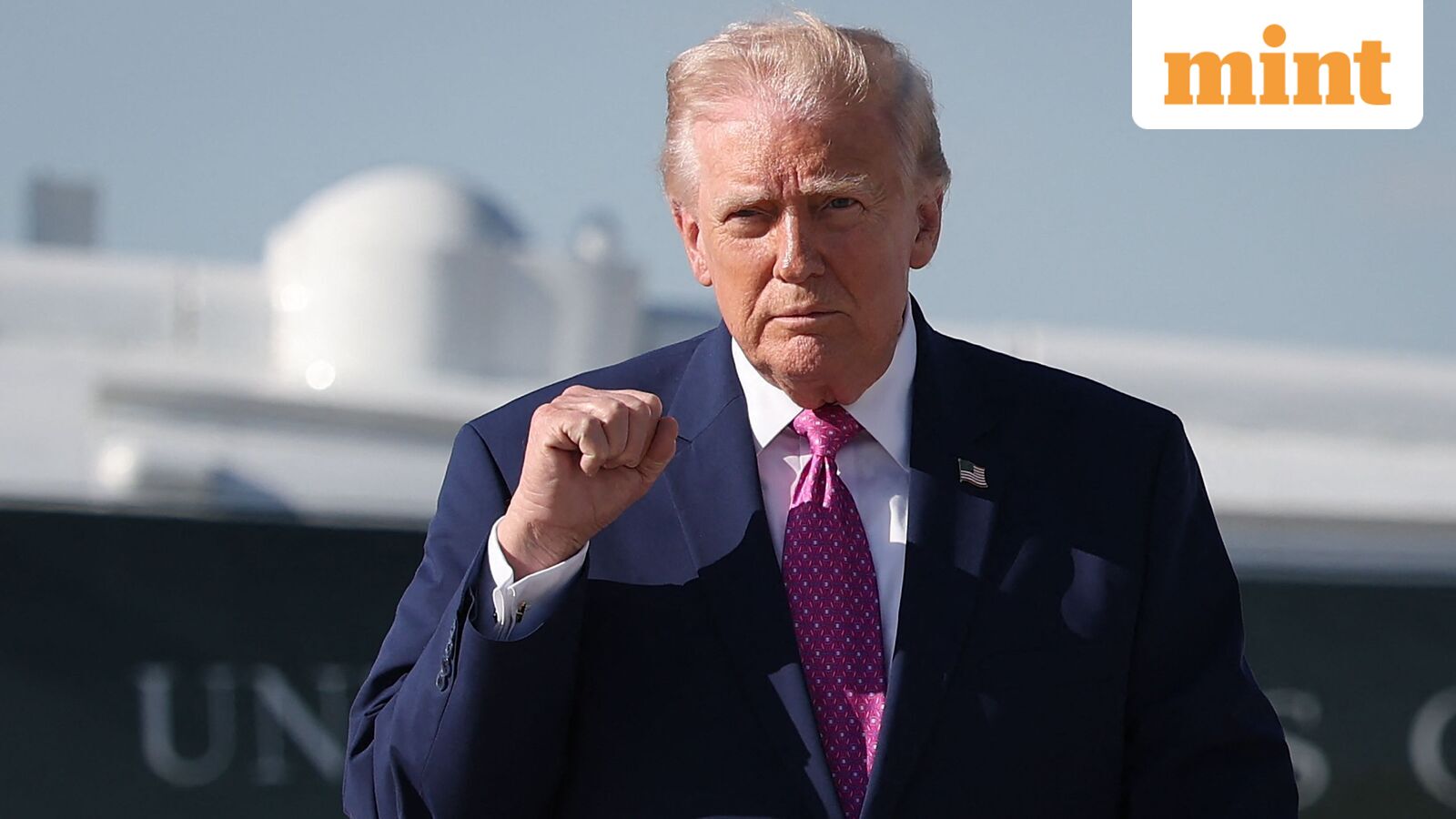
Trump Signals Surge in U.S. Oil Exports as Strategic Energy Pivot Takes Shape

Former President Donald Trump announced that a massive fleet of tankers is heading to the U.S. to load premium-grade oil and gas, highlighting the country's growing role as a global energy supplier amid ongoing concerns over the Strait of Hormuz.
A New Era for U.S. Energy Dominance
In a development that signals a significant shift in global energy logistics, former President Donald Trump has issued a bold statement regarding the movement of U.S. crude oil. Trump claimed that a massive fleet of empty oil tankers is currently en route to the United States, specifically tasked to load what he described as the “best and sweetest oil (and gas!) anywhere in the world.” This announcement underscores the ongoing transformation of the U.S. from an energy importer to a dominant global supplier, a trend that continues to reshape international trade dynamics.
The Strait of Hormuz Factor
Beyond the logistics of loading, the update carries significant geopolitical weight as it touches on the security of the Strait of Hormuz—the world’s most critical maritime oil chokepoint. By highlighting the flow of U.S. exports, Trump’s commentary draws a sharp contrast between the reliability of American energy supply chains and the volatility associated with Middle Eastern transit routes. For global traders, the Strait of Hormuz remains a primary focus of risk assessment; any disruption to this narrow passage, which carries approximately 20% of global petroleum liquids consumption, historically triggers immediate spikes in crude prices.
Why This Matters for Energy Markets
The pivot toward large-scale export operations is a direct consequence of the U.S. shale revolution, which has provided the global market with a high-volume supply of “sweet” crude—a low-sulfur oil that is cheaper and easier for refineries to process into gasoline and diesel. As domestic production reaches record levels, the U.S. has increasingly positioned itself as a "swing producer," capable of mitigating price shocks caused by geopolitical tensions in regions like the Persian Gulf.
For investors and energy traders, the arrival of such a large fleet of tankers points to a tightening of available storage capacity and a potential shift in global price benchmarks. When U.S. supply hits international markets at this scale, it often exerts downward pressure on global pricing, forcing OPEC+ members to reconsider production quotas to maintain price floors. The ability of the U.S. to rapidly scale export capacity provides a structural hedge for the global economy against supply disruptions elsewhere.
Monitoring the Supply Chain
Market participants should watch for upcoming inventory reports from the Energy Information Administration (EIA). A sustained increase in export volumes, as hinted at by the mobilization of these tankers, would likely be reflected in narrowing spreads between WTI (West Texas Intermediate) and Brent crude.
As the energy landscape becomes increasingly multipolar, the ability to monitor tanker traffic and export volumes is becoming as vital as tracking interest rates or inflation data. The next few weeks will be critical in determining whether this influx of shipping capacity results in a sustained export boom or if logistical bottlenecks at U.S. Gulf Coast ports will temper the flow. Traders should remain vigilant regarding any further updates on the operational status of these tankers, as they serve as a leading indicator for U.S. net export capacity and, by extension, global energy supply stability.