Macro● Neutral
Coatue Co-Founder Proposes AI Meeting Surveillance for Risk
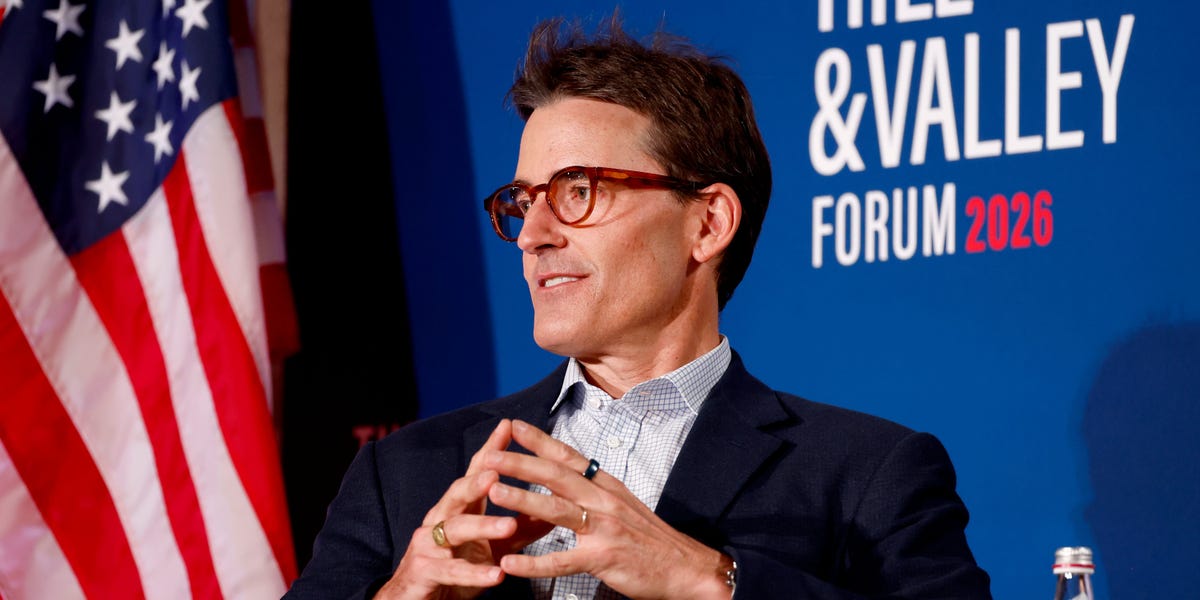
Philippe Laffont suggests AI-driven analysis of internal meetings to flag corporate risk. Balancing institutional oversight against employee morale is next.
Continue with
The Future of Institutional Oversight
In an era where institutional performance is increasingly defined by the speed and precision of information processing, the traditional boardroom meeting is facing a radical transformation. Philippe Laffont, the co-founder of the multi-billion dollar hedge fund Coatue Management, has reignited a contentious debate regarding corporate transparency and risk management. Laffont recently suggested that the systematic recording and AI-driven analysis of every internal meeting could serve as a powerful tool for identifying warning signs and mitigating organizational failure.
While the concept of total corporate surveillance is hardly new, Laffont’s endorsement brings the discussion into the upper echelons of high-stakes finance. The proposal centers on the utilization of advanced pattern recognition to flag "worrying behavior" within internal communications and strategy sessions. By parsing tone, cadence, and content, proponents argue that firms could detect early indicators of operational rot, ethical lapses, or strategic misalignment long before they manifest in a quarterly balance sheet.
The Efficiency vs. Culture Paradox
Laffont’s proposition is not without its caveats. During his recent commentary, he openly acknowledged the social friction such a policy would inevitably generate, noting that constant monitoring would likely exert a negative impact on employee morale. This creates a fundamental tension for institutional leaders: the trade-off between the cold, objective utility of data-driven oversight and the intangible, yet vital, environment of creative trust and psychological safety.
For traders and analysts, the question is whether the potential for reduced risk outweighs the risk of talent attrition. In the high-pressure environment of a hedge fund, where the free flow of contrarian ideas is often the primary engine of alpha, any policy that stifles open dialogue—or makes staff feel as though they are under a permanent microscope—could prove counterproductive. If the goal is to capture market-moving insights, the fear of being "flagged" for a dissenting opinion could lead to a sanitized, group-think environment that is detrimental to long-term performance.