Back to Markets
Macro● Neutral

The Geopolitical Supply Chain Trap: Why Federal Reserve Policy Cannot Fix Global Shipping Volatility

April 10, 2026 at 05:00 AMBy AlphaScalaSource: realclearmarkets.com
The Geopolitical Supply Chain Trap: Why Federal Reserve Policy Cannot Fix Global Shipping Volatility

The Federal Reserve's monetary policy is increasingly ineffective at combating inflation caused by geopolitical volatility and shipping disruptions, creating a new risk profile for traders.

The Limits of Monetary Policy in a Fractured World

In the modern globalized economy, the Federal Reserve serves as the primary architect of domestic financial stability. However, as recent market volatility underscores, the central bank’s toolkit—interest rate adjustments and quantitative tightening—is fundamentally ill-equipped to address the physical reality of global trade. While the Federal Reserve remains fixated on cooling inflation through monetary restriction, the true bottlenecks currently gripping the global economy are not found in spreadsheets or yield curves, but in the volatile, high-stakes arena of international geopolitics.

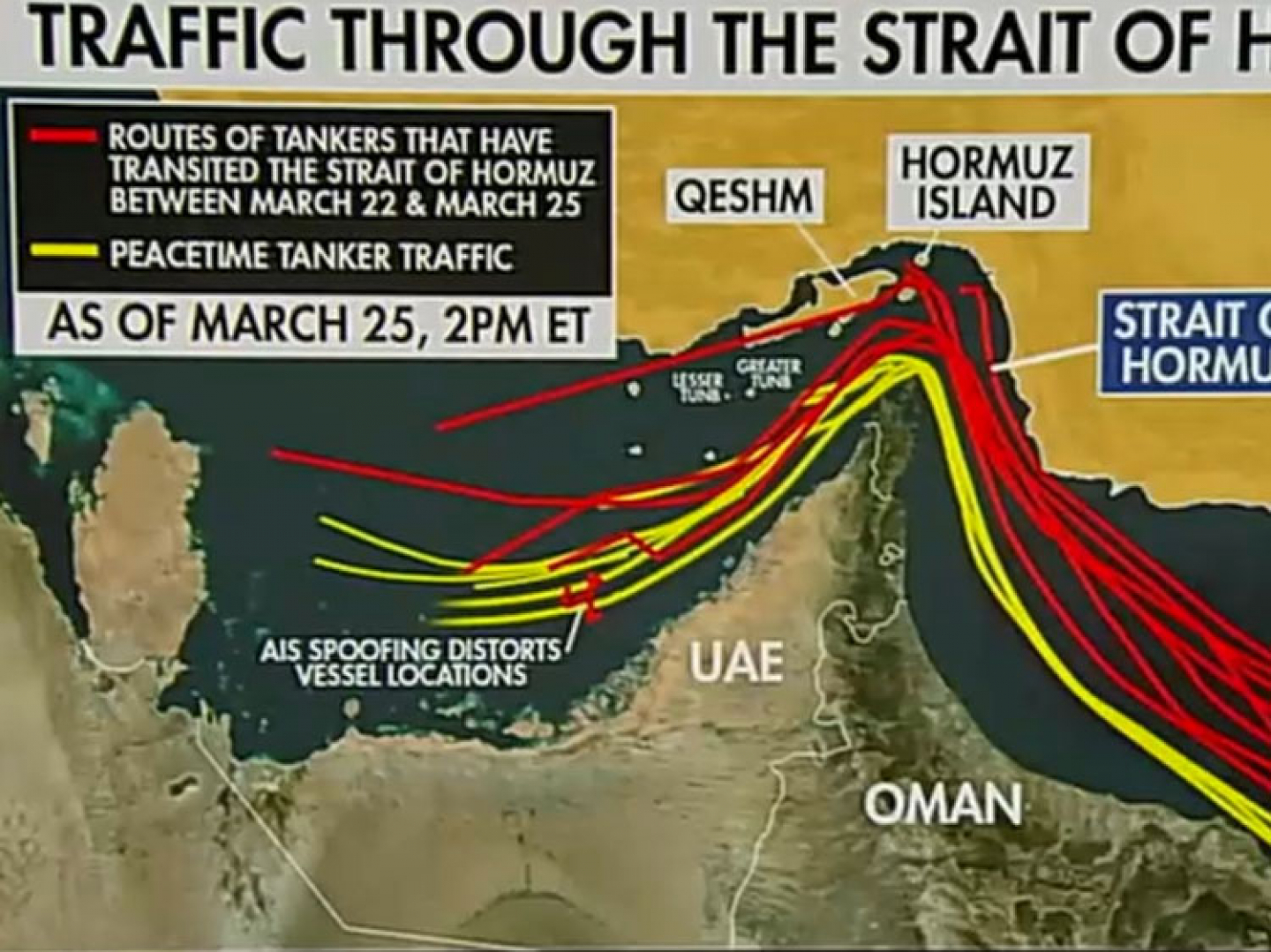
Market participants are increasingly recognizing that the unpredictability of leadership, particularly in the case of President Donald Trump, creates a "geopolitical risk premium" that no amount of rate-hiking can mitigate. When a head of state oscillates between threatening "apocalyptic destruction" of a nation like Iran and shifting trade postures, the resulting uncertainty reverberates through every major shipping lane, disrupting supply chains and inflating the cost of goods in ways that monetary policy cannot reach.

The Disconnect Between Fed Mandates and Shipping Realities

For traders, the core disconnect lies in the Fed’s mandate versus the reality of global logistics. The Federal Reserve operates on the assumption that demand-side pressure is the primary driver of inflation. However, if shipping lanes are blocked, ports are stalled by labor disputes, or geopolitical maneuvers force vessels to reroute, the resulting supply-side shock creates cost-push inflation.

Raising interest rates does nothing to clear a clogged port or reopen a restricted waterway. In fact, aggressive monetary tightening during a period of supply-side disruption risks stagflation—a scenario where the economy stagnates while prices remain elevated due to external shocks. As long as trade routes remain hostage to unpredictable political rhetoric and regional conflicts, the Fed’s attempts to manage inflation are effectively fighting a war on the wrong front.

Why Geopolitical Uncertainty Matters for Traders

Investors must distinguish between "controllable" domestic risks and "uncontrollable" global shocks. When political volatility spikes, the impact on shipping costs is immediate. Increased insurance premiums for tankers, fuel costs for longer rerouted voyages, and the logistical nightmare of delayed cargo all contribute directly to the Consumer Price Index (CPI).

For the active trader, these conditions demand a pivot in strategy. Relying solely on the Fed’s "dot plot" or FOMC sentiment is no longer sufficient. One must now factor in the "Trump Factor"—the inherent volatility introduced by unpredictable executive action. When a leader creates a climate of constant brinkmanship, the probability of sudden, sharp spikes in commodity prices and transportation costs rises significantly. This creates a disconnect where the stock market may react to domestic earnings, while the real economy suffers from the physical inability to move goods efficiently.

The Forward Outlook: Watching the Horizon

Looking ahead, market participants should pay close attention to the intersection of trade policy and naval security. The stability of global supply chains is currently more dependent on diplomatic navigation in the Middle East and the South China Sea than on the Federal Reserve’s next move.

Traders should monitor:

  1. Geopolitical Risk Premiums: Any escalation in rhetoric between the U.S. and key regional powers should be viewed as a direct threat to shipping volumes.
  2. Logistics Indices: Indicators tracking container freight rates and port congestion will likely offer a more accurate picture of near-term inflation than traditional labor market reports.
  3. Policy Divergence: Watch for instances where the administration’s trade policies clash with the Fed’s inflation goals. If the White House prioritizes political leverage through trade disruption, the Fed will be forced into a defensive posture, likely keeping rates higher for longer to compensate for the resulting supply-side inflation.

Ultimately, the shipping lanes remain a physical reality that no central bank balance sheet can unclog. Investors would do well to stop looking for the solution in the boardroom of the Federal Reserve and start looking for it in the volatile theater of international politics.