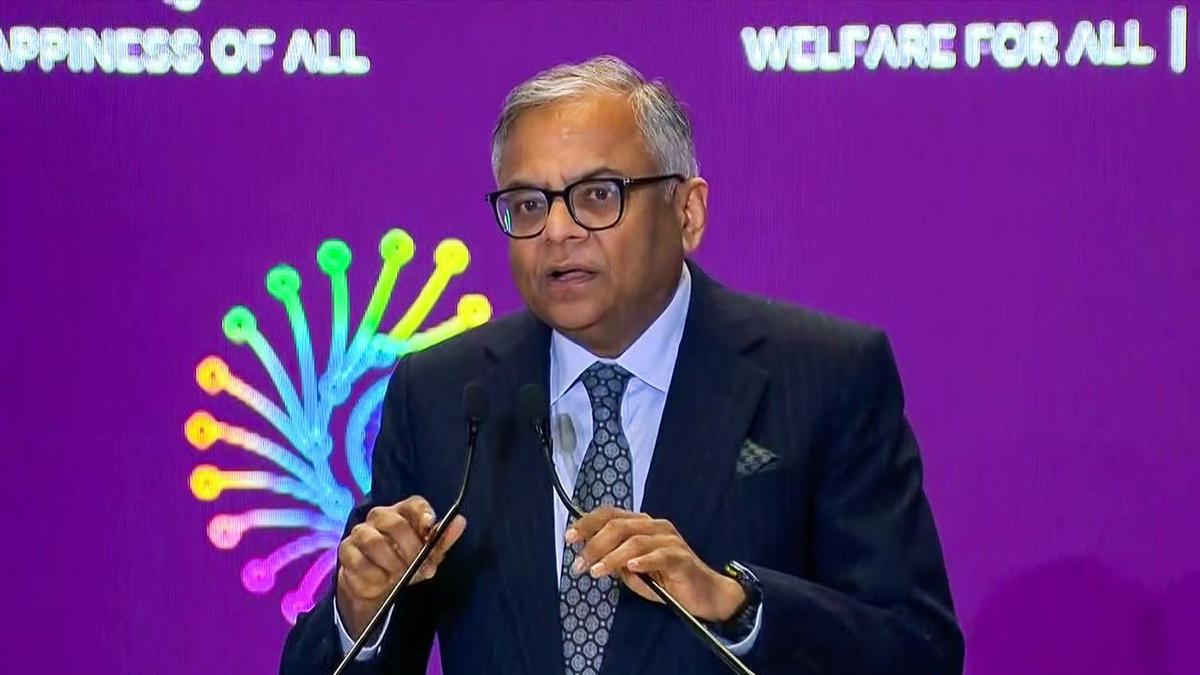
Tata Sons Chairman N. Chandrasekaran Charts Aggressive Path for Air India’s Turnaround

Tata Sons Chairman N. Chandrasekaran has labeled Air India's ongoing restructuring as a 'critical stage,' signaling a major push to modernize the legacy carrier into a world-class global airline.
A Defining Moment for Aviation
N. Chandrasekaran, Chairman of Tata Sons, has characterized the current trajectory of Air India as being in a 'critical stage' of transformation. Speaking on the airline’s ongoing restructuring efforts, Chandrasekaran underscored the conglomerate's unwavering commitment to evolving the legacy carrier into a world-class aviation brand. This pivot comes at a pivotal juncture for the Indian aviation sector, as the airline navigates the complex integration of its fleet, service standards, and operational culture following its acquisition from the Indian government.
The Weight of Transformation
Since the Tata Group assumed control of Air India, the airline has embarked on one of the most ambitious corporate turnarounds in aviation history. Chandrasekaran’s recent commentary highlights the reality that while the brand carries significant heritage, the operational and structural barriers to achieving global parity remain substantial. The 'critical stage' mentioned by the Chairman refers to the delicate balance between modernizing aging infrastructure and scaling operations to meet the surging demand for air travel in India and across international corridors.
For investors and industry analysts, the focus remains on whether the Tata Group can successfully harmonize its disparate airline entities—including the ongoing merger processes with Vistara and Air India Express—into a cohesive, high-performance powerhouse. The integration process is not merely a bureaucratic hurdle; it is a fundamental restructuring of the airline’s value proposition to the consumer.
Strategic Challenges and Market Implications
For traders and stakeholders, the implications of Air India’s transformation are significant. The airline is currently engaged in a massive fleet expansion, placing record-breaking orders for new aircraft to replace older, less fuel-efficient models. However, the aviation industry remains highly sensitive to macroeconomic volatility, including fluctuating jet fuel prices, geopolitical tensions affecting flight paths, and currency fluctuations.
Chandrasekaran’s emphasis on the 'critical' nature of this phase suggests that the next 12 to 24 months will be the litmus test for the Tata Group’s management strategy. The success of this turnaround will likely dictate the competitive landscape of Indian aviation for the next decade. Should the transformation yield the anticipated efficiencies, it would solidify the Tata Group’s position as a dominant force in global aviation, potentially influencing the valuation of the broader aviation ecosystem and related ancillary sectors.
The Road Ahead
As the airline continues to reform its service delivery and operational backbone, market observers will be watching for key performance indicators such as Load Factor improvements, On-Time Performance (OTP) metrics, and the speed at which the unified brand can capture market share from domestic and international incumbents.
Looking ahead, the focus for the Tata leadership will remain on execution. The airline’s ability to navigate the logistical complexities of fleet integration, coupled with a commitment to maintaining service excellence, will be the primary drivers of its long-term viability. Investors should continue to monitor the airline’s progress in fleet modernization as a leading indicator of its broader operational health. With the aviation sector acting as a key barometer for economic growth, Air India’s success is intrinsically linked to the broader health of the Indian economy.