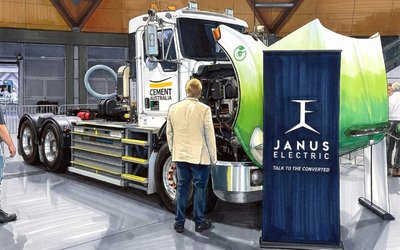
Janus Electric Targets US Freight Market with HVIP Vouchers and Energy One Partnership

Janus Electric has secured US$225,000 in California HVIP vouchers for vehicle conversions and finalized an MOU with Energy One to develop battery-swap infrastructure.
Australian Tech Eyes California
Janus Electric is pushing deeper into the North American heavy-vehicle market. The company secured two vouchers through California’s Hybrid and Zero-Emission Truck and Bus Voucher Incentive Project (HVIP). These vouchers total US$225,000 and will fund the conversion of heavy vehicles to the company’s proprietary electric systems.
This move marks a concrete step for the Australian firm as it works to establish a footprint in the US logistics sector. By utilizing state-backed incentives, the company aims to reduce the financial barrier for fleet operators looking to transition away from traditional diesel engines.
The Energy One Connection
Beyond vehicle conversions, Janus Electric is addressing the infrastructure hurdle. The company signed a Memorandum of Understanding (MOU) with Energy One to develop battery-swapping technology. This partnership focuses on building the necessary power grid infrastructure to support high-capacity electric freight operations.
Strategic Objectives
- Fleet Conversion: Utilization of the US$225,000 HVIP funding to prove the viability of their electric kits in the US market.
- Infrastructure Growth: Formalizing the Energy One MOU to create a network of battery-swap stations.
- Market Penetration: Expanding the reach of their modular battery technology beyond local markets.
Operational Metrics
| Feature | Detail |
|---|---|
| HVIP Funding | US$225,000 |
| Primary Market | California, USA |
| Key Partner | Energy One |
| Technology Focus | Heavy-vehicle conversion and battery swapping |
"The MOU with Energy One provides a clear pathway to deploy the infrastructure required to scale our battery-swap model for heavy transit," stated a company representative regarding the partnership.
Market Implications
Traders interested in market analysis should watch how Janus Electric manages its capital expenditure as it scales these US operations. While the HVIP vouchers offer immediate support, the success of the Energy One partnership will determine long-term viability. The heavy-vehicle sector remains sensitive to energy costs, and battery-swapping systems are often viewed as a way to minimize vehicle downtime compared to traditional charging.
Investors are also tracking how similar firms handle supply chain constraints. For those monitoring broader crude oil profile impacts, the transition of heavy transport to electric power is a metric to watch closely. The ability to execute on the Energy One agreement will be the next major milestone for the company's US expansion.