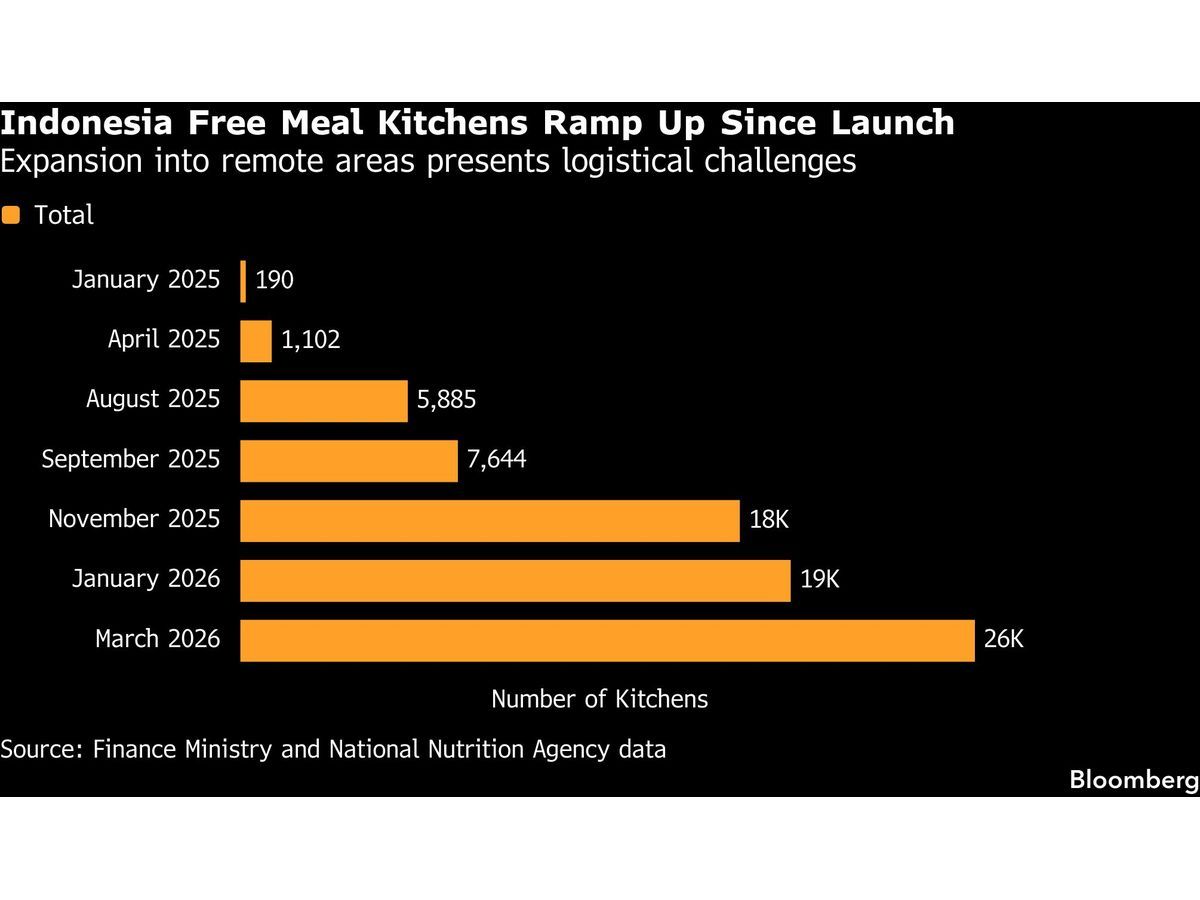
Indonesia’s $15 Billion Free Meal Program Strains National Budget

Indonesia is allocating $15 billion to a massive free meal program, raising concerns about the long-term impact on the national budget and economic productivity.
Fiscal Pressure Mounts
Indonesia is committing $15 billion (230 trillion rupiah) to a massive free meal program, one of the largest initiatives of its kind globally. While the government positions this as a major social welfare investment, the sheer scale of the spending is creating immediate friction within the national budget. Analysts warn that the program lacks clear evidence of becoming a long-term economic driver, leaving investors to question the fiscal sustainability of the current administration's flagship policy.
Budgetary Constraints
The funding requirement represents a substantial portion of the state's discretionary spending. With the government already managing tight revenue streams, this allocation forces a difficult trade-off between social spending and other developmental priorities. Traders monitoring market analysis are paying close attention to how this potential deficit expansion affects the sovereign credit profile.
Key Financial Metrics
| Metric | Value |
|---|---|
| Program Cost | $15 Billion |
| Local Currency Cost | 230 Trillion Rupiah |
| Primary Goal | Nutritional Welfare |
| Economic Impact | Unproven |
Market Implications
The fiscal strain is not occurring in a vacuum. Investors are concerned that the aggressive spending will limit the government's ability to respond to external shocks or invest in infrastructure. Because the program requires significant logistics and agricultural support, it could also influence local commodity prices. Those tracking the crude oil profile for signs of inflation or energy demand in the region should note that government spending patterns remain a primary indicator for domestic growth.
"The program has rapidly become one of the largest of its kind, but there’s little sign yet it will be an economic winner," noted market observers following the recent budget rollout.
What to Watch
Market participants should monitor the following factors in the coming quarters:
- Revenue Collection: Whether the government can meet tax targets to offset the $15 billion outlay.
- Execution Efficiency: Any reports of corruption or logistical bottlenecks that could inflate costs further.
- Fiscal Deficit Data: Updates from the central bank on the impact of this spending on the national debt-to-GDP ratio.
If the program fails to deliver measurable improvements in human capital or productivity, the government may be forced to scale back other necessary capital expenditures. Investors should remain cautious until more data emerges on the actual long-term impact of these distributions on the broader Indonesian economy.