A Shift in Urban Mobility
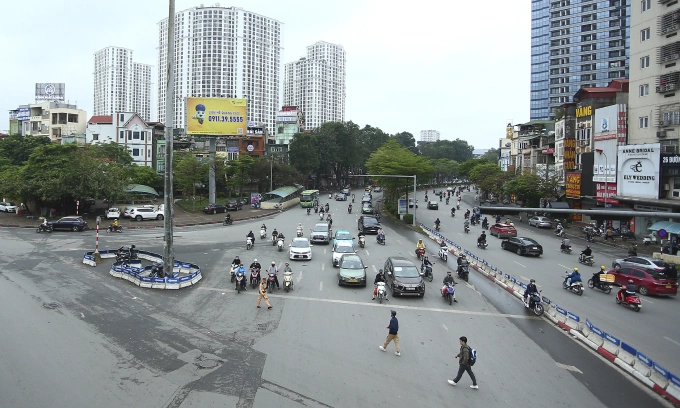
Three months after the implementation of a restrictive daytime transit policy, Hanoi’s infrastructure landscape is showing measurable signs of relief. The municipal government’s decision to ban trucks weighing 2 metric tons and above from entering inner-city streets during daylight hours has successfully mitigated some of the most persistent bottlenecks in the Vietnamese capital. For logistics operators, commuters, and urban planners alike, the policy represents a significant recalibration of how the city manages its rapid industrial growth against the constraints of its historical road network.
Data-Driven Decongestion
Since the regulation took effect in January, traffic flow has improved significantly across several of Hanoi’s most historically congested corridors. Arteries that were once synonymous with gridlock—specifically Nguyen Trai, Giai Phong, and Lang—have reported a noticeable increase in vehicle throughput.
The ban specifically targets heavy-duty and medium-duty freight vehicles, effectively decoupling commercial logistics traffic from the peak-hour passenger transit cycles. By restricting trucks of 2 metric tons or more—the workhorses of urban distribution—to nighttime hours, the city has successfully lowered the volume of large-displacement vehicles competing for space during the busiest parts of the day.
Why This Matters for the Regional Economy
For investors and market participants, infrastructure efficiency is a critical proxy for regional economic productivity. Hanoi serves as a primary hub for Northern Vietnam’s manufacturing and export sectors. When arterial roads like Giai Phong—a vital link for southern logistics—are obstructed, the resulting 'transportation tax' manifests in increased fuel consumption, delayed supply chains, and reduced labor productivity.
While the ban creates a logistical hurdle for freight companies, who must now consolidate deliveries into off-peak hours, the broader economic benefit is found in the stabilization of urban flow. Reduced idling times and improved transit reliability are essential for a city that continues to attract significant foreign direct investment (FDI) and internal migration.
The Trade-off: Logistics and Efficiency
The implementation of this ban is not without challenges. Logistics firms operating in Hanoi have had to undergo a period of operational adjustment to comply with the new temporal constraints. Moving heavy freight under the cover of darkness requires shifts in warehousing schedules and labor management. However, the early data suggests the trade-off is yielding a net positive result for the city’s overall operational environment.
Comparing Hanoi’s approach to other rapidly developing Southeast Asian metropolises, the move aligns with a broader regional trend of prioritizing commuter traffic and public safety over unrestricted 24-hour freight access. As urban density continues to climb, the ability to manage road capacity through regulatory intervention becomes as important as physical infrastructure expansion.
What to Watch Next: Long-Term Infrastructure Planning
Looking ahead, stakeholders should monitor whether the Hanoi municipal government expands the scope of the 2-ton ban or introduces additional 'green' transit zones to further discourage heavy vehicle traffic in high-density residential areas.
Furthermore, the long-term impact on local consumer pricing—specifically regarding the cost of goods transport—remains a variable to watch. If the efficiency gains on the road outweigh the increased overhead costs for logistics providers, the policy will likely be deemed a success, potentially setting a blueprint for other emerging cities in the region looking to solve their own 'last-mile' and transit congestion crises.